Scroll to the Bottom for the English Version
La amistad siempre ha sido un enigma, una promesa afectiva que desafía la lógica del contrato y la previsibilidad del amor. Se la ha celebrado durante siglos como un vínculo noble, desinteresado, incluso eterno, pero en su núcleo late una paradoja: qué es? Es imposible definirla.
Amistad no es garantía de nada ni tampoco es, realmente, un pacto; es una forma de presencia intermitente, una vibración entre lo dicho y lo que no puede decirse.
Tweet

Amistad no es garantía de nada ni tampoco es, realmente, un pacto; es una forma de presencia intermitente, una vibración entre lo dicho y lo que no puede decirse. A diferencia de los vínculos familiares, que están organizados por estructuras jurídicas y biológicas, o del amor, que se arroga la fusión y el deseo, la amistad no tiene mapa. No hay calendario para la amistad, ni modelo canónico que la sostenga. No se la funda ni se la declara: se la reconoce, y siempre demasiado tarde. Su aparición se da en el modo de lo que se pierde, o en lo que alguna vez estuvo y no se puede probar.

Uno no es amigo de alguien, sino del espacio que se abre entre ambos. Por eso las amistades más intensas son aquellas que logran resistir el impulso de nombrarse
Tweet
La amistad no se basa en la transparencia ni en la afirmación mutua. De hecho, su sustancia más profunda es el silencio. Ese silencio que no es ni evasión ni cobardía, sino el reconocimiento de que toda palabra puede traicionar. En la amistad verdadera, se ríe a veces sin causa aparente, y esa risa no es complicidad sino un modo de soportar juntos lo indecible: la conciencia de que no hay nada que asegure ese vínculo.

Lo que llamamos amistad es entonces una forma de estar junto al otro sin domesticarlo, sin clausurarlo en una identidad. Uno no es amigo de alguien, sino del espacio que se abre entre ambos. Por eso las amistades más intensas son aquellas que logran resistir el impulso de nombrarse, de capturarse, de archivarse. Son vínculos que existen al borde de su disolución, y que, sin embargo, insisten.

Esta insistencia no tiene la forma de la fidelidad romántica, ni de la lealtad contractual, sino del retorno incesante a una zona de incertidumbre. La amistad sobrevive no porque se afirme, sino porque no se exige. No pide pruebas, no necesita actualizaciones. Si acaso, se mide por la capacidad de soportar el mutismo, la distancia, incluso el malentendido. La amistad no es una promesa de continuidad, sino un gesto que acepta la discontinuidad como forma.
La amistad no es una promesa de continuidad, sino un gesto que acepta la discontinuidad como forma.
Tweet
El drama es que vivimos en un tiempo que todo lo vuelve visible, mensurable, verificable. La amistad, en ese contexto, aparece como una figura sospechosa. Si no se comunica, si no se exhibe, si no produce capital emocional compartido, se considera fallida. Y sin embargo, nada la vuelve más verdadera que su negativa a justificar su existencia. La amistad es, en este sentido, un residuo: lo que queda cuando el espectáculo ha terminado y las luces se apagan.
En tiempos de identidades blindadas, de bandos irreconciliables y lealtades partidarias, la amistad aparece como lo indecidible: un acto de fe sin programa.
Tweet
Hay algo radical en esta forma de vínculo porque, al no basarse en la semejanza ni en la utilidad, escapa también a las lógicas del enemigo. Uno no es amigo del que se le parece, sino de aquel cuya diferencia se soporta sin esfuerzo. En tiempos de identidades blindadas, de bandos irreconciliables y lealtades partidarias, la amistad aparece como lo indecidible: un acto de fe sin programa.
Y eso la vuelve profundamente política. No porque intervenga en el espacio público, sino porque desarma las categorías que organizan lo común. La amistad no funda comunidad; la fractura. No produce consenso, sino hospitalidad. No establece jerarquías, sino desposesión. La amistad es política porque, al no responder a las lógicas de la representación, subvierte la idea de que lo político se basa en la voluntad o la razón.
Quizás, por eso mismo, la amistad verdadera es tan rara y tan peligrosa. Porque no se puede institucionalizar ni convertir en valor.
Tweet
Quizás, por eso mismo, la amistad verdadera es tan rara y tan peligrosa. Porque no se puede institucionalizar ni convertir en valor. Porque no sirve para nada salvo para mostrar que todavía es posible habitar un mundo sin garantías. Una amistad que no se mide por la frecuencia del contacto ni por la utilidad mutua, sino por su capacidad de alojar el vacío. Una amistad que ríe del silencio. Que no salva, pero acompaña.
Friendship as a Shared Void
Friendship has always been a moral enigma, an affective promise that defies the logic of contract and the predictability of love. It is celebrated as a noble, selfless, even eternal bond, but at its core pulses a more radical paradox: the impossibility of its definition. Friendship is neither a guarantee nor a pact; it is a form of intermittent presence, a vibration between what is said and what cannot be said.
Unlike family ties, which are organized through legal and biological structures, or love, which claims fusion and desire, friendship has no map. There is no calendar for friendship, no canonical model to sustain it. It is not founded, nor declared: it is recognized, and always too late. It appears in the mode of what is lost, or what once was and can no longer be proven.
Friendship is not based on transparency or mutual affirmation. In fact, its deepest substance is silence. A silence that is neither evasion nor cowardice, but the recognition that every word can betray. In true friendship, laughter sometimes erupts without apparent cause—and that laughter is not complicity but a way to endure the unspeakable together: the awareness that nothing secures the bond.

What we call friendship is, then, a way of being beside the other without domesticating them, without enclosing them within an identity. One is not a friend of someone, but of the space that opens between both. This is why the most intense friendships are those that resist the impulse to name, capture, or archive themselves. These are bonds that exist on the edge of their own dissolution, and yet they persist.
What we call friendship is, then, a way of being beside the other without domesticating them, without enclosing them within an identity. One is not a friend of someone, but of the space that opens between both.
Tweet
This persistence does not take the form of romantic fidelity or contractual loyalty, but of a relentless return to a zone of uncertainty. Friendship survives not because it is asserted, but because it is not demanded. It asks for no proof, needs no updates. If anything, it is measured by the ability to withstand muteness, distance, even misunderstanding. Friendship is not a promise of continuity, but a gesture that accepts discontinuity as its form.
The tragedy is that we live in a time that renders everything visible, measurable, verifiable. Within that context, friendship appears suspect. If it doesn’t communicate, if it doesn’t perform, if it doesn’t generate shared emotional capital, it is deemed a failure. And yet, nothing makes it more real than its refusal to justify its own existence. In this sense, friendship is residue: what remains after the spectacle ends and the lights go out.
There is something radical in this kind of bond because, being based neither on similarity nor utility, it also escapes the logic of the enemy. One is not a friend to the one who resembles them, but to the one whose difference can be effortlessly borne. In times of fortified identities, irreconcilable factions, and partisan loyalties, friendship appears as the undecidable: an act of faith without a plan.
The tragedy is that we live in a time that renders everything visible, measurable, verifiable. Within that context, friendship appears suspect. If it doesn’t communicate, if it doesn’t perform, if it doesn’t generate shared emotional capital, it is deemed a failure
Tweet
And this is what makes it profoundly political. Not because it intervenes in public space, but because it disarms the categories that organize the common. Friendship does not found community; it fractures it. It does not produce consensus, but hospitality. It does not establish hierarchies, but dispossession. Friendship is political because, by refusing the logic of representation, it subverts the idea that politics is grounded in will or reason.
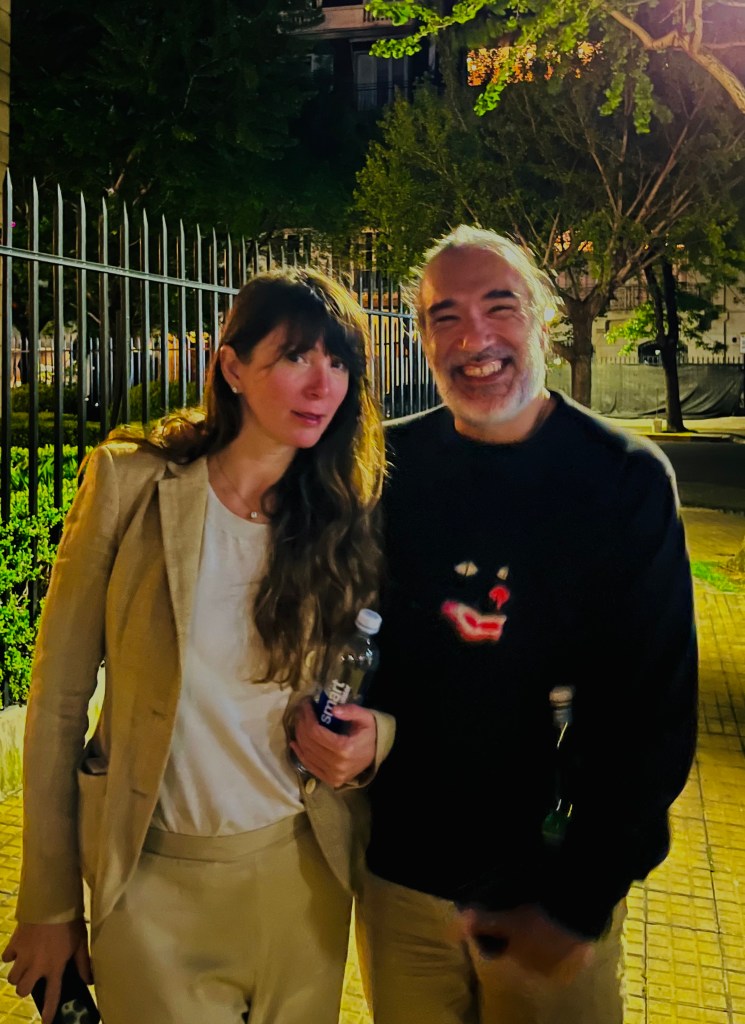
Perhaps this is why true friendship is so rare and so dangerous. Because it cannot be institutionalized or converted into value. Because it is good for nothing—except for showing that it is still possible to inhabit a world without guarantees. A friendship that is not measured by the frequency of contact or mutual benefit, but by its capacity to host the void. A friendship that laughs at silence. That does not save, but stays.
Perhaps this is why true friendship is so rare and so dangerous. Because it cannot be institutionalized or converted into value.
Tweet


 Loveartnotpeople.blog
Deja una respuesta