Home for a Quarter of a Century
I spent half my life trying to belong.To a country, to a language, to two highly prestigious universities. Trying to have a conversation under the promise of a tolerant, multicultural world, in which the end of colonial history—though not fully resolved—was at least tempered by the post–Second World War order that guaranteed certain rights: national sovereignty and individual autonomy. They called it, I think… Human Rights.

“I spent half my life trying to belong. To a country, to a language, to two highly prestigious universities… But on January 1st, 2024, I understood that the ‘belonging’ I had longed for was nothing more than a fiction.”
Tweet
But on January 1st, 2024, when I was detained—and, in legal terms, disappeared and kidnapped—in my adoptive country, the United Kingdom, during a psychiatric crisis I had warned the emergency services (999) about in the week leading up to it, I understood that the “belonging” I had longed for was nothing more than a fiction. While I was taking a nap, people entered my home and inserted a drug into my body that—possibly in combination with something an ex-friend might have been giving me (someone with knowledge of my mental health and an unhealthy obsession with money)—triggered a psychotic episode that took me to her house and later to the only public hospital in the East Sussex area.
“The legal system exploited my post-traumatic stress to replicate, in my name, the prosecution’s version of the story. Without adequate defense, what I lived was the imposition of someone else’s truth.”
Tweet
From there: a cascade of medication, no effective legal defense, and a delay of more than a year by the Argentine consulate in providing me with a list of trustworthy lawyers—something I never imagined would become so vital, until it did. Neither the police nor this ex-friend notified the consulate, in violation of the Vienna Convention. No provision was made for guaranteed access to medication, food, water, medical assistance nor for even a basic understanding of my clinical situation. All this was compounded by a legal system that exploited my ongoing post-traumatic stress to replicate, in my name, the prosecution’s version of the story. Without adequate defense, what I lived was the imposition of someone else’s truth—built on legal, medical, and likely xenophobic and racist exclusion.

What followed was a chain of procedural failures: disappearance of key evidence, accusations with no clinical basis, manipulated reports, medical negligence, absence of toxicological tests—despite my documented requests under Habeas Data and data protection law. My legal defense, fully aware that prolonging the process was damaging my mental health and draining my financial capacity, seemed less interested in defending me than in aligning itself with the institutional silence protecting everyone—except me.
“What the system does is to turn the victim into the perpetrator in order to cover up its own violence.”
Tweet
I am writing a novel based on this experience. But not as a horror story. Rather, as an analysis of systematic negligence and corruption. And above all, about something that fascinated me in the process: first through that ex-friend, then through racist incidents many Argentinians abroad are currently experiencing, and finally through what I discovered—hopefully in time—about my lawyer’s mishandling of the case. While he was calming me down, the evidence was disappearing, and a homophobic, moralistic, and Victorian story was being crafted—one that aimed to construct the figure of a “sexual deviant.” That figure, rooted in 19th-century jurisprudence, reappears here as an instrument of punishment.

This is the first in a series of posts where I want to think critically about how institutions protect one another, how the emotional and financial cost always falls on the foreigner, and how what they call “cumulative procedural issues” is not an accident—but a structural form of violence.
“Reading the accusation is like reading the closet: a document written in florid, repressed, almost painful homoerotic prose.”
Tweet
The National Project Is No Longer a Solution
Senegalese poet-politician Léopold Sédar Senghor and Martinican revolutionary Aimé Césaire understood it long before we did: the nation-state is not a solution but the continuation of colonialism by other means. What appears as autonomy—flag, anthem, passport, embassy—is often just local administration of a global order that remains intact. In my case, the country I was born in didn’t protect me, and the country that adopted me never integrated me. Both states—through action or omission—left me legally and medically unarmed.
I delayed applying for British citizenship because, post-Brexit, the UK no longer allows dual nationality. I chose to remain Argentine—not necessarily to align with Argentina’s present, but to maintain a dialogue with its future, or at least with those capable of engaging in the kind of cultural conversation this situation demands. How can we believe in any national project—British, European, or Argentine—if that project is built on the systematic exclusion of anyone who doesn’t conform?And what if that person is me? What if that body is ours?
Who Has the Right to Name Things?
The relationship between the “national project” and “imperial protection” is as old as it is strategic. Think of the Elgin Marbles: looted from Athens and still held by the British Museum under the excuse that “they wouldn’t be safe in Greece.” The same UK that preaches multiculturalism and human rights continues to hoard not just marble artifacts but entire cultural structures—property justified through violence and colonial law.

The British Museum hides this hypocrisy behind opaque legal mechanisms, such as its Board of Trustees, which is not accountable to Greece, nor to UK citizens. That’s how imperial protection works: they expropriate you “for your own good,” and then degrade you to justify the expropriation. Something similar happened to me. They stripped me of agency—over my medical treatment, over my own narrative, over my body—arguing that something in me didn’t submit properly to the hegemonic script. What’s really at stake here—and in the geopolitical stakes I want to examine—is the question: who gets to narrate? Who has the authority to name?
From HIV to Trident: Institutional Violence and Imperial Fantasy
This foundational form of foreignness—living with HIV—became a weapon of institutional violence. But there’s another level: geopolitical foreignness.
The UK still speaks in the language of empire, but it’s no longer an empire. It lost that position decades ago, arguably with Nasser’s reclaiming of the Suez Canal in 1956. Since then, the UK has survived on nostalgia, propped up by a diplomacy that masks its structural decline. Now, faced with Russia—whose nuclear arsenal dwarfs that of the UK—the country panics but cannot act. It has submarines, it has modern aircraft, it has tactical nukes, but it lacks autonomy. Its military posture is delegated, not sovereign. Its economy is too indebted to project power. It is a state drifting toward irrelevance.
And because it can no longer project power outward, it does so inward. It invents internal enemies. Enter the foreigner. Enter me. Not as a real threat—but as structural excuse. The migrant, the HIV-positive, the mentally ill, the queer: lives to be managed. The State becomes an expert in administering bodies it does not recognize as its own. It names you without listening. It medicates you without healing. It prosecutes you without defending. In this context, my foreignness is functional: it allows the legal system, the medical system, and the multicultural bureaucracy to displace their own crisis onto a body that cannot speak back, that has no access, that is isolated. If I’m the problem, they get to pretend they’re the solution.

Human Rights as Neo-Colonial Alibi
For Senghor and Césaire, the problem was never that human rights were an unfulfilled ideal. The problem was that they function as a screen for new forms of domination. The Republic of Rights, the nation-state as a juridical body, doesn’t guarantee inclusion—it defines what cannot be included. The foreigner, the madman, the broken. As early as postwar Germany, Hannah Arendt observed that “people’s humanity depends on national identity.” That is: your human rights exist only if a state is willing to recognize them. Her critique, which once illuminated the fragility of rights, has now become part of the problem.
Today, the answer isn’t stronger states to protect rights. It’s that the very concept of “rights” has fallen out of political discourse. The guarantee against horror has been replaced by the logics of security, market, and administration. And so we arrive at a brutal paradox: If the state doesn’t protect, and if its inaction justifies foreign intervention, then “human rights” become not a shield—but a weapon.
Scapegoating and Medicalized Violence
Foreignness isn’t a legal status—it’s a position imposed from the outside. The hospital that doesn’t read your medical file, does not do a toxicological report, does not realize that you are dissociated and diagnosis you from a chat between a nurse and a psychotic man. The doctor that injection sedation inside you and lets you go. The guards who one hour later, after you hurt yourself and swam in the freezing cold mud of the forest where the hospital is located make medical decisions and push you, against your will, 400 meters from the entrance. To do what? The lawyer who doesn’t listen, infantilizes you, sounds hectic on the phone, and forces you to adopt the rhetorical strategies of Sor Juana Inés de la Cruz just to be heard. The police that let evidence vanish despite the formal asking of the CCTVs and recordings and coordinate behind the scenes with the hospital to shield them from a malpractice scandal. The solicitor that, after receiving thousands of pounds, joins the beating—not with fists, but through systemic complicity. Because the physical assault I suffered that night must be covered up. So I become the abuser.
I Was Pushed, Drugged, Beaten, Accused
It all starts with a push. A man—sedated, wounded, disoriented—tries to re-enter the hospital after being dumped miles from home, in freezing rain, with no bus service, no phone, no money. That push drags me, mostly unconscious, into the woods, 400 meters from the hospital. And there—according to the accusation—I touched the groin of one of the guards. But 400 meters from the hospital, that man was no longer a hospital worker.

And I—trapped in an induced psychosis—had no capacity for consent or intention. Reading the accusation is like reading the inside of a closet: florid, homoerotic, and painful. A bouncer performs masculinity for his mates. Perhaps this was their moment to mix sadism, desire, and punishment. But something failed. Maybe I laughed. Maybe I dodged a blow. Maybe I said something uncolonial. I don’t know. I was elsewhere.
What I remember is this: A transit camera. My body on the ground. A knee on my neck with a young man’s full body weight on me. He was not a policeman. A boot hitting my back and a third one, that out of nowhere punched in the face. I asked for the CCTVs of when I was not allowed to re-enter and of the beating up. Instead the police edited a short clip with me two hours later on my knees saying the word ‘cock’. Instead of being taken care at the Hospital, meters away; I was thrown into a cell. I think I was urinated upon but I am not sure. Ninety five per cent of that experience is a blank. No toxicological reports, no paraphernalia, planted witnesses (saying that I took pictures of myself naked with my mobile phone which was at home!). I survived.
I was shocked when my solicitor said three months later: The problem is that you asked for the cameras. They were never given to me. The only proof provided was curated by the police and is a two second clip.
Not a victim, nor a perpetrator
I don’t see myself as a victim, even if in this particular case I am one. What the system does is to turn the victim into the perpetrator in order to cover up its own violence. The goal: to conceal the hospital’s malpractice and distract from the beating. I don’t see myself as a victim, even if in this particular case I am one. What the system does is to turn the victim into the perpetrator in order to cover up its own violence. The goal: to conceal the hospital’s malpractice and distract from the beating.
“Maybe the mix of blood, stories, and wounds has made us stronger. But institutional racism doesn’t evolve: it loops. And it always makes the same fatal mistake — to underestimate the intelligence of those it tries to subjugate.”
Tweet
An Argentine body, hybrid and trained to fragment time
Reading the accusation is like reading the closet: a document written in florid, repressed, almost painful homoerotic prose. A bouncer, part of a security group, obliged to perform masculinity in front of his mates. Perhaps this was their chance to stage a mix of punishment, sadism, and desire. But something in that scene broke: perhaps a laugh, a misplaced word, a slip in another language disrupted their script of domination. I remember a camera. I remember being on the ground, like George Floyd, a knee on my neck, a body pinning me down. I’m 53 years old and I run 90 minutes a day. I could be their father, even their grandfather. But I come from a family of boxers: Pan-American, Olympic, and Intercontinental champions. Fighters shaped in a political culture where the body is both strategy and resistance.
I remember being on the ground, like George Floyd, a knee on my neck, a body pinning me down. I’m 53 years old but I come from a family of boxers: Pan-American, Olympic, Fighters shaped in a political culture where the body is both strategy and resistance.
Tweet
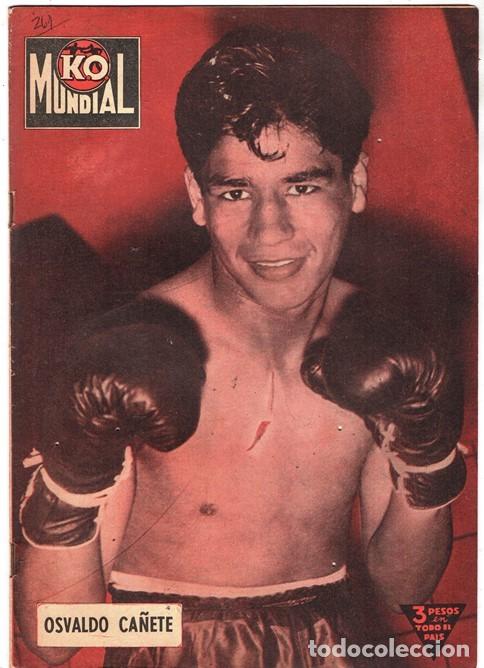
They, the ones who pinned me down, were raised in the Blair-era aesthetics of fitness: where the body is a sign, not a function. But when it comes to the real fight, this South American might be able to endure more, dodge better, move sharper. Because maybe —and I learned this the hard way— the axes of true gentlemanliness seem to be shifting from North to Global South. Maybe the mix of blood, stories, and wounds has made us stronger. But institutional racism doesn’t evolve: it loops. And it always makes the same fatal mistake — to underestimate the intelligence of those it tries to subjugate.
In any foreign country, the key evidence has already vanished. And yet, from that abandonment, another map can be drawn: a foreignness that neither victimises itself nor integrates. An uneasy community of what doesn’t fit and refuses to.
Tweet
Perhaps foreignness is not a punishment but a portal
A possibility of radical de-identification. A habitable form of negativity. Not to romanticise exclusion, but to imagine from that space a kind of community that does not stem from the national body —a body which, at least in its diplomatic version, has long ceased to fulfil its most basic function. How else to explain that the list of solicitors —a legal obligation of the consulate— arrived a year and a half after the incident? At that point, in any foreign country, the key evidence has already vanished. And yet, from that abandonment, another map can be drawn: a foreignness that neither victimises itself nor integrates. An uneasy community of what doesn’t fit and refuses to.
If one can be a foreigner within oneself, why wouldn’t one be so among the concert of nations, now that nations themselves no longer know what they’re for? That which Aimé Césaire called “a non-imperial universal.
Tweet
If one can be a foreigner within oneself, why wouldn’t one be so among the concert of nations, now that nations themselves no longer know what they’re for? That which Aimé Césaire called “a non-imperial universal.” That which Pedro Lemebel wove from feathers and scars. That which looks more like a tremor than a flag. What surfaces at the margins of language and diagnosis. What has no law, but holds memory. What cannot be captured or translated without being betrayed.
Perhaps foreignness is not a punishment but a portal — a possibility of radical de-identification. A habitable form of negativity
Tweet
Ghost in the Machine
What I’ve learned over these years is that there is no possible defence within the system that accuses you. Criminal law, like forensic psychiatry, is designed to turn symptoms into crimes — because (apparent) weakness, in an insecure and declining metropolis, is always perceived as a threat. Foreignness becomes a crime the moment it becomes visible as a self-possessed “I.” And this —strangely— is something I’ve come to enjoy, perhaps because I was born for it.
The self and the body may no longer be the place where resistance should take root. Perhaps the only remaining space for what we still call freedom lies in this very text: floating in virtual space, untethered — even, perhaps, from my own death.


 Loveartnotpeople.blog
Deja una respuesta