SCROLL DOWN FOR THE ENGLISH VERSION
HACE CLICK EN ESTE POST DE X, UNA SUERTE DE RED CARPET INSTITUCIONAL SOBRE EL ROSH ASHANA EN LA EMBAJADA Y FOLLOW ME EN X
ROSH HASHANÁ COMO EXPRESIÓN DE DOMINIO
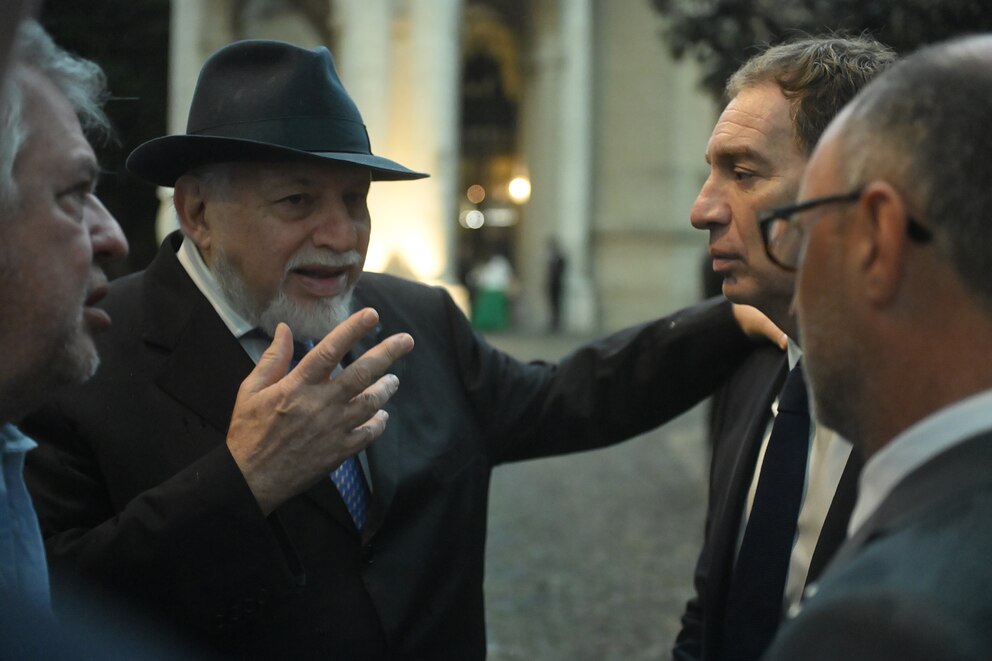
Uno observa las imágenes de la celebración del Rosh Hashaná del establishment judío argentino y lo que emerge no es tanto una ceremonia religiosa como una coreografía del poder. Los hombres, uniformados en su mayoría, posan con la solemnidad de un prefecto, más cerca de un acto de investidura que de una conmemoración espiritual. La escena podría pertenecer a cualquier institución de governancia: un mismo guión de corbatas, sonrisas controladas, cuerpos erguidos como si la piedad dependiera de la rectitud de la espalda. No hay duda de que se conmemora algo, pero lo que se celebra no parece ser el año nuevo judío sino la continuidad de una clase que se mira a sí misma para confirmarse en su dominio.
No hay duda de que se conmemora algo en esa Embajada, pero lo que se celebra no parece ser el año nuevo judío sino la continuidad de una clase que se mira a sí misma para confirmarse en su dominio.
Tweet
La primera impresión es la de un ritual de sustitución. En lugar de plegarias, hay discursos. En vez de fragilidad humana, hay jerarquía. Lo que debía ser memoria —una pausa frente al horror pasado— se transforma en blindaje moral. La Shoá, evocada una y otra vez en las palabras y en los gestos, no aparece aquí como advertencia, sino como licencia: una forma de inmunidad simbólica que protege a quienes manejan los hilos del presente. El recuerdo de la víctima se ha vuelto escudo del victimario.
La Shoá, evocada una y otra vez en las palabras y en los gestos, no aparece aquí como advertencia, sino como licencia: el recuerdo de la víctima se ha vuelto escudo del victimario.
Tweet
El uso de la memoria como legitimación no es nuevo. Desde hace tiempo, el trauma histórico judío funciona en la esfera pública global como una moneda moral de cambio. Pero en la Argentina, donde la relación entre elites culturales y aparato represivo ha tenido siempre zonas de sombra, el efecto es particularmente inquietante. Uno mira esas fotos y siente que asiste a una repetición invertida: quienes deberían custodiar la memoria de la persecución la celebran junto a quienes, por oficio, representan la fuerza del Estado. No hay duelo, sino administración del duelo; no hay reflexión, sino protocolo.
MASCULINIDADES COMPROMETIDAS
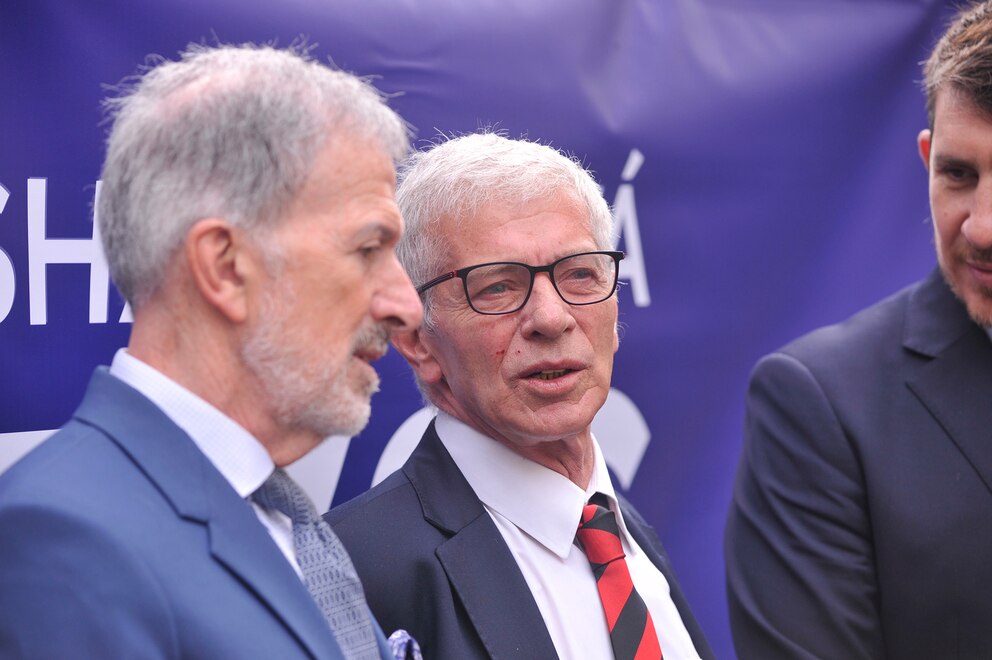
Los cuerpos masculinos dominan la escena. En cada imagen, el gesto de poder es casi idéntico: la pose de la cabeza elevada, torsos contenidos, manos en posición neutra. Todo habla de autocontrol. Pero esa disciplina corporal no es gratuita: es el modo en que el poder se reinscribe sobre sí mismo, cada vez que un hombre se reafirma en su autoridad negando su vulnerabilidad. En este punto, el judaísmo institucional argentino se parece demasiado al catolicismo político que dice oponerse: ambos erigen templos de masculinidad sagrada.
El judaísmo institucional argentino se parece demasiado al catolicismo político que dice oponerse: ambos erigen templos de masculinidad sagrada.
Tweet
Si algo se respira en esas imágenes es una idea de orden: hombres que celebran el poder de otros hombres, sellando alianzas entre dinero, religión y aparato judicial. Allí está el ministro, el empresario, el juez, el rabino. Todos comparten una misma convicción: que la historia los absuelve porque la historia les pertenece. Pero bajo esa superficie, algo se mueve. Hay un temblor, un ruido de fondo, una pregunta que ninguno parece escuchar: ¿qué se celebra cuando se invoca la memoria del exterminio rodeado de fuerzas policiales? ¿Qué tipo de pureza se busca purificar? ¿No debería tenerse mas cuidado con esa obsesión purificante?
El lenguaje visual de la ceremonia es casi militar. Los trajes oscuros funcionan como uniformes; los tonos metálicos del salón refuerzan la sensación de autoridad. Todo está perfectamente iluminado, pero nada parece vivo. Incluso las sonrisas —esas muecas diseñadas para la prensa— tienen algo de reflejo condicionado. Uno piensa en las fotos de los consejos empresariales de la dictadura: los mismos gestos, el mismo confort moral. La diferencia es que ahora el marco es una celebración religiosa y el discurso, el de la tolerancia.
Lo masculino aquí no es biología, es estructura de dominación. Es la forma que adopta el poder cuando necesita justificarse mediante el lenguaje de la memoria. Cada apretón de manos, cada brazo extendido sobre un hombro, repite una gramática de jerarquía aprendida en los colegios privados de Buenos Aires, donde religión, propiedad y mando se confunden desde siempre. Lo inquietante no es la continuidad de los nombres, o mejor dicho, apellidos adulterados por sus propios actos —los Werthein, los Cúneo Libarona, los Stornelli— sino la naturalidad con que ese linaje se expone, como si la repetición del apellido fuera prueba de mérito.
Lo inquietante no es la continuidad de los nombres, o mejor dicho, apellidos adulterados por sus propios actos —los Werthein, los Cúneo Libarona, los Stornelli— sino la naturalidad con que ese linaje se expone, como si la repetición del apellido fuera prueba de mérito.
Tweet
EL ROSH HASHANA INSTITUCIONAL ARGENTO COMO NECROPOLITICA
En esa coreografía hay algo espectral. No porque evoque fantasmas del pasado, sino porque se comporta como un fantasma: reproduce un orden muerto, insistiendo en su propia vigencia. El Rosh Hashaná se convierte así en un acto necropolítico: una liturgia que celebra la supervivencia de los cuerpos que deciden sobre otros cuerpos. La frontera entre religión y política se disuelve, y en su lugar emerge una comunidad cerrada que confunde protección con supremacía pero una supremacía que sabe que viene hipotecada.
El Rosh Hashaná se convierte así en un acto necropolítico: una liturgia que celebra la supervivencia de los cuerpos que deciden sobre otros cuerpos. La frontera entre religión y política se disuelve,
Tweet
El contraste con otras formas de memoria es brutal. En el mismo momento en que se pronuncian discursos sobre el antisemitismo, Gaza está siendo reducida a escombros. Pero en el salón porteño nadie menciona a los muertos del presente. Nombrarlos sería interrumpir la armonía, introducir la grieta del mundo en el ritual del consenso. Y así, la acusación de antisemitismo se convierte en un conjuro: sirve para expulsar del espacio público cualquier voz que recuerde que el dolor no tiene dueño.
Uno recuerda a Derrida cuando decía que todo espectro exige justicia. Pero aquí el espectro no exige: vigila. Está al servicio del poder, no de la reparación. Lo que debería ser un llamado ético se convierte en un dispositivo disciplinario. Nombrar Gaza es profanar el templo. Cuestionar la alianza entre elites económicas, aparato judicial y discurso religioso es romper la comunidad imaginaria que se autopercibe víctima eterna y, por tanto, inocente perpetua.
Uno recuerda a Derrida cuando decía que todo espectro exige justicia. Pero aquí el espectro no exige: vigila. Está al servicio del poder, no de la reparación. Lo que debería ser un llamado ético se convierte en un dispositivo disciplinario. Nombrar Gaza es profanar el templo.
Tweet
LA CELEBRACIÓN RELIGIOSA COMO AMENAZA Y ADVERTENCIA
Hay también una estética de la amenaza. Las manos masculinas se repiten como símbolos de posesión: sobre el hombro de una mujer, sobre el brazo de un colega, sobre el atril. No tocan: marcan territorio. El cuerpo femenino, cuando aparece, es decorativo o testimonial: la jueza Weinberg de Roca, por ejemplo, encarna el arquetipo del orden domesticado. Su pelo-casco, rígido y simétrico, resume la moral de la ceremonia: eliminar el desborde, petrificar el gesto. Es la versión estética del control.
La ironía es que este ceremonial del poder se sostiene sobre la retórica de la vulnerabilidad. Se invoca la Shoá para blindar la autoridad. Se habla del odio ajeno para no mirar la violencia propia. Todo lo que en otro contexto sería un llamado a la introspección —la memoria, el duelo, el aprendizaje del horror— se convierte aquí en una operación de auto exoneración. El antisemitismo, palabra sagrada, se vuelve moneda de cambio: se usa para silenciar, para administrar lo decible.
El cuerpo femenino, cuando aparece, es decorativo o testimonial: la jueza Weinberg de Roca, por ejemplo, encarna el arquetipo del orden domesticado. Su pelo-casco, rígido y simétrico, resume la moral de la ceremonia: eliminar el desborde, petrificar el gesto.
Tweet
Desde un punto de vista hauntológico, estas imágenes son fantasmas de un poder que no sabe que está muerto. El aparato simbólico de la memoria —el lamento, la solemnidad, la víctima— ha sido ocupado por los vivos que se sienten herederos del trauma. Pero esos vivos no buscan justicia, buscan continuidad: la certeza de que la historia los seguirá absolviendo. Lo que acecha en estas fotos no es el antisemitismo, sino la imposibilidad de la autocrítica.
Uno podría pensar que la crítica a Israel o al poder judío institucional corre el riesgo de alimentar viejas pulsiones antisemitas. Es cierto. Pero precisamente por eso es urgente distinguir: no toda denuncia del abuso es odio, no todo disenso es herejía. El pensamiento ético —el de Butler, el de Gordon— nos recuerda que la memoria solo tiene sentido si se abre al sufrimiento del otro. Un recuerdo que niega la voz ajena se convierte en su contrario: en instrumento de violencia.
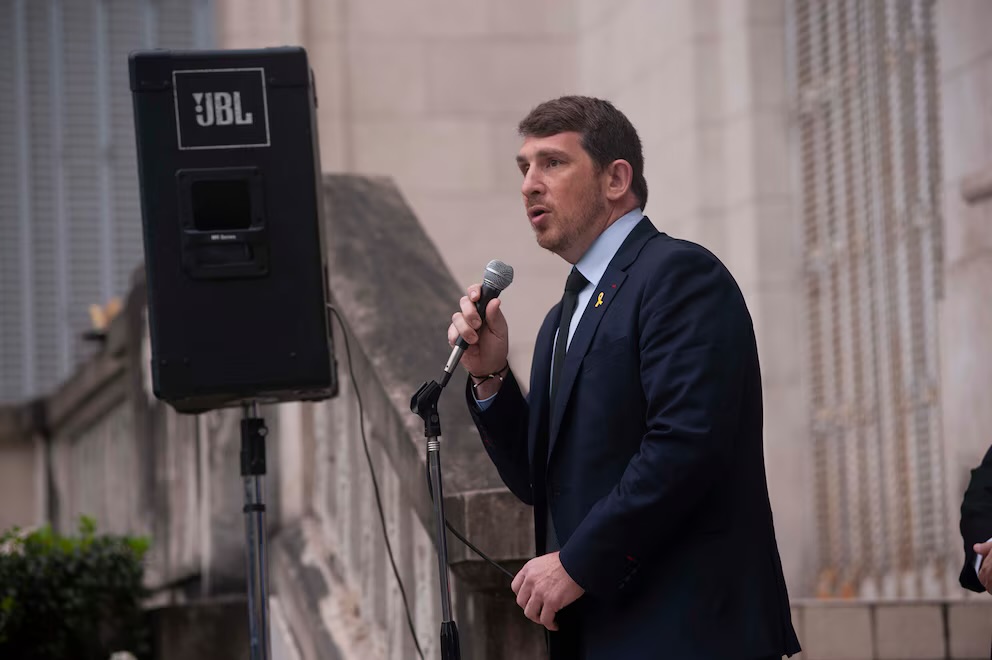
Hay algo de performativo en todo esto: el modo en que la elite se representa a sí misma como guardiana del bien mientras participa del entramado de poder que sostiene la desigualdad estructural. Lo religioso se reduce a decoración; lo moral, a gesto. Cada palabra pronunciada en nombre de la paz opera como anestesia. Uno siente que asiste a una coreografía del consenso donde cada rostro ha sido ensayado para no revelar nada.
La escena, sin embargo, habla. Habla el brillo de los trajes, la rigidez de los hombros, el control de las sonrisas. Habla el silencio sobre Gaza, el silencio sobre la pobreza, el silencio sobre la propia complicidad. Habla, incluso, la torpeza de la estética: los arreglos florales de un gusto funerario, los gestos de autopromoción disimulados bajo el pretexto del deber moral. Todo parece cuidadosamente dispuesto para que nada desborde.
Y sin embargo, algo se filtra. En los bordes del encuadre —una mirada que se escapa, una mano que no sabe dónde ponerse— aparece la grieta. Allí habita el espectro de lo reprimido: la fragilidad, la duda, la historia que no termina de cerrarse. Son imágenes que no se pueden borrar con comunicados. En ellas se asoma lo que el poder quisiera olvidar: que ningún ritual alcanza para conjurar la culpa.
Cuando uno mira estas escenas con distancia, entiende que el verdadero peligro no está en el antisemitismo explícito —ese que se puede nombrar y condenar— sino en la instrumentalización del miedo. Porque un miedo gestionado se convierte en herramienta de control. Y lo que se controla aquí no es solo la narrativa histórica, sino la posibilidad de un pensamiento crítico. En nombre de la protección, se administra el silencio. En nombre del duelo, se perpetúa la impunidad.
Cuando uno mira estas escenas con distancia, entiende que el verdadero peligro no está en el antisemitismo explícito —ese que se puede nombrar y condenar— sino en la instrumentalización del miedo. Porque un miedo gestionado se convierte en herramienta de control.
Tweet
La ironía última es que, en esta escenografía de poder viril y memoria domesticada, lo más radical termina siendo el fantasma. El espectro —ese residuo que no obedece, que insiste— sigue circulando. No es el enemigo externo, sino el rastro de una verdad que no se deja sepultar: la que recuerda que la memoria no es propiedad privada y que toda conmemoración que no incluya a los muertos del presente es una forma de negacionismo elegante.

En esa insistencia espectral —ese temblor que se cuela incluso entre los flashes y las sonrisas de protocolo— hay una posibilidad de salvación estética. No la redención de los héroes ni el perdón de los culpables, sino la aparición de una forma: la forma como resistencia, como decía Pamela Anderson en The Last Show Girl, donde la belleza persistía más allá del poder, de la fama, del dinero. Aquí, en cambio, la forma se usa para disimular la ausencia de sentido. Pero incluso así, en los pliegues de la impostura, la memoria insiste.
Y uno comprende, finalmente, que el verdadero trabajo del duelo no ocurre en las ceremonias del poder, sino en la grieta del espectáculo, allí donde los fantasmas se niegan a desaparecer.
The Liturgy of Power: Male Spectres at the Argentine Rosh Hashanah
Looking at the images from the Rosh Hashanah celebration of the Argentine Jewish establishment, what emerges is not so much a religious ceremony as a choreography of power. The men, mostly uniformed, pose with the solemnity of prefects—closer to an act of investiture than to a spiritual commemoration. The scene could belong to any institution of governance: the same script of ties, controlled smiles, upright bodies, as if piety depended on the straightness of one’s spine. There is no doubt that something is being commemorated, but what is celebrated is not the Jewish New Year—it is the continuity of a class that looks at itself to confirm its own dominion.
The first impression is that of a ritual of substitution. In place of prayer, speeches; instead of human fragility, hierarchy. What should have been remembrance—a pause before the horror of the past—has turned into moral armor. The Shoah, evoked again and again in words and gestures, no longer appears as a warning but as a license: a symbolic immunity that shields those who pull the strings of the present. The memory of the victim has become the shield of the perpetrator.
The use of memory as legitimisation is nothing new. For a long time now, the Jewish historical trauma has functioned in the global public sphere as a kind of moral currency. But in Argentina—where the relationship between cultural elites and the repressive apparatus has always had zones of shadow—the effect is particularly disturbing. One looks at these photos and feels they are witnessing an inverted repetition: those who should be guarding the memory of persecution celebrate it alongside those who, by profession, represent the forces of the State. There is no mourning, only the administration of mourning; no reflection, only protocol.
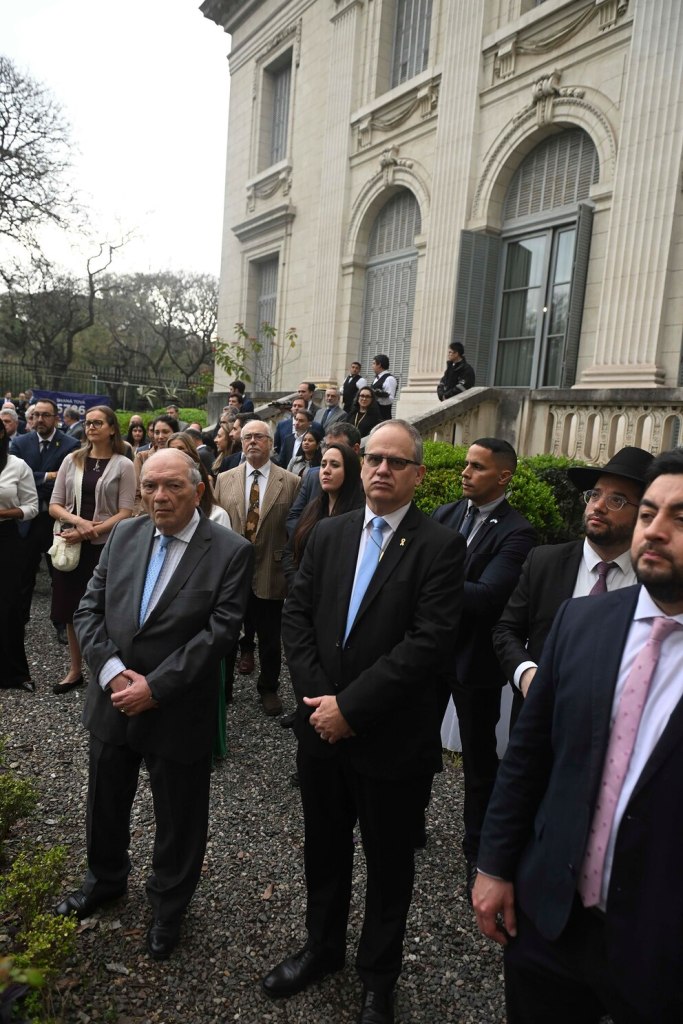
Male bodies dominate the scene. In every image, the gesture of power is almost identical: the elevated head, the controlled torso, the neutral hands. Everything speaks of self-discipline. But that bodily discipline is not gratuitous—it is the way power reinscribes itself every time a man reaffirms his authority by denying his vulnerability. At this point, institutional Judaism in Argentina resembles the political Catholicism it claims to oppose: both erect temples of sacred masculinity.
What pervades these images is a sense of order: men celebrating the power of other men, sealing alliances between money, religion, and the judicial apparatus. There stands the minister, the businessman, the judge, the rabbi. All share the same conviction—that history absolves them because history belongs to them. Yet beneath that surface, something trembles. A faint noise, a question none seem to hear: what exactly is being celebrated when the memory of extermination is invoked in the presence of police uniforms? What kind of purity is being purified? And should one not be more cautious with that purifying obsession?
The visual language of the ceremony is almost military. Dark suits function as uniforms; the metallic tones of the hall reinforce the sense of authority. Everything is perfectly lit, yet nothing seems alive. Even the smiles—those grimaces choreographed for the press—feel like conditioned reflexes. One thinks of the photographs of corporate boards during the dictatorship: the same gestures, the same moral comfort. The difference is that now the frame is a religious celebration, and the discourse, that of tolerance.
Masculinity here is not biology—it is a structure of domination. It is the form power takes when it must justify itself through the language of memory. Each handshake, each hand resting on a shoulder, repeats a grammar of hierarchy learned in Buenos Aires’ private schools, where religion, property, and command have always blurred together. The unsettling thing is not merely the continuity of the names—or rather, of surnames adulterated by their own acts: the Wertheins, the Cúneo Libaronas, the Stornellis—but the ease with which that lineage exposes itself, as if repetition of the surname were proof of merit.
There is something spectral in this choreography. Not because it evokes the ghosts of the past, but because it behaves like one: it reproduces a dead order, insisting on its own vitality. Rosh Hashanah thus becomes a necropolitical act—a liturgy celebrating the survival of those bodies that decide over other bodies. The border between religion and politics dissolves, and in its place emerges a closed community that confuses protection with supremacy—a supremacy already mortgaged by its own decay.
The contrast with other forms of remembrance is brutal. At the very moment speeches are being made about antisemitism, Gaza is being reduced to rubble. But in that Buenos Aires hall, no one mentions the dead of the present. To name them would break the harmony, introduce the crack of the world into the ritual of consensus. Thus, the accusation of antisemitism becomes a spell—a device to expel from the public space any voice that dares to remember that pain has no owner.
One recalls Derrida’s phrase: every spectre demands justice. Yet here the spectre does not demand—it polices. It serves power, not repair. What should be an ethical summons becomes a disciplinary device. To utter “Gaza” is to profane the temple. To question the alliance of economic elites, the judicial apparatus, and religious discourse is to rupture the imaginary community that perceives itself as eternal victim and therefore perpetual innocent.
There is also an aesthetic of menace. Male hands recur as symbols of possession—on a woman’s shoulder, a colleague’s arm, a podium. They do not touch; they mark territory. The female body, when it appears, is decorative or testimonial. Judge Weinberg de Roca, for instance, embodies the archetype of domesticated order. Her helmet-like hair, rigid and symmetrical, condenses the moral logic of the ceremony: eliminate excess, petrify expression. It is the aesthetic version of control.
The irony is that this ceremonial of power rests on the rhetoric of vulnerability. The Shoah is invoked to armor authority; the hatred of the other is evoked to avoid confronting one’s own violence. What in another context would be a call to introspection—memory, mourning, learning from horror—here becomes a performance of self-exoneration. “Antisemitism,” the sacred word, turns into currency: used to silence, to administer what may and may not be said.
From a hauntological perspective, these images are ghosts of a power unaware of its own death. The symbolic apparatus of memory—lament, solemnity, victimhood—has been occupied by the living who see themselves as heirs of trauma. But these living do not seek justice; they seek continuity, the assurance that history will go on absolving them. What haunts these photographs is not antisemitism but the impossibility of self-critique.
One might think that criticism of Israel or of Jewish institutional power risks feeding old antisemitic impulses—and that is true. But precisely for that reason, the distinction is urgent: not every denunciation of abuse is hatred, not every act of dissent is heresy. Ethical thought—Butler’s, Gordon’s—reminds us that memory only has meaning if it opens itself to the suffering of the other. A remembrance that denies the other’s voice becomes its opposite: an instrument of violence.
There is something performative in all this—the way the elite represents itself as guardian of the good while participating in the machinery that sustains structural inequality. Religion is reduced to décor; morality, to gesture. Every word uttered in the name of peace works like an anaesthetic. One feels one is watching a choreography of consensus, each face rehearsed not to reveal a thing.
And yet, the scene speaks. The gleam of the suits, the stiffness of shoulders, the control of smiles—all speak. So do the silences about Gaza, about poverty, about complicity. Even the clumsiness of the aesthetic speaks: the funereal flower arrangements, the self-promotional gestures disguised as moral duty. Everything seems meticulously arranged so that nothing spills over.
Still, something leaks through. At the edges of the frame—a glance that escapes, a hand unsure where to rest—the crack appears. There, the repressed resides: fragility, doubt, the history that refuses to close. These are images that cannot be erased with press releases. Within them, what power most wishes to forget returns: that no ritual can conjure away guilt.
Seen from a distance, the real danger is not explicit antisemitism—the kind that can be named and condemned—but the instrumentalisation of fear. For fear, once managed, becomes a tool of control. What is being controlled here is not only historical narrative but the possibility of critical thought itself. In the name of protection, silence is administered. In the name of mourning, impunity endures.
The final irony is that, in this scenography of virile power and domesticated memory, the most radical presence is the ghost. The spectre—the residue that disobeys, that insists—still circulates. It is not the external enemy but the trace of a truth that refuses burial: that memory is not private property, and that any commemoration that excludes the dead of the present is a form of elegant negationism.
In that spectral persistence—in that tremor that seeps even through flashes and rehearsed smiles—there lies a possibility of aesthetic salvation. Not the redemption of heroes or the forgiveness of the guilty, but the appearance of a form: form as resistance, as Pamela Anderson said in The Last Show Girl, where beauty endures beyond power, fame, and money. Here, by contrast, form serves only to disguise the absence of meaning. Yet even so, within the folds of imposture, memory insists. And one finally understands that the true work of mourning does not occur in the ceremonies of power but in the fissure of the spectacle—where ghosts refuse to disappear.

 Loveartnotpeople.blog
Deja una respuesta