
Anda al final para la versión en Español
Britain does not hide its crises behind soap operas; it processes its crises as soap operas. This is not propaganda but a cultural reflex: a way of refusing to confront structural rot by transforming everything into saints, villains, redemption arcs and family melodrama. Politics becomes narrative. Narrative becomes anaesthetic. And an entire society avoids seeing itself. Meghan Markle, Prince Andrew, Boris Johnson, Harry, Sarah Ferguson — morally incomparable figures who nonetheless serve the same cultural purpose. They let the public turn systemic decay into emotional weather. When everything becomes a storyline, nothing remains system.
Meghan Markle, Prince Andrew, Boris Johnson, Harry, Sarah Ferguson — morally incomparable figures who nonetheless serve the same cultural purpose. They let the public turn systemic decay into emotional weather. When everything becomes a storyline, nothing remains system.
Tweet

Archetypes in a Nation That Cannot Look at Power
Britain reads power through characters, not institutions. Meghan becomes the disruptive outsider; Andrew, the disgraced uncle; Harry, the wounded rebel; Boris, the loveable rogue whose failures are forgiven as personality quirks; and Ferguson, the perpetual court jester whose chaos is tolerated until it threatens the institution.
This preference for narrative over structure allows the public to debate whether Meghan “broke” the family instead of asking what the family is: a state-funded political institution entangled with global capital and increasingly porous to foreign money. It allows Andrew’s downfall to be framed as personal rather than systemic. And it allowed the country to laugh at Boris Johnson’s parties instead of confronting the parliamentary finding that governance failures contributed to tens of thousands of preventable COVID deaths. Britain is not distracting itself — it is protecting itself from knowing.

The Porous Elite: When Aristocracy Needs Cash
The deeper story is the financial and moral porosity of the British elite over the last two decades. When a hereditary aristocracy becomes financially fragile, it becomes permeable. And when London’s status as global financial centre hinges on attracting liquidity at all costs, the doors open to opaque capital. This is not speculation — it is documented. A 2023 UK Parliament report states that “a significant proportion of illicit Russian finance has flowed through the UK economy.” (House of Commons Foreign Affairs Committee, 2023.). Transparency International UK reports that £6.7 billion in suspect wealth is tied to UK property, much of it via offshore structures (Transparency International UK, 2022.) LBC’s investigative report details how Russian money was deliberately courted through investor visas and private clubs (LBC News Investigation, 2024.)
When a hereditary aristocracy becomes financially fragile, it becomes permeable. And when London’s status as global financial centre hinges on attracting liquidity at all costs, the doors open to opaque capital.
Tweet
This strategy had social consequences: London became so gentrified it turned nearly uninhabitable; property inflation created a fantasy of national wealth; an entire generation was pushed out of the housing market; and a country that welcomes the oligarch investing in Knightsbridge despises the immigrant who cleans the office or criminalises de asylum seeker. This is the long-term bargain that made Britain porous — not just economically, but morally.
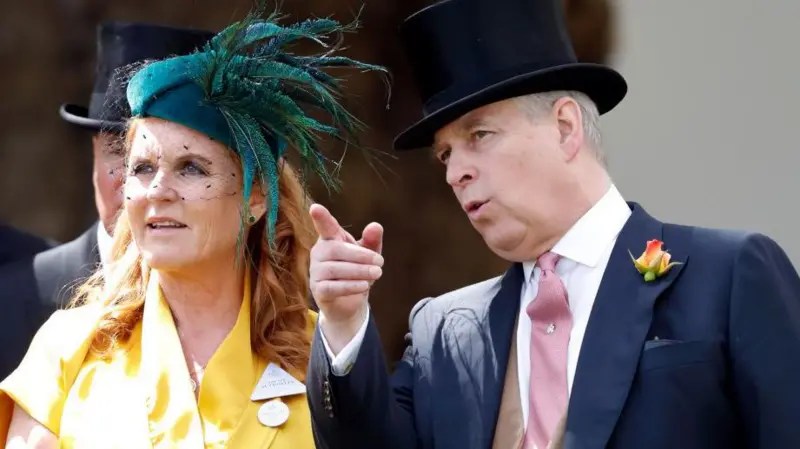
Sarah Ferguson and the Ecosystem of Access
Sarah Ferguson is not a comic side-character in the royal saga; she is a case study in what happens when aristocratic privilege loses its financial base. Once stripped of steady protection, real estate, and institutional backing, she became what many in the collapsing British aristocracy become: porous, dependent on access, proximity, and the informal economy of high society. She is not unique — she is representative.
I witnessed that ecosystem first-hand. A Russian acquaintance I met at Annabel’s invited me to dinner at Elton John’s home. That evening, I was introduced to Ferguson. The moment she learned of my connection to John Mack — at the time one of the most powerful figures in global finance as CEO of Morgan Stanley — the dynamic shifted. Proximity, not status, became the currency. That is how I ended up at Buckingham Palace twice: not because I belonged to that world, but because in a decaying aristocracy, access has more value than lineage.
A Russian acquaintance I met at Annabel’s invited me to dinner at Elton John’s home. That evening, I was introduced to Ferguson. The moment she learned of my connection to John Mack — at the time one of the most powerful figures in global finance as CEO of Morgan Stanley — the dynamic shifted. Proximity, not status, became the currency. That is how I ended up at Buckingham Palace twice.
Tweet
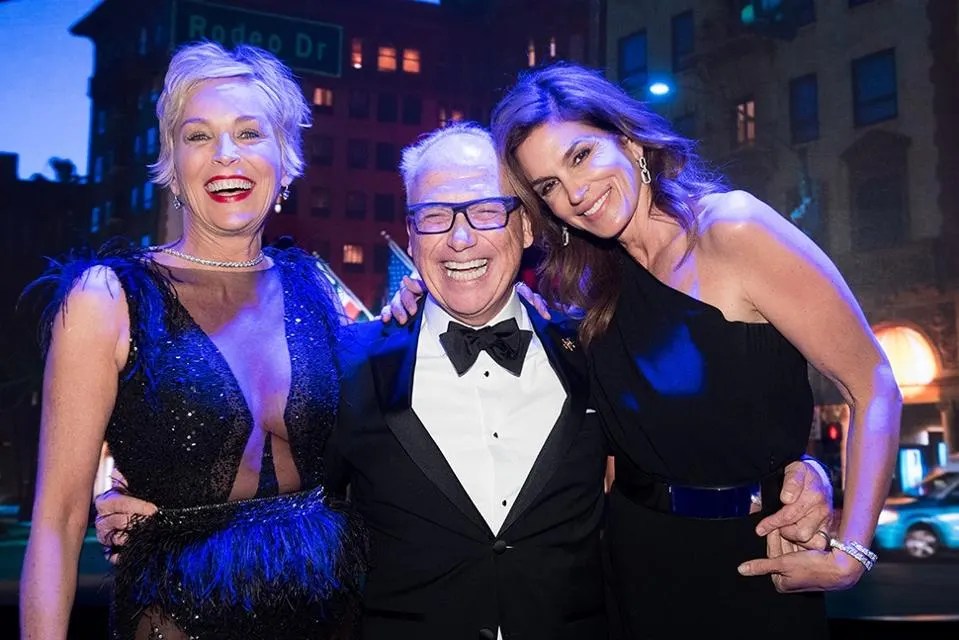
Ferguson moved in circles that were themselves transnational: financiers around Mack, luxury-industry executives like Jerry Inzerillo (now CEO of the Diriyah Gate Development Authority in Saudi Arabia, a flagship mega-project of Mohammed bin Salman’s Vision 2030), and media-political figures like Dr. Mehmet Oz, with whom I travelled as part of a group to the Galápagos and later Egypt. Inzerillo now sits at the intersection of Gulf soft power, global real-estate capital and state-driven cultural diplomacy — his presence at international summits reflects how finance, hospitality and geopolitical strategy blend seamlessly.
Dr. Oz, once a television doctor, then a Trump-endorsed Senate candidate, is today the Administrator of the Centers for Medicare & Medicaid Services (CMS) in the Trump administration — a cabinet-level health authority overseeing coverage for more than 150 million Americans since April 2025. His trajectory — from celebrity doctor to political actor shaping federal health systems — is emblematic of how these networks migrate across countries, industries and institutions without friction.
When you see these figures together — a Saudi mega-project executive, a U.S. federal health administrator, a disgraced royal, a Wall Street titan — the point is not scandal; it is structure. These aren’t social coincidences. They are the architecture of a global elite in which influence is traded laterally, across borders and platforms, with almost no institutional oversight. The British aristocracy, financially weakened and desperate for liquidity, increasingly became a participant in — and a beneficiary of — this ecosystem of circulating privilege.
When you see these figures together — a Saudi mega-project executive, a U.S. federal health administrator, a disgraced royal, a Wall Street titan — the point is not scandal; it is structure. These aren’t social coincidences. They are the architecture of a global elite in which influence is traded laterally, across borders and platforms, with almost no institutional oversight.
Tweet

Ferguson’s forthcoming book therefore matters. Not because of gossip, but because she has lived inside the pre-Epstein machinery — the social conduits, private clubs, and mutually beneficial networks that linked aristocracy, wealth, celebrity and power long before the public understood Epstein as a political and intelligence actor. She knows the brokers, the facilitators, the gatekeepers, the introducers. And she no longer has anything to lose.
Meghan Markle’s friendship with Markus Anderson — a powerful consultant at Soho House described by Town & Country as “the man who knows everyone” — raises structural questions about how palace access increasingly flowed through private clubs rather than public duties. Vanity Fair reported that Meghan and Harry’s first date happened at Soho House (July 2016), and Yahoo Entertainment confirmed that Markle was even considered for a Soho House ambassador role. Anderson, who helped launch global branches of the club, has been profiled as a connector who integrates “creatives, financiers and influencers” into elite circuits. The issue here is not moral. It is institutional. Why is a private club — a commercial brand — acting as a soft-power broker to the monarchy? Why is access to the Crown mediated not by constitutional norms but by a globalised lifestyle network designed to monetize exclusivity? And what does it mean that the monarchy — an institution whose legitimacy depends on public trust — has been increasingly pulled into the gravitational field of opaque capital, PR networks, and transnational influence circuits?
Markle’s friendship with Markus Anderson — a powerful consultant at Soho House described by Town & Country as “the man who knows everyone” — raises structural questions about how palace access increasingly flowed through private clubs rather than public duties. Vanity Fair reported that Meghan and Harry’s first date happened at Soho House in 2016.
Tweet
Ferguson’s story is not an anecdote; it is a blueprint. The monarchy’s declining financial security did not simply make it vulnerable — it made it absorptive. It opened the gates to financiers, global influencers, wealthy foreigners, and private clubs, weaving the institution into a transnational network that is neither accountable nor transparent. And now, one of the people who saw that ecosystem from the inside — who relied on it, travelled through it, and benefited from it — is preparing to speak.

Meghan Markle, Soho House, and the Machinery of Access
Meghan Markle’s entry into the royal world did not occur in a vacuum. It followed paths that are documented, not imagined, and these paths reveal how access to the British monarchy increasingly flows through private networks rather than public institutions. Markus Anderson was first row in her wedding at Saint George’s Chapel. This was not mere friendship — it was a gateway into a globalised access machine.
Meghan Markle’s entry into the royal world did not occur in a vacuum. It followed paths that are documented, not imagined, and these paths reveal how access to the British monarchy increasingly flows through private networks rather than public institutions. Anderson was first row in her wedding at Saint George’s Chapel. This was not mere friendship — it was a gateway into a globalised access machine.
Tweet
None of this implies wrongdoing on Meghan’s part. It is not her morality that is under examination but the system that enveloped her. The real question is structural: why has a private hospitality brand become a soft-power broker for the British aristocracy? Why are cultural intermediaries — rather than constitutional mechanisms — facilitating entry into the royal ecosystem? And what does it mean that the monarchy, already financially porous and desperate for relevance, has outsourced part of its legitimacy to a club that monetises exclusivity and curates elite belonging as a commercial product?
Seen in this light, Meghan’s insertion into royal life becomes a mirror of a broader shift: the monarchy increasingly entangled with networks designed not for governance, but for influence-trading. The story is not one of scandal; it is one of sociology, economics and the quiet restructuring of institutional power. It shows how, long before the public sees anything, the circulatory system of soft power has already determined who gets access, who is validated, and who is absorbed into the symbolic body of the Crown.
Seen in this light, Meghan’s insertion into royal life becomes a mirror of a broader shift: the monarchy increasingly entangled with networks designed not for governance, but for influence-trading. The story is not one of scandal; it is one of sociology, economics and the quiet restructuring of institutional power.
Tweet

The Geopolitical Continuum: From Andrew to Trump
These dynamics do not stop at British borders; they are part of a larger geopolitical continuum in which networks of access, privilege and leverage operate across the United States, the United Kingdom and beyond. Epstein’s world made this visible. What is documented is not a conspiracy but a pattern: he cultivated connections with Western elites, financiers, political figures and intelligence-adjacent actors on both sides of the Atlantic. His importance lay not only in the crimes he committed but in the architecture of proximity he engineered. He built bridges that others walked across and he could blackmail.
Within this continuum, Donald Trump’s consistent refusal to criticise Vladimir Putin — even when confronted with the unanimous assessment of U.S. intelligence agencies — has been widely interpreted as transactional rather than ideological. It reflects a dynamic in which influence is negotiated privately before it appears publicly; in which coercive leverage circulates socially long before it becomes political; and in which kompromat functions not as a secret dossier but as a rumour-network, a shared understanding, a silent pact shaped by what each actor knows about the other.
Soft power always travels before hard power. It travels through clubs, dinners, invitations, intermediaries. It travels through the same circuits that move money, prestige, and access. Before it reaches Parliament or Congress, it has already passed through Soho House, Annabel’s, Palm Beach, Riyadh, Manhattan, Mayfair. Understanding this continuum is essential because it reveals that the British monarchy, the American presidency, the global financial class, and even intelligence ecosystems increasingly share the same bloodstream. The question is not whether Meghan or Andrew or Trump “belong” to this world, but how this world has learned to engineer belonging, to absorb, to reward, to protect — and to silence.
The question is not whether Meghan or Andrew or Trump “belong” to this world, but how this world has learned to engineer belonging, to absorb, to reward, to protect — and to silence.
Tweet
The Present: The Pattern Did Not End
While Britain anxiously dissects whether Meghan made Kate cry, the real story is unfolding far from Windsor, Kensington or Montecito. The theatrical obsession with royal emotions has become a national sedative, keeping the public mesmerised while events of geopolitical consequence occur off-screen. This month alone, the United Kingdom confronted several developments that would ordinarily command national attention—yet they barely penetrated the surface of public discourse.
While Britain anxiously dissects whether Meghan made Kate cry, the real story is unfolding far from Windsor. The theatrical obsession with royal emotions has become a national sedative, keeping the public mesmerised while events of geopolitical consequence occur off-screen. This week, the Russian vessel Yantar, long suspected by Western intelligence of mapping or tampering with undersea communication cables, entered UK waters and was shadowed by the Royal Navy.
Tweet
This week, Reuters reported that the Russian vessel Yantar, long suspected by Western intelligence of mapping or tampering with undersea communication cables, entered UK waters and was shadowed by the Royal Navy. These cables underpin everything from financial transactions to military coordination, and the UK vulnerability has been raised repeatedly. Sky News, in a 2022 investigation, described the UK’s undersea infrastructure as a strategic weak point, one Moscow has studied carefully. When a hostile state’s vessel approaches the nervous system of the nation, it is not a subplot; it is a warning.
Around the same time, a senior Welsh government official resigned after allegations of accepting bribes linked to Russian interests—another sign that influence operations are neither theoretical nor historical but ongoing. BBC Wales covered the resignation in detail, yet the story vanished almost instantly from broader public consciousness, drowned out by the soap-opera style reporting on royal family dynamics. These are not dramatic accents in an otherwise stable narrative. They are symptoms of a country whose political and diplomatic vulnerabilities have grown so severe that they can no longer be acknowledged without shattering the national self-image. And this is precisely the point: the national conversation remains stuck in the shallow waters of royal psychodrama while the deeper currents of geopolitical risk continue unexamined.
The Bureaucracy That Maintains the Fiction
British bureaucracy plays a central role in sustaining this carefully maintained blindness. It is not a neutral administrative layer but the unseen narrator of the national story, deciding which truths are amplified, which are softened, which become “too sensitive,” and which are reframed as minor administrative irregularities. It transforms structural corruption into “failures of process,” geopolitical infiltration into “areas of concern,” and institutional collapse into “lessons learned.”
This bureaucratic instinct—to sanitise, to fragment, to depoliticise—serves as the operating system of Britain’s political soap opera. By dispersing responsibility across committees, offices, agencies and regulators, it ensures that no event connects to any other, no scandal becomes systemic, and no failure becomes a crisis. The effect is not simply political denial; it is epistemological. It makes it nearly impossible for the public to see the architecture of power, influence and vulnerability that shapes their reality. Bureaucracy, in modern Britain, is not merely paperwork. It is a worldview. To resist this worldview is to refuse infantilisation. It means rejecting the reduction of politics to personality and insisting instead on institutional analysis. It requires reading scandals as symptoms of structural weaknesses rather than as emotional narratives about flawed or virtuous individuals. It demands seeing access networks, foreign interference, regulatory capture, and elite porosity as political realities—no matter how energetically the national story tries to repackage them as anecdotal or irrelevant. To refuse subhuman status is to insist on adulthood in a country that increasingly chooses fairy tales over facts. It is to insist that seeing clearly, even when painful, is preferable to being protected by illusions.
The British Mess
While the public debates whether Meghan is manipulator or victim, whether Andrew deserves exile, whether Boris was charmingly chaotic or catastrophically incompetent, the real story takes place elsewhere. The United Kingdom’s crisis is not emotional but structural: foreign money laundering through London’s institutions; Russian mapping of critical submarine infrastructure; a monarchy increasingly dependent on private networks and opaque intermediaries; and a political class that elevates spectacle over statecraft.
The soap opera does not conceal the crisis. It is the mechanism that makes the crisis invisible. And unless Britain liberates itself from its own narrative fantasies—unless it stops mistaking plotlines for politics and melodrama for governance—the next catastrophe will not only be predictable; it will be misread once again as just another episode.
Meghan, Andrew, Boris y la ceguera autoinducida de una telenovela política
El Reino Unido no oculta sus crisis detrás de telenovelas; procesa sus crisis como si fueran telenovelas. No es propaganda sino un reflejo cultural: una forma de negarse a enfrentar la podredumbre estructural transformando todo en santos, villanos, arcos de redención y melodrama familiar. La política se convierte en narrativa. La narrativa en anestesia. Y toda una sociedad evita verse a sí misma.
El Reino Unido procesa sus crisis como si fueran telenovelas. No es propaganda sino un reflejo cultural: una forma de negarse a enfrentar la podredumbre estructural transformando todo en santos, villanos, arcos de redención y melodrama familiar. La política se convierte en narrativa. La narrativa en anestesia. Y toda una sociedad evita verse.
Tweet
Meghan Markle, el príncipe Andrés, Boris Johnson, Harry, Sarah Ferguson: figuras moralmente inconmensurables que, sin embargo, cumplen la misma función cultural. Permiten que el público convierta la decadencia sistémica en clima emocional. Cuando todo se vuelve un relato, nada sigue siendo un sistema.
Arquetipos en una nación incapaz de mirar el poder
El Reino Unido lee el poder a través de personajes, no de instituciones. Meghan se convierte en la outsider disruptiva; Andrés, en el tío caído en desgracia; Harry, en el rebelde herido; Boris, en el pícaro encantador cuyas fallas se perdonan como rasgos de personalidad; y Ferguson, en la bufona cortesana cuya inestabilidad solo importa cuando amenaza a la institución.
Esta preferencia por la narrativa antes que por la estructura permite al público debatir si Meghan “rompió” a la familia real en vez de preguntar qué es la familia real: una institución política financiada por el Estado, entrelazada con el capital global y cada vez más porosa al dinero extranjero. Permite presentar la caída de Andrés como personal en lugar de sistémica. Y permitió al país reírse de las fiestas de Boris Johnson en vez de enfrentar el dictamen parlamentario de que los fallos de gobernanza contribuyeron a decenas de miles de muertes evitables durante el COVID. El Reino Unido no se distrae — se protege del conocimiento.
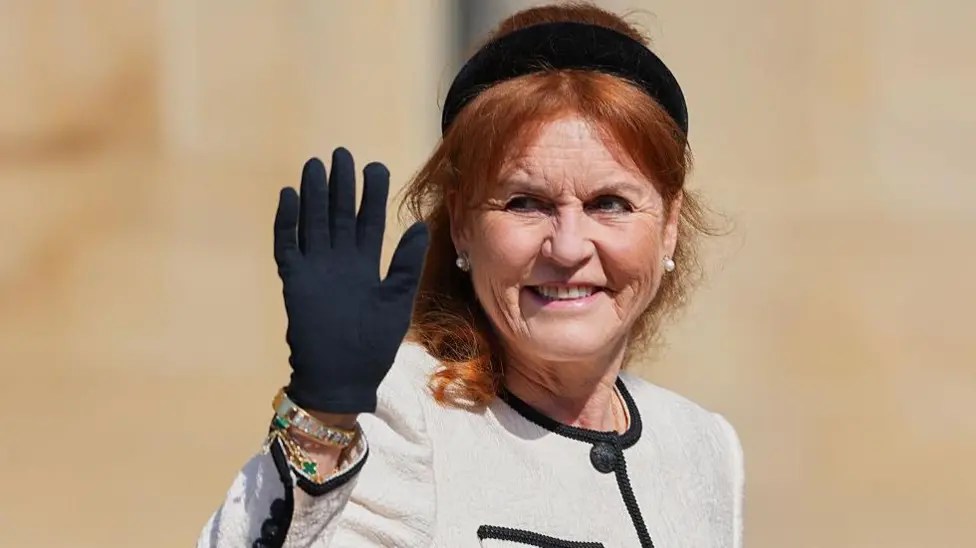
La élite porosa: cuando la aristocracia necesita dinero
La historia más profunda es la porosidad financiera y moral de la élite británica en las últimas dos décadas. Cuando una aristocracia hereditaria se vuelve financieramente frágil, se vuelve permeable. Y cuando el estatus de Londres como centro financiero global depende de atraer liquidez a cualquier costo, las puertas se abren al capital opaco.
Esto no es especulación: está documentado. Un informe del Parlamento británico (2023) afirma que “una proporción significativa de las finanzas ilícitas rusas ha fluido por la economía del Reino Unido”. Transparency International UK informó que 6.700 millones de libras en riqueza sospechosa están vinculadas a propiedades británicas, muchas a través de estructuras offshore. Y una investigación de LBC mostró cómo el Reino Unido cortejó deliberadamente dinero ruso mediante visas de inversionistas y clubes privados.
Las consecuencias sociales fueron claras: Londres gentrificada hasta volverse casi inhabitable; la inflación inmobiliaria creando una fantasía de riqueza nacional; toda una generación excluida del mercado de vivienda; y un país que abraza al oligarca que invierte en Knightsbridge mientras desprecia al inmigrante que limpia la oficina o criminaliza al solicitante de asilo. Este fue el pacto a largo plazo que volvió poroso al Reino Unido —económica y moralmente.
Sarah Ferguson y el ecosistema del acceso
Sarah Ferguson no es un personaje cómico en la saga real; es un caso ejemplar de lo que ocurre cuando el privilegio aristocrático pierde su base financiera. Sin protección estable, sin patrimonio, sin respaldo institucional, se convirtió en lo que muchos aristócratas británicos en caída libre se convierten hoy: porosa, dependiente del acceso, la proximidad y la economía informal de la alta sociedad. No es una anomalía — es representativa.
Ese ecosistema lo vi de primera mano. Un conocido ruso que había conocido en Annabel’s me invitó a cenar a la casa de Elton John. Allí conocí a Ferguson. En el momento en que supo de mi vínculo con John Mack —entonces uno de los hombres más poderosos de las finanzas globales como CEO de Morgan Stanley— la dinámica cambió. La proximidad, no el estatus, se volvió la moneda. Así terminé dos veces en el Buckingham Palace: no porque perteneciera a ese mundo, sino porque en una aristocracia en decadencia el acceso vale más que la genealogía.
Ferguson circulaba en redes transnacionales: financieros del círculo de Mack; ejecutivos del lujo como Jerry Inzerillo —hoy CEO de la Diriyah Gate Development Authority en Arabia Saudita, pilar del Vision 2030 de Mohammed bin Salman—; y figuras mediáticas-políticas como Mehmet Oz, con quien viajé en grupo a las Galápagos y posteriormente a Egipto.
Inzerillo está hoy en el cruce entre soft power del Golfo, capital inmobiliario global y diplomacia cultural estatal. Oz, tras ser médico televisivo y candidato republicano, es desde abril de 2025 Administrador de Medicare y Medicaid (CMS) en la administración Trump, cargo confirmado por el Senado y reportado por Reuters, AP y The Washington Post.
Cuando se observan juntos —un ejecutivo de un megaproyecto saudí, un alto funcionario federal estadounidense, una aristócrata en caída, un titán de Wall Street— el punto no es el escándalo, es la estructura. No son coincidencias sociales: son la arquitectura de una élite global en la que la influencia circula lateralmente, sin fronteras ni supervisión institucional. La aristocracia británica, debilitada y sedienta de liquidez, se volvió partícipe —y beneficiaria— de ese ecosistema de privilegio circulante.
Por eso el próximo libro de Ferguson importa. No por el chisme, sino porque vivió dentro de la maquinaria pre-Epstein: los conductos sociales, los clubes privados, los intercambios de favores que unían aristocracia, riqueza, celebridad y poder mucho antes de que el público entendiera a Epstein como actor político e inteligencia-adjacent. Conoce a los brokers, a los facilitadores, a los porteros, a los introductores. Y hoy ya no tiene nada que perder.
Su cercanía con Meghan Markle a través de Markus Anderson, consultor poderoso de Soho House descrito por Town & Country como “el hombre que conoce a todos”, plantea preguntas estructurales sobre cómo el acceso al Palacio comenzó a fluir por redes privadas en vez de deberes públicos. Vanity Fair informó que la primera cita entre Meghan y Harry ocurrió en Soho House (julio de 2016), y Yahoo Entertainment confirmó que Meghan incluso fue considerada para un rol de embajadora global del club. Anderson, responsable de expandir la marca y conectar “creativos, financieros e influencers”, fue primera fila en su boda en St. George’s Chapel. El problema no es moral. Es institucional. ¿Por qué un club privado —una marca comercial— actúa como broker de poder blando para la monarquía? ¿Por qué el acceso al trono se mediatiza por redes lifestyle globales en vez de por normas constitucionales? ¿Y qué significa que la monarquía, cuya legitimidad depende de la confianza pública, esté siendo absorbida por el campo gravitacional del capital opaco? La historia de Ferguson no es una anécdota; es un plano arquitectónico de la monarquía contemporánea.
Meghan Markle, Soho House y la maquinaria del acceso
La entrada de Meghan al mundo real no ocurrió en el vacío. Siguió rutas documentadas que revelan cómo el acceso al poder británico fluye hoy por redes privadas, no instituciones públicas. La amistad íntima entre Markle y Anderson —quien era literalmente un constructor de redes globales— no es incidental: es estructural. Soho House se convierte, así, en el símbolo de la mediación contemporánea entre celebridad, poder financiero y aristocracia.
La entrada de Meghan al mundo real no ocurrió en el vacío. Siguió rutas documentadas que revelan cómo el acceso al poder británico fluye hoy por redes privadas, no instituciones públicas. La amistad íntima entre Markle y Anderson —quien era literalmente un constructor de redes globales— no es incidental: es estructural.
Tweet
Nada de esto implica culpa alguna de Meghan. El análisis no es moral sino sistémico: los caminos de acceso al poder dejaron de ser constitucionales y se volvieron sociales, privados, monetizados. Mucho antes de que el público vea nada, la circulación del soft power ya decidió quién ingresa, quién asciende y quién es absorbido por el cuerpo simbólico de la Corona.

El continuo geopolítico: de Andrés a Trump
Estas dinámicas no se detienen en las fronteras británicas; forman parte de un continuo geopolítico donde redes de acceso, privilegio y apalancamiento operan entre Estados Unidos, el Reino Unido y más allá. El mundo de Epstein lo hizo visible. Lo documentado no es conspiración sino patrón: cultivó lazos con élites occidentales, financieros, figuras políticas y actores cercanos a inteligencia en ambos países. Su importancia no radicaba solo en los crímenes, sino en la arquitectura de proximidad que construyó.
Trazó puentes que otros cruzaron. Y que podía usar para extorsionar. Dentro de ese continuo, la negativa constante de Donald Trump a criticar a Vladimir Putin —incluso ante evaluaciones unánimes de las agencias de inteligencia estadounidenses— ha sido interpretada como transaccional, no ideológica. Es un mundo donde la influencia se negocia en privado antes de aparecer en público; donde la coerción circula socialmente antes que políticamente; donde el kompromat funciona como red de rumores, pacto tácito, entendimiento silencioso.
El soft power siempre viaja antes que el hard power. Viaja por clubes, cenas, invitaciones, intermediarios. Por los mismos circuitos que transportan dinero, prestigio, acceso. Antes de llegar al Parlamento o al Congreso, ya ha pasado por Soho House, Annabel’s, Palm Beach, Riad, Manhattan, Mayfair. Comprender este continuo es esencial: revela que la monarquía británica, la presidencia estadounidense, la clase financiera global y los ecosistemas de inteligencia comparten hoy el mismo torrente sanguíneo.
El presente: el patrón no terminó
Mientras el Reino Unido debate si Meghan hizo llorar a Kate, la historia real se desarrolla lejos de Windsor, Kensington o Montecito. La obsesión teatral con las emociones reales funciona como sedante nacional, manteniendo al público hipnotizado mientras ocurren hechos de gravedad geopolítica.
Esta semana, Reuters informó que el buque ruso Yantar, sospechado desde hace años de mapear o manipular cables submarinos, ingresó en aguas británicas y fue seguido por la Royal Navy. Estos cables sostienen desde transacciones financieras hasta coordinación militar. Una investigación de Sky News (2022) describió esta infraestructura como un punto débil estratégico que Moscú estudia cuidadosamente. No es un subplot: es una advertencia.
Simultáneamente, un alto funcionario del gobierno galés renunció tras acusaciones de aceptar sobornos vinculados a Rusia. BBC Wales cubrió el caso en detalle, pero desapareció casi de inmediato del radar público, ahogado por el melodrama mediático de los Windsor. Son síntomas, no anécdotas, de un país cuya vulnerabilidad política y diplomática se volvió tan profunda que ya no puede articularse sin romper la autoimagen nacional.
La burocracia que sostiene la ficción
La burocracia británica cumple un rol fundamental en esta ceguera cuidadosamente mantenida. No es una capa administrativa neutra sino la narradora invisible de la historia nacional: decide qué verdades se amplifican, cuáles se suavizan, cuáles se vuelven “demasiado sensibles” y cuáles se transforman en simples deslices administrativos. Convierte la corrupción estructural en “fallas de proceso”, la infiltración geopolítica en “áreas de preocupación”, el colapso institucional en “lecciones aprendidas”.
Esta tendencia burocrática —sanitizar, fragmentar, despolitizar— funciona como el sistema operativo de la telenovela política británica. Dispersa la responsabilidad, desconecta los eventos, diluye la causalidad. El efecto no es solo político, sino epistemológico: dificulta que el público vea la arquitectura real de poder, influencia y vulnerabilidad que define su vida cotidiana.
Resistir esta cosmovisión implica negarse a ser infantilizado. Exige rechazar la reducción de la política a personalidad. Requiere leer los escándalos como síntomas estructurales. Implica reconocer redes de acceso, interferencia extranjera, captura regulatoria y porosidad de élite como realidades políticas, no como giros narrativos. Ver, aunque duela, es siempre mejor que vivir protegido por ilusiones.
El desastre británico
Mientras el público debate si Meghan es manipuladora o víctima, si Andrés merece el exilio, si Boris era encantadoramente caótico o desastrosamente incompetente, la historia real ocurre en otro lugar. La crisis del Reino Unido no es emocional sino estructural: lavado de dinero extranjero en Londres; mapeo ruso de infraestructura crítica; una monarquía dependiente de redes privadas y opacas; y una clase política que prefiere el espectáculo a la gobernanza. La telenovela no oculta la crisis. Es el mecanismo que la vuelve invisible. Y a menos que el Reino Unido rompa el hechizo de sus propias fantasías narrativas —a menos que deje de confundir tramas con política, melodrama con Estado— la próxima catástrofe no solo será predecible: volverá a ser leída como un episodio más.

 Loveartnotpeople.blog
Deja una respuesta