
The English Version is Below the Spanish One
La Mala Educación de esta semana puede verse aquí. Subscribite a mi Canal de YouTube. O, si te interesa el contenido Premium sobre arte, hacéte miembro pago en el área de Membresías.
El momento en que la violencia deja de ser abstracta
Hay momentos históricos en los que la violencia deja de funcionar como fondo permanente y se vuelve legible. No porque sea nueva —la violencia nunca lo es— sino porque deja de estar dispersa. Se condensa. Durante largos períodos, los hechos violentos se acumulan como ruido: estadísticas, imágenes repetidas, nombres que se suceden hasta perder singularidad. Todo es grave, pero nada termina de fijarse. El presente se vuelve una manguera de horrores constantes que erosiona la capacidad de atención y de juicio. La saturación, paradójicamente, protege al poder.
La para-democracia no elimina derechos: los vuelve tardíos. Cuando la verdad llega fuera de tiempo, ya no protege; apenas certifica el daño.
Tweet
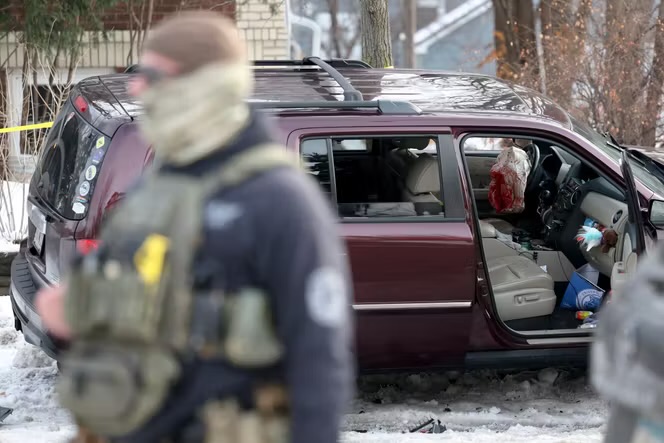
Pero a veces algo ocurre que rompe ese velo. No inaugura una violencia distinta; la hace visible de otro modo. La saca del registro de lo abstracto y la devuelve al terreno de lo imaginable. No es un cambio cuantitativo, sino perceptivo. De pronto, lo que antes se sabía —porque se sabía— empieza a sentirse. Y cuando eso sucede, el clima cambia.
Ese tipo de momento no opera por acumulación de argumentos, sino por identificación. No es la comprensión racional de que algo es injusto lo que produce el desplazamiento, sino la sensación de que eso podría haber sido uno mismo. La violencia deja de pertenecer a un grupo lejano, a una minoría social, a una categoría administrable, y se vuelve transversal. Se vuelve íntima. La escena concreta —un gesto, una frase, una situación cotidiana— funciona como detonante porque cancela la distancia moral que permite convivir con el daño ajeno.
La historia está llena de estos momentos. No porque antes no hubiera crueldad, sino porque durante un tiempo esa crueldad fue tolerable, explicable o absorbible. Cuando deja de serlo, no es porque el horror haya aumentado, sino porque la sociedad ya no puede fingir que no lo entiende. El umbral se cruza cuando la violencia deja de poder narrarse como excepción, exceso o error, y empieza a leerse como mensaje.
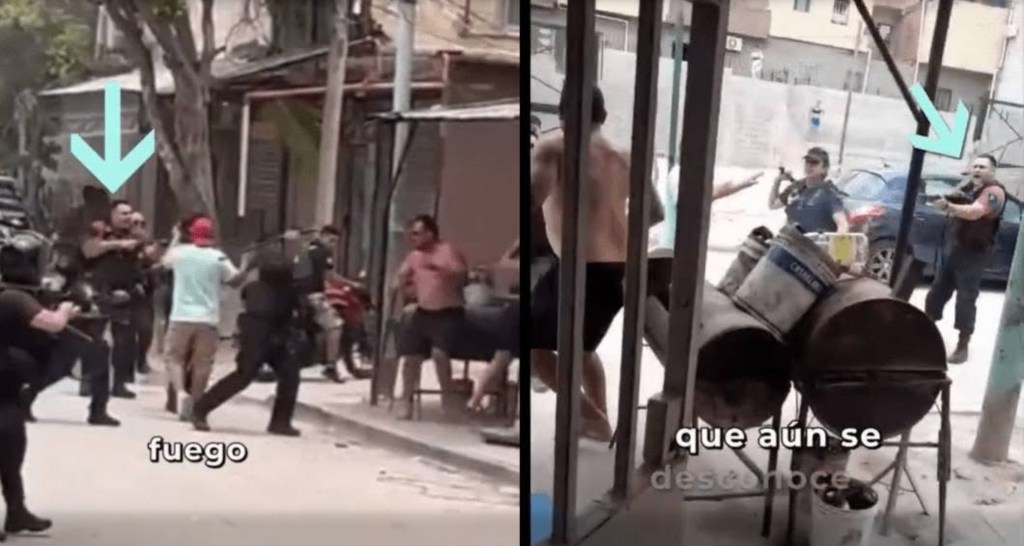
Lo decisivo de estos momentos es que no interrumpen la violencia: interrumpen el relato que la amortiguaba. Rompen la ilusión de normalidad que permitía seguir adelante sin hacerse cargo. Algo se vuelve evidente, incluso para quienes preferían no ver. No todos reaccionan igual. Siempre hay quienes se refugian en la negación o en la mentira. Pero la diferencia es que, a partir de ese punto, la mayoría ya sabe lo que está viendo. Y eso modifica el terreno político.
El autoritarismo contemporáneo no gobierna solo con violencia, sino administrando el calendario: pospone la justicia, diluye la responsabilidad y normaliza el desgaste.
Tweet
La violencia que, finalmente, fija el sentido
La violencia política rara vez irrumpe como un hecho aislado. Cuando parece hacerlo, suele ser porque una secuencia previa ha preparado el terreno. Los episodios que luego se recuerdan como “puntos de inflexión” casi nunca son los primeros; son los que condensan una serie de agresiones anteriores que habían sido toleradas, minimizadas o absorbidas como ruido de fondo. La historia enseña que el shock no proviene de la novedad, sino de la legibilidad.

En Estados Unidos, este patrón se repite con una regularidad inquietante. A mediados del siglo XIX, durante la década previa a la Guerra Civil, la violencia política ya estaba en marcha mucho antes de que se volviera imposible de ignorar. Durante días, senadores del Norte fueron agredidos físicamente por representantes del Sur en una sucesión de ataques que apenas lograron atención sostenida. Golpes, empujones, amenazas: nada de eso parecía aún suficiente para alterar el equilibrio institucional. Hasta que ocurrió el episodio que fijó el sentido.
En 1856, un senador abolicionista fue atacado dentro del recinto del Senado, sentado en su escritorio, por un congresista del Sur que lo golpeó brutalmente con un bastón hasta dejarlo inconsciente. La escena no podía ser más elocuente: la violencia no se ejercía en los márgenes, sino en el corazón mismo de la representación democrática. No fue el primer ataque, pero fue el que volvió imposible fingir que se trataba de excesos individuales. La sociedad estaba preparada para entender lo que significaba porque llevaba días —años— siendo entrenada para verlo.

Algo similar ocurrió en la década de 1920 con el Ku Klux Klan. Durante un tiempo, amplios sectores de la sociedad estadounidense toleraron o banalizaron su existencia, viéndolo incluso como una forma grotesca pero inofensiva de sociabilidad política. Marchas, rituales, retórica patriótica: todo podía ser reinterpretado como folklore reaccionario. Hasta que un crimen específico —el secuestro, la violación y el asesinato de una mujer joven por parte del liderazgo del Klan— quebró esa lectura. El apoyo social colapsó casi de inmediato. No porque la organización no hubiera sido violenta antes, sino porque de pronto la violencia se volvió imposible de narrar como otra cosa.
Estos momentos no funcionan porque revelan algo desconocido, sino porque hacen innegable lo que ya estaba a la vista. La sociedad no descubre la violencia; deja de justificarla.

En el presente, ese mecanismo vuelve a activarse. Durante años, la violencia policial en Estados Unidos ha sido documentada con una crudeza creciente: cuerpos inmovilizados hasta la muerte, personas que no sobreviven a la custodia estatal, escenas filmadas que recorren el mundo. Sin embargo, durante mucho tiempo, estas imágenes convivieron con un grado notable de abstracción moral. Eran reconocidas como injustas, pero no siempre como intolerables. Se sabía que estaban mal, pero no necesariamente que podían sucederle a cualquiera.
Lo que cambia cuando la violencia se vuelve reconocible en términos cotidianos es la identificación. Cuando la escena no puede ser confinada a una categoría social específica, cuando no puede ser explicada como una excepción trágica dentro de un grupo vulnerable, el relato se resquebraja. El umbral se cruza cuando la violencia deja de ser estadística y se vuelve escenario imaginable.
No vivimos el fin de la democracia, sino su desincronización: las instituciones siguen en pie mientras el daño ocurre siempre antes de que puedan intervenir.
Tweet
La historia reciente lo confirma. El asalto al Capitolio el 6 de enero fue observado en tiempo real por millones de personas. No hubo mediación posible. No hubo versión alternativa capaz de borrar lo visto. Y aun así, la maquinaria de la negación persistió, produciendo relatos contradictorios con una obstinación que no buscaba convencer, sino desgastar. La repetición de la mentira no era un error; era una estrategia. Cada insistencia medía cuánta realidad podía ser desmentida sin consecuencias inmediatas.
Este punto es crucial: la violencia contemporánea no se limita a producir daño físico. Produce relatos. Y esos relatos no buscan coherencia, sino saturación. El objetivo no es imponer una verdad, sino erosionar la posibilidad misma de distinguirla. Cuando todo es discutible, cuando incluso lo filmado puede ser negado, la violencia se libera de su necesidad de justificación.
Sin embargo, incluso en ese contexto, hay escenas que atraviesan la saturación. Momentos en los que la acumulación de horrores ya no anestesia, sino que prepara el terreno para una ruptura perceptiva. No porque la sociedad se vuelva súbitamente más moral, sino porque el costo psicológico de seguir negando se vuelve demasiado alto.
Estos momentos tienen un rasgo común: revelan la violencia no como respuesta, sino como afirmación de dominio. No como error, sino como mensaje. La fuerza se ejerce para demostrar quién manda, no para resolver una amenaza. Y cuando ese mensaje se vuelve demasiado explícito, la performance de poder empieza a delatar su fragilidad. La brutalidad deja de ser intimidante y empieza a ser reveladora.
Históricamente, este es el punto en el que el poder autoritario acelera. No se retrae. Intensifica. Porque sabe que el tiempo juega en su contra. La violencia se vuelve más visible, más cruda, más concentrada. No como señal de control, sino como último recurso frente a una legitimidad que se escurre.
La paradoja es que, al hacerlo, suele producir exactamente lo que intenta evitar: la cristalización del sentido. La violencia deja de poder ser narrada como exceso aislado y empieza a ser leída como estructura. Y cuando eso ocurre, el relato dominante pierde su capacidad de organizar la experiencia colectiva.

Argentina: la deuda como forma de violencia lenta
Si en Estados Unidos la violencia tiende a cristalizar en escenas que interrumpen el relato —precisamente porque desbordan una tradición que se piensa a sí misma como no autoritaria—, en Argentina el problema es otro. La violencia no irrumpe como excepción: forma parte del paisaje histórico. No siempre adopta la forma del estallido, sino la de la administración prolongada. No se presenta necesariamente como ruptura, sino como continuidad.
La historia reciente argentina muestra con claridad que la violencia sistémica no comienza ni termina con un signo político. Existió durante el kirchnerismo y persistió en el post-kirchnerismo, mutando de forma pero no de función. La llamada “grieta”, más que un simple clivaje ideológico, operó durante años como una pedagogía de la polarización: entrenó a la sociedad para vivir en un estado de tensión permanente, donde el conflicto era constante pero raramente resolutivo. La violencia no desaparecía; se distribuía discursivamente, se desplazaba, se volvía interpretativa.
Ese entrenamiento tiene consecuencias. Una sociedad habituada a leer la política como enfrentamiento continuo desarrolla tolerancia al daño estructural. Aprende a convivir con excesos siempre que puedan ser narrados como parte del juego. La violencia deja de ser un límite y se vuelve un recurso retórico. En ese contexto, incluso episodios de enorme gravedad pueden quedar suspendidos en una ambigüedad inquietante.

El caso ocurrido en Olivos durante la presidencia de Alberto Fernández funciona como una escena paradigmática de esa ambigüedad. La paliza a la entonces Primera Dama nunca terminó de resolverse en un relato estable. ¿Fue un caso de violencia doméstica? ¿Fue una operación de extorsión ligada a los servicios de inteligencia? ¿Fue ambas cosas a la vez? La imposibilidad de fijar una verdad no es sólo producto de la falta de información, sino del modo en que el poder gestiona el sentido. El episodio no produjo una cristalización colectiva comparable a otros momentos históricos. Se diluyó. Se volvió incómodo. Fue administrado hasta perder fuerza política.
Ese es el punto clave de continuidad: en Argentina, la violencia raramente se concentra en una escena única capaz de reorganizar la percepción social. Su forma dominante es la dilación. La postergación del conflicto. El aplazamiento de la verdad. Y es en ese terreno donde el endeudamiento masivo adquiere su dimensión política más profunda.
El endeudamiento no funciona aquí como un error coyuntural ni como una apuesta técnica fallida, sino como una tecnología de gobierno. Cuando el Estado contrae decenas de miles de millones de dólares para sostener una estabilidad cambiaria manifiestamente artificial, no está resolviendo un problema estructural: está comprando tiempo. Tiempo político. Tiempo narrativo. Tiempo para que los costos no coincidan con las decisiones que los generan.
Esa compra de tiempo no es neutra. Cada dólar tomado bajo esas condiciones reordena prioridades, constriñe márgenes futuros y desplaza el conflicto hacia adelante. El daño no desaparece; se pospone. Y en ese desplazamiento se produce una forma específica de violencia: no la que se ve, sino la que se hereda. No la que estalla, sino la que se acumula como carga.
A diferencia de la violencia cristalizante, esta no ofrece una escena inmediata que convoque identificación. No hay gesto singular que permita decir “esto podría haber sido yo”. Lo que hay es una abstracción sostenida: cifras, swaps, reservas, compromisos asumidos en nombre de una estabilidad prometida mientras se erosiona la capacidad del Estado para cumplir funciones básicas. La violencia se vuelve administrativa. Y como toda violencia administrada, tiende a naturalizarse.
El silencio juega aquí un papel decisivo. No solo el silencio mediático, sino el institucional. Informes que no se responden. Detalles que no se aclaran. Preguntas que quedan suspendidas en un limbo burocrático. ¿Dónde están las reservas? ¿En qué condiciones se comprometieron? ¿Cómo se pagaron determinadas obligaciones? ¿Qué garantías se ofrecieron? Cada ausencia de respuesta no es simplemente una falla de transparencia: es una forma de gobierno. El silencio no aparece como excepción, sino como método.
En este punto, la comparación con Estados Unidos se vuelve reveladora. Allí, el ciudadano puede decir con relativa claridad que sus impuestos están financiando prácticas que rechaza: la relación es directa, inmediata, casi contable. En Argentina, la frase es la misma, pero desplazada en el tiempo. No se trata solo de lo que se paga hoy, sino de lo que se pagará mañana. La sociedad financia, muchas veces sin saberlo del todo, una ficción de normalidad cuyo costo real será exigido cuando quienes tomaron las decisiones ya no estén en escena. Tal vez por eso, durante su presidencia, Mauricio Macri puso un énfasis particular en el control del poder judicial —especialmente los tribunales de casación— y en el manejo de los servicios de inteligencia: no como un exceso personal, sino como una forma de asegurarse que el ajuste diferido no encontrara un límite institucional inmediato y lo encontrara en la cárcel. También compró parte de La Nación así como ahora el poder vinculado con la política compra los medios y ha venido comprando las prepagas. Ese mismo terreno es el que Javier Milei ha venido a disputar, en parte desarmando ese dispositivo y en parte reconfigurándolo, utilizando inicialmente a Patricia Bullrich como instrumento para desplazar a Macri de ese lugar. No es un dato menor: Bullrich ha funcionado históricamente como garante local de intereses norteamericanos en Buenos Aires, y su centralidad en este reordenamiento sugiere que la administración del tiempo —judicial, político, financiero— sigue siendo el núcleo real del poder, más allá de los recambios discursivos o ideológicos.

Esa es la lógica de la violencia lenta. No necesita imponerse por la fuerza porque se diluye en el calendario. No genera indignación súbita, sino desgaste. No produce un quiebre, sino cansancio. Y ese cansancio es políticamente funcional. Una sociedad agotada discute menos, exige menos, espera menos. El endeudamiento, en este sentido, no es solo una herramienta económica: es una técnica de desmovilización.
Lo inquietante es que esta forma de violencia convive sin contradicción con discursos de orden, racionalidad y sacrificio. Se presenta como responsabilidad mientras transfiere costos de manera opaca. Se justifica como realismo mientras restringe el horizonte de lo posible. Y se sostiene, en buena medida, porque no produce una escena única capaz de cristalizar el daño. El daño, aquí, es difuso. Y lo difuso es más difícil de combatir.
Inteligencia, secreto y el gobierno del retardo
Si la deuda organiza el tiempo económico y la violencia visible organiza el miedo inmediato, el sistema de inteligencia organiza algo más sutil y más duradero: el tiempo de la verdad. No qué se sabe, sino cuándo se puede saber. No qué se juzga, sino cuándo ese juicio llega, y en qué condiciones de agotamiento social.
En Argentina, la inteligencia nunca ha sido solo un dispositivo técnico. Ha sido, históricamente, un actor político informal, una zona gris donde se cruzan información, disciplinamiento y extorsión. Lo decisivo no es su existencia —toda democracia moderna la tiene— sino su estatuto ambiguo: siempre presente, raramente responsable, casi nunca plenamente visible.
La reforma del sistema de inteligencia por vía ejecutiva no inaugura ese problema, pero lo intensifica. Al hacerlo mediante decreto, el secreto deja de presentarse como excepción funcional y pasa a consolidarse como marco general de acción. No se trata únicamente de ampliar atribuciones, sino de redefinir el régimen de acceso a la información. El secreto ya no protege una operación puntual; protege el proceso mismo.
Aquí es donde la ambigüedad de episodios como el de Olivos adquiere un sentido más amplio. No importa tanto resolver retrospectivamente si allí hubo violencia doméstica, operación de inteligencia o una combinación de ambas. Lo que importa es que el episodio haya quedado suspendido en una indeterminación permanente. Esa suspensión no es casual. Es un modo de neutralizar el efecto político del daño. Mientras no haya relato estable, no hay cristalización. Y sin cristalización, no hay quiebre.
La grieta cumple en este punto una función clave. Durante años, enseñó a leer toda acusación grave como parte de una disputa facciosa. La violencia deja de ser evaluada por su contenido y pasa a ser evaluada por su procedencia. ¿Quién acusa? ¿Desde qué lado? ¿Con qué intención? Esa pedagogía erosiona la posibilidad misma de verdad compartida. Todo puede ser desestimado como operación. Incluso lo real.
El sistema de inteligencia se inserta perfectamente en ese paisaje. No necesita intervenir de manera espectacular. Le alcanza con retardar, con filtrar, con dosificar. El derecho sigue existiendo, pero llega tarde. Las investigaciones se abren cuando el impacto ya se diluyó. Las explicaciones aparecen cuando el interés público se desplazó a otro tema. El poder no bloquea el acceso a la justicia: lo desincroniza.
Este retardo tiene efectos profundos. Una sociedad puede tolerar un error, incluso un abuso, si cree que habrá consecuencias. Lo que erosiona la confianza no es solo el daño, sino la sensación de que nunca llega el momento adecuado para juzgarlo. El tiempo se vuelve el verdadero campo de batalla. No se niega la legalidad; se la posterga hasta volverla irrelevante.
Aquí, la continuidad entre violencia económica, violencia institucional y violencia simbólica se vuelve evidente. El endeudamiento compra tiempo político. El secreto administra el tiempo informativo. Y el derecho, atrapado entre ambos, opera en un presente siempre atrasado. Cuando finalmente interviene, lo hace sobre hechos ya incorporados al paisaje social. La normalidad se ha desplazado.
Este modo de gobierno no necesita declarar estados de excepción ni clausurar parlamentos. Funciona mejor cuando las formas democráticas permanecen intactas. Las elecciones se celebran. Los tribunales existen. Los comunicados se emiten. Pero el momento en el que esas instancias podrían producir un efecto real ya pasó. La democracia sigue operando, pero fuera de fase con el daño.
Para reopening time: para-democracia, retardo y la forma contemporánea del poder
Hablar de post-democracia supone aceptar que algo quedó atrás. Supone una cronología clara: primero democracia, después otra cosa. Pero lo que se observa hoy —en Argentina y en Estados Unidos, por vías distintas y con tradiciones diferentes— no responde a esa secuencia. No hay un “después” nítido. Hay un al costado. Un desplazamiento lateral. Una forma de poder que no sustituye a la democracia, sino que opera junto a ella, aprovechando sus inercias, su confianza en el procedimiento, su fe en el tiempo largo.
El prefijo griego para no indica superación ni negación. Indica proximidad, contigüidad, acompañamiento. Algo que corre en paralelo. La para-democracia no deroga derechos; los desincroniza. No clausura instituciones; las vuelve tardías. No prohíbe la verdad; la administra en diferido. El resultado no es la ausencia de legalidad, sino su llegada fuera de tiempo.
Este es el rasgo decisivo del autoritarismo contemporáneo: no gobierna principalmente por la excepción, sino por el retardo. Retardo del derecho frente al daño. Retardo de la información frente a la decisión. Retardo de la responsabilidad frente al hecho consumado. La violencia no necesita imponerse de una vez; le alcanza con diluirse en el calendario. Cuando la respuesta llega, llega cansada. Cuando la explicación aparece, ya no organiza nada.
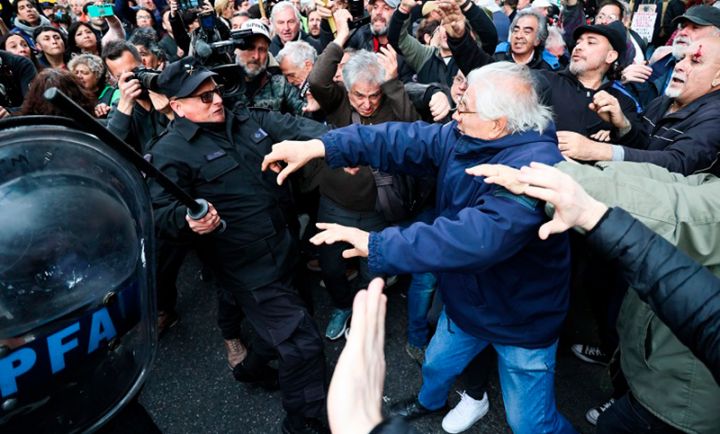
En Estados Unidos, este mecanismo se hace visible cuando la violencia irrumpe con tal claridad que perfora la saturación y obliga a una lectura moral inmediata. En Argentina, opera de modo más persistente y menos espectacular: endeudamiento como compra de tiempo, secreto como entorno, ambigüedad como método. En ambos casos, el efecto es el mismo: la verdad llega tarde. Y una verdad tardía ya no protege; apenas documenta.
Por eso la cuestión central no es solo qué se hace, sino cuándo puede ser dicho y en qué condiciones puede ser juzgado. El poder contemporáneo no se limita a producir hechos; produce cronologías. Decide el ritmo al que la sociedad puede entender lo que le ocurre. Y cuando ese ritmo es impuesto desde arriba, la experiencia democrática se vuelve una carrera perdida.
La para-democracia no necesita convencer. Necesita cansar. No necesita clausurar el disenso; necesita fragmentarlo. No necesita borrar la empatía; necesita exponerla como debilidad. El gesto autoritario ya no se presenta como doctrina, sino como administración: de presupuestos, de secretos, de tiempos muertos. El daño se vuelve sistémico porque deja de ser narrable en una sola escena.
Frente a este escenario, el desafío no es meramente institucional. Es perceptivo. Recuperar la democracia implica recuperar la sincronía entre acción y comprensión, entre daño y respuesta, entre poder y responsabilidad. Implica resistir la tentación de la normalización, del “esto siempre fue así”, del “no hay alternativa”. Implica, sobre todo, rechazar la idea de que la brutalidad —económica, policial o administrativa— sea una forma legítima de realismo.
Hay momentos en los que la historia no avanza por ruptura, sino por desplazamiento lateral. En esos momentos, la pregunta no es si la democracia cayó, sino desde cuándo dejó de llegar a tiempo. Reconocer ese desfase no garantiza una salida, pero evita la peor de las derrotas: la adaptación silenciosa.
Porque cuando el poder gobierna el tiempo, la primera tarea política es volver a mirar sin anestesia, nombrar sin retardo, pensar sin obediencia. No para producir héroes ni gestos grandilocuentes, sino para impedir que lo humano se vuelva negociable. No todo proceso de deshumanización comienza con campos o con leyes de excepción. Muchos comienzan con algo más discreto: la aceptación de que el daño llegue tarde al lenguaje.
Y ese es el punto en el que todavía hay algo que defender. No una democracia idealizada, sino la posibilidad misma de no convertirnos, por cansancio o por hábito, en sujetos para los que la violencia ya no exige explicación.
In trump+milei’s Para-Democracy, rights are not revoked; they are desynchronized.
Para-democracy doesn’t abolish rights; it delays them. When truth arrives out of time, it no longer protects— it merely records the damage.
Tweet
The moment when violence ceases to be abstract
There are historical moments in which violence stops functioning as a permanent background and becomes legible. Not because it is new—violence never is—but because it is no longer dispersed. It condenses. Over long periods, violent events accumulate as noise: statistics, repeated images, names that follow one another until they lose singularity. Everything is grave, yet nothing fully takes hold. The present turns into a firehose of constant horrors that erodes the capacity for attention and judgment. Saturation, paradoxically, protects power.

But sometimes something happens that breaks through that veil. It does not inaugurate a different violence; it makes violence visible in a different way. It pulls it out of the abstract register and returns it to the realm of the imaginable. This is not a quantitative shift but a perceptual one. Suddenly, what was previously known—simply because it was known—begins to be felt. And when that happens, the atmosphere changes.
This kind of moment does not operate through the accumulation of arguments, but through identification. It is not the rational understanding that something is unjust that produces the shift, but the sensation that it could have been oneself. Violence ceases to belong to a distant group, to a social minority, to an administrable category, and becomes transversal. It becomes intimate. A concrete scene—a gesture, a phrase, an everyday situation—functions as a trigger because it cancels the moral distance that allows one to coexist with harm inflicted on others.
History is full of such moments. Not because cruelty did not exist before, but because for a time that cruelty was tolerable, explainable, or absorbable. When it ceases to be so, it is not because the horror has increased, but because society can no longer pretend not to understand it. The threshold is crossed when violence can no longer be narrated as exception, excess, or error, and begins to be read as message.
What is decisive about these moments is that they do not interrupt violence; they interrupt the narrative that cushioned it. They break the illusion of normality that made it possible to move forward without reckoning. Something becomes evident, even to those who preferred not to see. Not everyone reacts in the same way. There are always those who retreat into denial or into lies. But the difference is that, from that point on, the majority knows what it is seeing. And that alters the political terrain.
Contemporary authoritarianism governs less through prohibition than through timing: justice postponed, responsibility deferred, harm normalized by delay.
Tweet
The violence that ultimately fixes meaning
Political violence rarely erupts as an isolated fact. When it appears to do so, it is usually because a prior sequence has prepared the ground. The episodes later remembered as “turning points” are almost never the first ones; they are those that condense a series of earlier aggressions that had been tolerated, minimized, or absorbed as background noise. History teaches that shock does not arise from novelty, but from legibility.
In the United States, this pattern repeats itself with unsettling regularity. In the mid-nineteenth century, during the decade preceding the Civil War, political violence was already underway long before it became impossible to ignore. For days, Northern senators were physically assaulted by Southern representatives in a succession of attacks that barely managed to secure sustained attention. Punches, shoves, threats—none of this yet seemed sufficient to disrupt the institutional balance. Until the episode that fixed meaning occurred.
In 1856, an abolitionist senator was attacked inside the Senate chamber, seated at his desk, by a Southern congressman who brutally beat him with a cane until he lay unconscious. The scene could not have been more eloquent: violence was not exercised at the margins, but at the very heart of democratic representation. It was not the first attack, but it was the one that made it impossible to pretend these were merely individual excesses. Society was prepared to understand its meaning because it had been trained—over days, over years—to see it.
Something similar occurred in the 1920s with the Ku Klux Klan. For a time, broad sectors of American society tolerated or trivialized its existence, even seeing it as a grotesque but harmless form of political sociability. Marches, rituals, patriotic rhetoric—everything could be reinterpreted as reactionary folklore. Until a specific crime—the kidnapping, rape, and murder of a young woman by Klan leadership—shattered that reading. Social support collapsed almost immediately. Not because the organization had not been violent before, but because violence suddenly became impossible to narrate as anything else.
These moments do not function because they reveal something unknown, but because they make undeniable what was already visible. Society does not discover violence; it stops justifying it.
In the present, that mechanism has been reactivated. For years, police violence in the United States has been documented with increasing brutality: bodies restrained until death, people who do not survive state custody, filmed scenes that circulate globally. And yet, for a long time, these images coexisted with a remarkable degree of moral abstraction. They were recognized as unjust, but not always as intolerable. It was known they were wrong, but not necessarily that they could happen to anyone.
What changes when violence becomes recognizable in everyday terms is identification. When a scene cannot be confined to a specific social category, when it cannot be explained as a tragic exception within a vulnerable group, the narrative fractures. The threshold is crossed when violence stops being statistical and becomes an imaginable scenario.
We are not witnessing the end of democracy, but its desynchronization—institutions remain while damage always happens first.
Tweet
Recent history confirms this. The January 6 attack on the Capitol was observed in real time by millions. There was no mediation possible. No alternative version capable of erasing what had been seen. And yet, the machinery of denial persisted, producing contradictory narratives with an obstinacy that did not seek to convince, but to exhaust. The repetition of the lie was not an error; it was a strategy. Each insistence measured how much reality could be denied without immediate consequence.
This point is crucial: contemporary violence does not limit itself to producing physical harm. It produces narratives. And those narratives do not seek coherence, but saturation. The objective is not to impose a truth, but to erode the very possibility of distinguishing one. When everything is debatable, when even what is filmed can be denied, violence is freed from its need for justification.
And yet, even in that context, there are scenes that pierce saturation. Moments in which the accumulation of horrors no longer anesthetizes, but prepares the ground for a perceptual rupture. Not because society suddenly becomes more moral, but because the psychological cost of continuing to deny becomes too high.
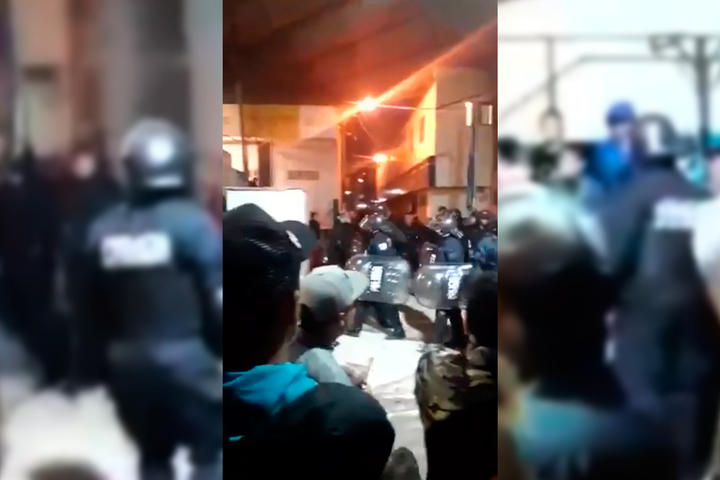
These moments share a common feature: they reveal violence not as response, but as assertion of dominance. Not as error, but as message. Force is exercised to demonstrate who is in charge, not to resolve a threat. And when that message becomes too explicit, the performance of power begins to betray its fragility. Brutality ceases to intimidate and begins to reveal.
Historically, this is the point at which authoritarian power accelerates. It does not retreat. It intensifies. Because it knows time is no longer on its side. Violence becomes more visible, more crude, more concentrated—not as a sign of control, but as a last resort in the face of legitimacy slipping away.
The paradox is that, in doing so, it often produces exactly what it seeks to avoid: the crystallization of meaning. Violence can no longer be narrated as isolated excess and begins to be read as structure. And when that happens, the dominant narrative loses its capacity to organize collective experience.
Argentina: debt as a form of slow violence
If in the United States violence tends to crystallize in scenes that interrupt the narrative—precisely because they overflow a tradition that understands itself as non-authoritarian—in Argentina the problem is different. Violence does not erupt as exception; it forms part of the historical landscape. It does not always take the form of an explosion, but of prolonged administration. It does not necessarily present itself as rupture, but as continuity.
Recent Argentine history shows clearly that systemic violence neither begins nor ends with a particular political sign. It existed during Kirchnerism and persisted in the post-Kirchner period, mutating in form but not in function. The so-called grieta, rather than a simple ideological cleavage, operated for years as a pedagogy of polarization: it trained society to live in a permanent state of tension, where conflict was constant but rarely resolutive. Violence did not disappear; it was distributed discursively, displaced, rendered interpretive.
That training has consequences. A society accustomed to reading politics as continuous confrontation develops tolerance for structural harm. It learns to coexist with excesses so long as they can be narrated as part of the game. Violence ceases to be a limit and becomes a rhetorical resource. In that context, even episodes of enormous gravity can remain suspended in a troubling ambiguity.

The episode that occurred in Olivos during the presidency of Alberto Fernández functions as a paradigmatic scene of that ambiguity. The beating of the then First Lady never settled into a stable narrative. Was it a case of domestic violence? An extortion operation linked to the intelligence services? Both at once? The impossibility of fixing a truth is not only the product of lack of information, but of the way power manages meaning. The episode did not produce a collective crystallization comparable to other historical moments. It dissipated. It became uncomfortable. It was administered until it lost political force.
This is the key point of continuity: in Argentina, violence rarely concentrates in a single scene capable of reorganizing social perception. Its dominant form is delay. The postponement of conflict. The deferral of truth. And it is on that terrain that massive indebtedness acquires its deepest political dimension.
Here, debt does not function as a contingent error or a failed technical bet, but as a technology of government. When the state contracts tens of billions of dollars to sustain a manifestly artificial exchange-rate stability, it is not solving a structural problem; it is buying time. Political time. Narrative time. Time so that costs do not coincide with the decisions that generate them.
That purchase of time is not neutral. Each dollar taken under those conditions reorders priorities, constrains future margins, and displaces conflict forward. Harm does not disappear; it is postponed. And in that postponement a specific form of violence is produced: not the violence one sees, but the violence one inherits. Not the violence that explodes, but the violence that accumulates as burden.
Unlike crystallizing violence, this one offers no immediate scene capable of producing identification. There is no singular gesture that allows one to say, “this could have been me.” What exists instead is a sustained abstraction: figures, swaps, reserves, commitments assumed in the name of a promised stability while the state’s capacity to fulfill basic functions erodes. Violence becomes administrative. And like all administered violence, it tends to naturalize.
Silence plays a decisive role here. Not only media silence, but institutional silence. Reports that are never answered. Details that are never clarified. Questions suspended in a bureaucratic limbo. Where are the reserves? Under what conditions were they committed? How were certain obligations paid? What guarantees were offered? Each absence of response is not merely a transparency failure; it is a form of government. Silence appears not as exception, but as method.
At this point, the comparison with the United States becomes revealing. There, the citizen can say with relative clarity that their taxes are financing practices they reject; the relationship is direct, immediate, almost accounting-like. In Argentina, the sentence is the same, but displaced in time. It is not only about what is paid today, but what will be paid tomorrow. Society finances—often without fully knowing it—a fiction of normality whose real cost will be demanded when those who made the decisions are no longer on the scene. Perhaps that is why, during his presidency, Mauricio Macri placed particular emphasis on controlling the judiciary—especially the courts of cassation—and the intelligence services: not as a personal excess, but as a way of ensuring that deferred adjustment would not encounter an immediate institutional limit and would instead encounter prison. He also bought part of La Nación, just as political power today buys media outlets and has been buying private health providers. This same terrain is what Javier Milei has come to dispute, in part dismantling that device and in part reconfiguring it, initially using Patricia Bullrich as an instrument to displace Macri from that position. This is no minor detail: Bullrich has historically functioned as a local guarantor of U.S. interests in Buenos Aires, and her centrality in this reordering suggests that the administration of time—judicial, political, financial—continues to be the real core of power, beyond discursive or ideological turnovers.
This is the logic of slow violence. It does not need to impose itself by force because it dilutes itself in the calendar. It does not generate sudden indignation, but wear. It does not produce rupture, but fatigue. And that fatigue is politically functional. An exhausted society debates less, demands less, expects less. Debt, in this sense, is not only an economic tool; it is a technique of demobilization.
What is unsettling is that this form of violence coexists without contradiction with discourses of order, rationality, and sacrifice. It presents itself as responsibility while transferring costs opaquely. It justifies itself as realism while narrowing the horizon of the possible. And it sustains itself, in large measure, because it does not produce a single scene capable of crystallizing harm. Harm, here, is diffuse. And what is diffuse is harder to fight.
Intelligence, secrecy, and the government of delay
If debt organizes economic time and visible violence organizes immediate fear, the intelligence system organizes something more subtle and more enduring: the time of truth. Not what is known, but when it can be known. Not what is judged, but when that judgment arrives, and under what conditions of social exhaustion.
In Argentina, intelligence has never been merely a technical device. Historically, it has been an informal political actor, a gray zone where information, discipline, and extortion intersect. What is decisive is not its existence—every modern democracy has one—but its ambiguous status: always present, rarely accountable, almost never fully visible.
Reforming the intelligence system by executive decree does not inaugurate that problem, but intensifies it. By doing so through executive action, secrecy ceases to present itself as a functional exception and consolidates itself as a general framework of action. It is not simply about expanding powers, but about redefining the regime of access to information. Secrecy no longer protects a specific operation; it protects the process itself.
This is where the ambiguity of episodes like Olivos takes on broader meaning. What matters is not resolving retrospectively whether there was domestic violence, an intelligence operation, or a combination of both. What matters is that the episode remained suspended in permanent indeterminacy. That suspension is not accidental. It is a way of neutralizing the political effect of harm. Where there is no stable narrative, there is no crystallization. And without crystallization, there is no rupture.
The grieta plays a key role here. For years, it trained people to read every serious accusation as part of a factional dispute. Violence ceases to be evaluated by its content and is instead evaluated by its provenance. Who accuses? From which side? With what intention? That pedagogy erodes the very possibility of shared truth. Everything can be dismissed as an operation. Even the real.
The intelligence system fits perfectly into that landscape. It does not need to intervene spectacularly. It only needs to delay, to filter, to dose. Law continues to exist, but it arrives late. Investigations open when impact has already dissipated. Explanations appear when public interest has moved elsewhere. Power does not block access to justice; it desynchronizes it.
This delay has profound effects. A society can tolerate an error, even an abuse, if it believes there will be consequences. What erodes trust is not only harm, but the sensation that the right moment to judge never arrives. Time becomes the real battlefield. Legality is not denied; it is postponed until it becomes irrelevant.
Here, the continuity between economic violence, institutional violence, and symbolic violence becomes evident. Debt buys political time. Secrecy administers informational time. And law, trapped between both, operates in a perpetually belated present. When it finally intervenes, it does so over facts already incorporated into the social landscape. Normality has shifted.
This mode of government does not need to declare states of exception or shutter parliaments. It works better when democratic forms remain intact. Elections are held. Courts exist. Communiqués are issued. But the moment at which those instances could produce a real effect has already passed. Democracy continues to operate, but out of phase with harm.
Para-reopening time: para-democracy, delay, and the contemporary form of power
To speak of post-democracy is to assume that something lies behind us. It presupposes a clear chronology: first democracy, then something else. But what is observable today—in Argentina and in the United States, through different paths and traditions—does not follow that sequence. There is no clean “after.” There is an alongside. A lateral displacement. A form of power that does not replace democracy, but operates next to it, exploiting its inertias, its trust in procedure, its faith in long time.
The Greek prefix para does not indicate supersession or negation. It indicates proximity, contiguity, accompaniment—something that runs in parallel. Para-democracy does not revoke rights; it desynchronizes them. It does not close institutions; it renders them late. It does not forbid truth; it administers it in delay. The result is not the absence of legality, but its arrival out of time.
This is the decisive trait of contemporary authoritarianism: it does not govern primarily through exception, but through delay. Delay of law in relation to harm. Delay of information in relation to decision. Delay of responsibility in relation to the fait accompli. Violence does not need to impose itself all at once; it suffices to dilute itself in the calendar. When response arrives, it arrives tired. When explanation appears, it no longer organizes anything.
In the United States, this mechanism becomes visible when violence erupts with such clarity that it pierces saturation and demands an immediate moral reading. In Argentina, it operates more persistently and less spectacularly: debt as time-buying, secrecy as environment, ambiguity as method. In both cases, the effect is the same: truth arrives late. And a late truth no longer protects; it merely documents.
For that reason, the central question is not only what is done, but when it can be said and under what conditions it can be judged. Contemporary power does not merely produce facts; it produces chronologies. It decides the rhythm at which society can understand what is happening to it. And when that rhythm is imposed from above, democratic experience becomes a losing race.
Para-democracy does not need to persuade. It needs to exhaust. It does not need to close dissent; it needs to fragment it. It does not need to erase empathy; it needs to expose it as weakness. The authoritarian gesture no longer presents itself as doctrine, but as administration: of budgets, of secrets, of dead time. Harm becomes systemic because it can no longer be narrated in a single scene.
Faced with this scenario, the challenge is not merely institutional. It is perceptual. To recover democracy is to recover synchrony between action and understanding, between harm and response, between power and responsibility. It means resisting the temptation of normalization, of “this has always been so,” of “there is no alternative.” Above all, it means rejecting the idea that brutality—economic, police, or administrative—is a legitimate form of realism.
There are moments in which history advances not by rupture, but by lateral displacement. In those moments, the question is not whether democracy has fallen, but since when it stopped arriving on time. Recognizing that mismatch does not guarantee an exit, but it avoids the worst defeat: silent adaptation.
Because when power governs time, the first political task is to look again without anesthesia, to name without delay, to think without obedience. Not to produce heroes or grand gestures, but to prevent the human from becoming negotiable. Not every process of dehumanization begins with camps or emergency laws. Many begin with something far more discreet: the acceptance that harm arrives too late to language.
And that is the point at which there is still something left to defend. Not an idealized democracy, but the very possibility of not becoming, through exhaustion or habit, subjects for whom violence no longer requires explanation.
Si este texto te resultó útil para pensar el presente más allá del ruido inmediato, en La Mala Educación desarrollo este tipo de análisis en profundidad: política, cultura, historia y poder, sin consignas ni simplificaciones. Suscribirte al canal es una forma concreta de sostener este trabajo independiente y de acceder a contenidos exclusivos, cursos y debates que no circulan en las redes. Encontrás el canal en la pantalla encima de este texto.
Historia a contrapelo del arte argentino propone una lectura crítica y no complaciente de la historia del arte en la Argentina, escrita desde los márgenes, contra el canon y contra las versiones consolidadas del poder cultural.




 Loveartnotpeople.blog
Deja una respuesta