SCROLL DOWN FOR THE ENGLISH VERSION
El punto de partida tiene que ser incómodo: mientras en Argentina el debate progresista se consume siguiendo de manera reactiva la agenda diaria de Javier Milei —la represión en una marcha, la reforma laboral, el último decreto— el marco internacional está redefiniéndose en términos mucho más profundos. Y esa redefinición no es abstracta. Tiene consecuencias directas para América Latina, para Argentina y para cualquier proyecto que aspire a llamarse democrático y soberano.
Mientras en Argentina el progresismo reacciona a la minucia de Milei, el tablero global cambia. Rubio en Múnich no moderó: refinó una doctrina donde “Occidente” exige disciplina fiscal, alineamiento cultural y apertura extractiva. La deuda ya no es técnica: es obediencia geopolítica.
Tweet

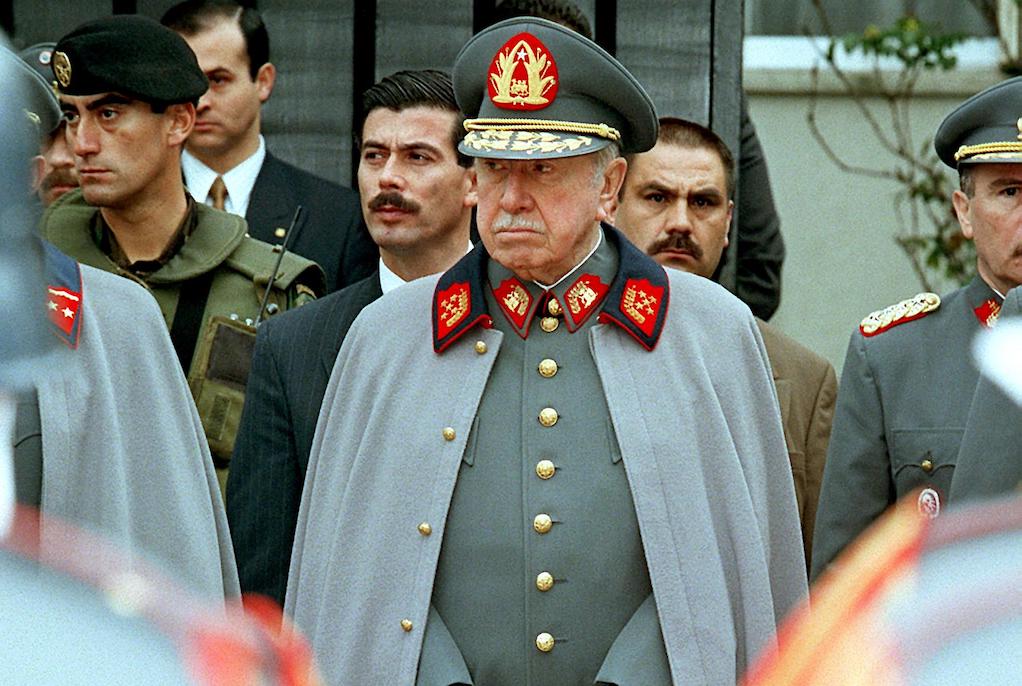
Ayer analizamos el discurso de Marco Rubio en la Munich Security Conference como formalización diplomática de una doctrina civilizatoria: pertenencia a Occidente condicionada por disciplina fiscal, alineamiento cultural y apertura extractiva. Hoy el contrapunto surge de una conferencia de Alexandria Ocasio-Cortez en TU Berlín TV, en Alemania. Y el contraste no es menor. Por primera vez una figura demócrata norteamericana de ese nivel dice con claridad que Augusto Pinochet no actuó solo, que el intervencionismo estadounidense —con Henry Kissinger como arquitecto— fue parte constitutiva del terrorismo de Estado en América Latina.
Alexandria Ocasio-Cortez en Berlín dijo algo inusual: Pinochet no actuó solo y EE.UU., con Kissinger, fue parte del terrorismo de Estado. Pero al hablar de Gaza el lenguaje se vuelve elíptico: denuncia deshumanización sin decir “genocidio”. Esa tensión muestra el aislamiento del progresismo radical.
Tweet
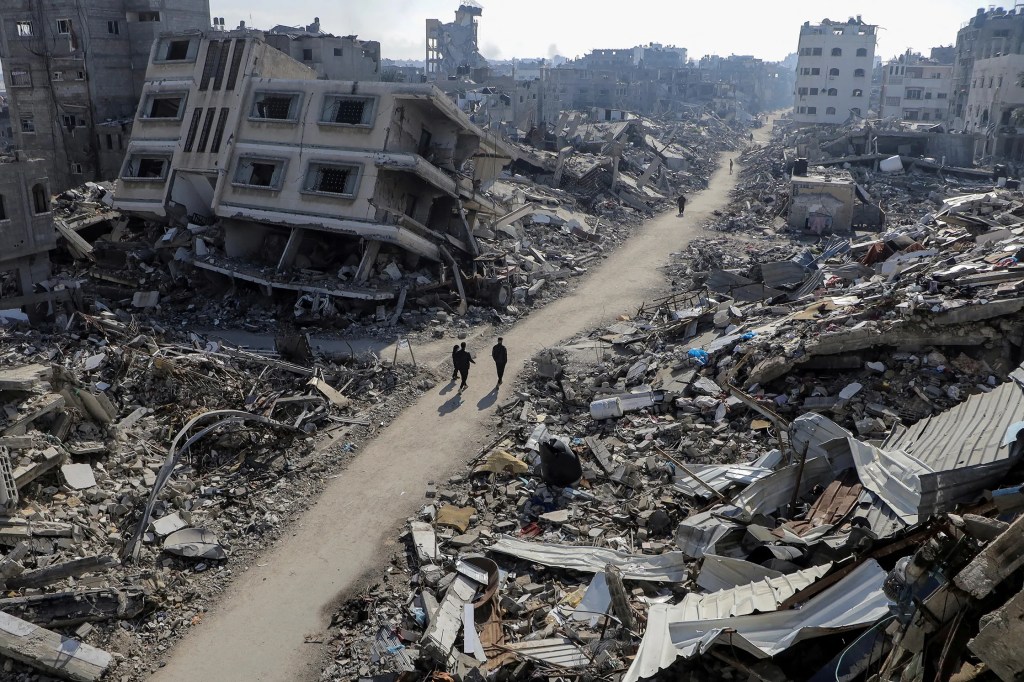
Ese reconocimiento es histórico. No es una consigna estudiantil. Es la admisión desde el corazón del establishment demócrata de que la democracia estadounidense estuvo implicada en tortura, desaparición y cambio de régimen. Y sin embargo, incluso allí aparece el límite. Cuando AOC se refiere a Gaza, da vueltas retóricas, bordea el término, describe la crisis como deshumanización, como horror humanitario, como derrumbe moral de la democracia, pero no pronuncia directamente la palabra “genocidio”. No porque no entienda la gravedad, sino porque habla en Alemania, donde la memoria del Holocausto estructura el campo legal y político hasta el punto de que determinadas formulaciones pueden implicar consecuencias penales o aislamiento político inmediato. Y porque incluso en Estados Unidos la acusación de antisemitismo se activa automáticamente ante cualquier crítica estructural a la política israelí.
Lo interesante no es juzgarla por esa cautela, sino entender lo que revela. El progresismo radical está aislado globalmente. Puede señalar el patrón —Pinochet, Kissinger, intervención— puede insinuar la contradicción moral en Gaza, puede denunciar que la provisión de armas en contextos de violaciones masivas de derechos humanos vacía de contenido el discurso de superioridad democrática. Pero no logra articular una estrategia de poder. No logra unir explícitamente las dos puntas: la intervención estadounidense en América Latina y el genocidio en Gaza como continuidad estructural de una política exterior que invoca democracia mientras administra violencia.
Ese vacío es exactamente el que se reproduce en Argentina. En El Destape y en el ecosistema de streamers post-kirchneristas, el progresismo queda atrapado en la minucia reactiva. Se denuncia la represión, se editorializa sobre la injusticia social, se comenta cada gesto presidencial como si fuera el centro del mundo. Y cuando alguien intenta elevar el marco —como Nicolás Lantos— se desplaza hacia abstracciones macro como la inteligencia artificial o la geopolítica global en términos tan generales que no interpelan ningún poder concreto. No hay una narrativa que conecte la deuda externa, el extractivismo, la subordinación estratégica y el rediseño civilizatorio global. No hay una identidad internacionalista coherente que articule pasado y presente.
El progresismo argentino denuncia cada abuso del día, pero no articula una estrategia global. Sin marco internacional, la reacción moral se vuelve rutina política.
Tweet

Lo que hace falta es exactamente lo que AOC apenas roza: un liderazgo capaz de hilar los cabos y decir con todas las letras que la democracia occidental ha sido históricamente compatible con dictaduras cuando convino a sus intereses, y que hoy es compatible con el genocidio en Gaza mientras se invoca estabilidad y seguridad. Decir que la disciplina fiscal impuesta a países como Argentina no es solo macroeconomía, sino mecanismo de alineamiento. Decir que el mito argentino de nación blanca y europea facilitó esa inserción subordinada mucho antes de Milei. Y decir que sin una estrategia internacionalista articulada, cualquier progresismo local queda condenado a la reacción moralista sin poder real.
La prueba de ese bloqueo estructural es el caso Epstein. No importa cuánto se denuncie; el entramado corporativo-financiero que atraviesa partidos y medios —incluyendo sectores del peronismo y del radicalismo— impide avanzar. El poder corporativo no es una consigna; es un dispositivo transversal que captura tanto oficialismo como oposición. Si no se puede tocar eso, no se puede construir alternativa.
El contraste final es brutal. En Múnich, Rubio sofisticó una doctrina de bloques civilizatorios donde pertenecer implica obedecer. En Berlín, Ocasio-Cortez insinuó la contradicción moral de ese orden, pero sin romper completamente el cerco discursivo. En Buenos Aires, el progresismo sigue discutiendo la última represión como si el tablero no estuviera cambiando.
La pregunta ya no es si Milei es bueno o malo. La pregunta es si existe en Argentina una fuerza política capaz de entender que el debate real es civilizatorio, geopolítico y estructural. Si no la hay, la agenda seguirá siendo reactiva, y el país seguirá moviéndose dentro de un orden definido en Múnich, en Washington o en Berlín, pero nunca en Buenos Aires.
Beyond Reactive Progressivism: Building International Alliances After AOC’s Recognition of U.S. Responsibility in Latin America
Alexandria Ocasio-Cortez in Berlin did something rare: she acknowledged that Pinochet did not act alone and that the U.S., under Kissinger, was complicit in Latin American state terror. But when turning to Gaza, her language becomes elliptical—naming dehumanization without saying “genocide.” That tension exposes the global isolation of radical progressivism.
Tweet
The starting point has to be uncomfortable and explicit: while in Argentina progressive debate is consumed by reactively following Javier Milei’s day-to-day agenda—the repression at a march, the labour reform, the latest decree—the international framework is being redefined at a much deeper level. And that redefinition is not abstract. It has direct consequences for Latin America, for Argentina, and for any project that still wants to call itself democratic and sovereign.
While Argentine progressivism reacts to Milei’s daily agenda, the global board is shifting. Rubio in Munich didn’t moderate—he refined a doctrine where “the West” demands fiscal discipline, cultural alignment, and extractive openness. Debt is no longer technical policy; it’s geopolitical obedience.
Tweet
Yesterday we analysed Marco Rubio’s speech at the Munich Security Conference as the diplomatic formalisation of a civilizational doctrine: belonging to “the West” is conditioned by fiscal discipline, cultural alignment, and extractive openness. Today, the counterpoint comes from a conference by Alexandria Ocasio-Cortez on TU Berlin TV, in Germany. And the contrast is decisive. For the first time, a Democrat of that stature states plainly that Augusto Pinochet did not act alone, and that U.S. interventionism—with Henry Kissinger as a central architect—was structurally implicated in regime change, torture, and state terrorism in Latin America.
Without an articulated internationalist strategy, progressivism remains reactive—denouncing injustice at home while failing to connect it to the global structures that sustain it. What’s needed now is not commentary, but coordinated alliances capable of linking debt, intervention, extractivism, and democracy into a coherent alternative.
Tweet
That recognition is historic. It is not a campus slogan. It is an admission from within the heart of the Democratic establishment that U.S. democracy was entangled with disappearance, terror, and forced political engineering. And yet even there, the limit appears. When AOC turns to Gaza, she performs rhetorical detours: she circles the term, describes the crisis as dehumanization, as humanitarian horror, as a moral collapse of democratic legitimacy, but she does not say “genocide” directly. Not because she fails to grasp the scale, but because she is speaking in Germany, where Holocaust memory structures the legal and political field to the point that certain formulations can carry immediate penal and professional consequences. And because in the United States itself the accusation of antisemitism is routinely mobilised against anyone who advances a structural critique of Israeli policy.
What matters is not to moralise about her caution, but to understand what it reveals. Radical socialist progressivism is globally isolated. It can name the pattern—Pinochet, Kissinger, interventionism—it can indicate the moral contradiction in Gaza, it can argue that supplying weapons amid massive human-rights violations empties the democratic claim of superiority. But it still struggles to articulate a power strategy. It does not fully bridge the two ends: U.S. responsibility for Latin American state terror and the genocide in Gaza as part of a structural continuity in a foreign policy that invokes democracy while administering violence.
That gap is precisely what is reproduced in Argentina. On El Destape and across the post-Kirchnerite streamer ecosystem, progressivism remains trapped in reactive minutiae. Repression is denounced, injustice is editorialised, every presidential gesture is processed as if it were the centre of the world. And when someone attempts to widen the frame—Nicolás Lantos is a useful example—the move often shifts into macro abstractions like artificial intelligence or “global geopolitics” in terms so general that they end up interrogating no concrete power. There is no narrative capable of connecting external debt, extractivism, strategic subordination, and the global civilizational redesign. There is no coherent internationalist identity capable of linking past and present.
What is needed is exactly what AOC only begins to touch: leadership able to connect the dots and state plainly that Western democracy has historically been compatible with dictatorships when it served interests, and that today it is compatible with genocide in Gaza while invoking stability and security. Leadership able to say that the fiscal discipline imposed on countries like Argentina is not “just macroeconomics” but an alignment mechanism. Leadership able to say that Argentina’s myth of whiteness and European exceptionalism long pre-conditions this subordination—well before Milei. And leadership able to admit that without an articulated internationalist strategy, local progressivism is condemned to moral reaction without real power.
The proof of that structural blockage is the Epstein case. It does not matter how often it is denounced; the corporate-financial web that cuts across parties and media—including sectors of Peronism and the Radical Party—prevents decisive movement. Corporate power is not a slogan; it is a transversal device that captures both government and opposition. If you cannot touch that, you cannot build an alternative.
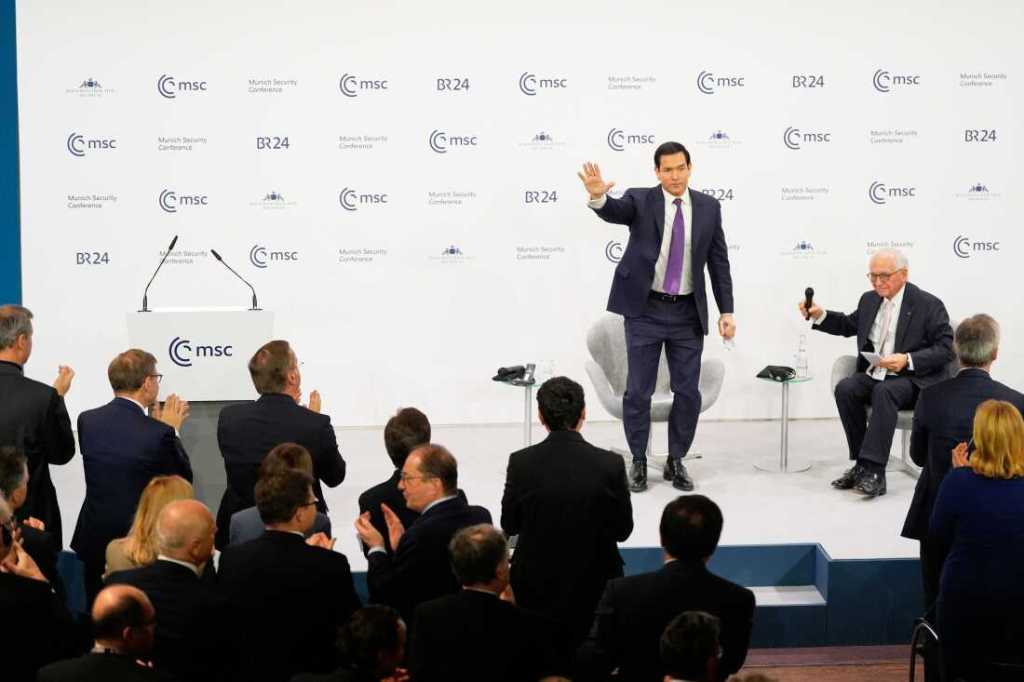
The final contrast is brutal. In Munich, Rubio refined a doctrine of civilizational blocs in which belonging requires obedience. In Berlin, Ocasio-Cortez indicated the moral contradiction of that order, but without fully breaking the discursive cordon. In Buenos Aires, progressivism keeps discussing the latest repression as if the board itself were not changing.
The question is no longer whether Milei is good or bad. The question is whether Argentina has a political force capable of understanding that the real debate is civilizational, geopolitical, and structural. If it does not, the agenda will remain reactive, and the country will continue moving inside an order defined in Munich, in Washington, or in Berlin—never in Buenos Aires.
From next month, I will be hosting a weekly livestream focused on current affairs, and a separate weekly livestream exclusively for paying members of my YouTube channel, designed to develop these threads beyond reactive commentary and into strategy, concepts, and durable alliances.
© Rodrigo Cañete, 2026. All rights reserved. This text may not be reproduced, distributed, translated, or published in whole or in part without prior written permission from the author, except for brief quotations used for academic or journalistic purposes with full attribution.



 Loveartnotpeople.blog
Deja una respuesta