
A night of colonial fantasy. That’s how the “Sarao del Virrey” was promoted at the Isaac Fernández Blanco Museum: a period gala featuring lavish costumes, courtly dances, colonial music, and historical cuisine. But what actually took place was something else entirely. What took place was a performance of aesthetic dissociation, a simulacrum-party where the Buenos Aires elite dressed up as a long-extinct nobility to avoid the uncomfortable friction of contemporary Argentina.
At the “Sarao del Virrey” at the Isaac Fernández Blanco Museum was a performance of aesthetic dissociation
Tweet
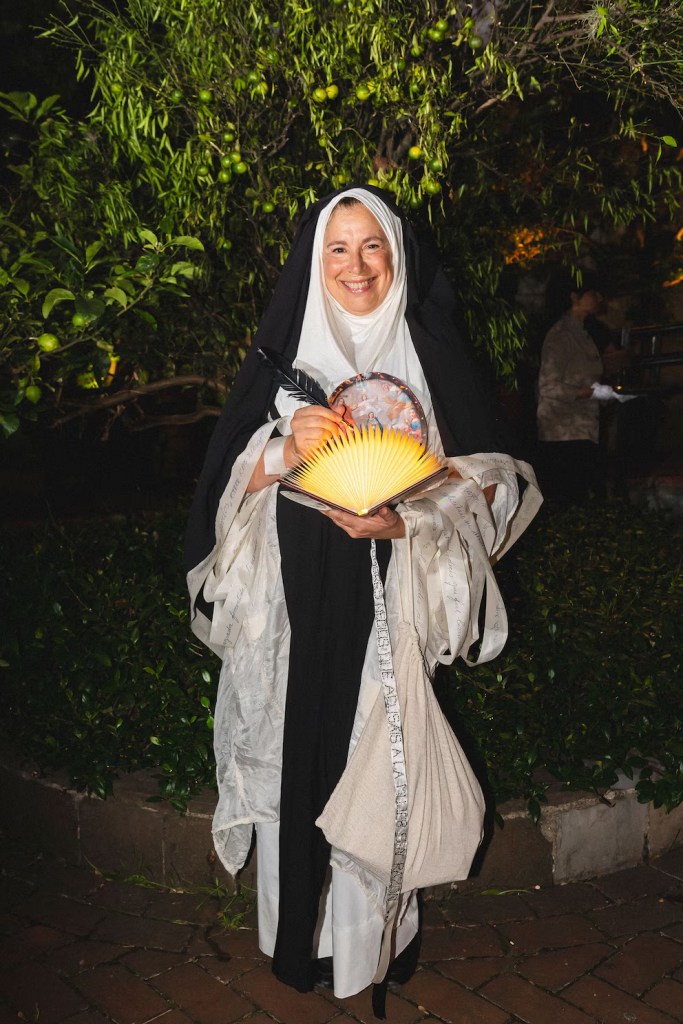
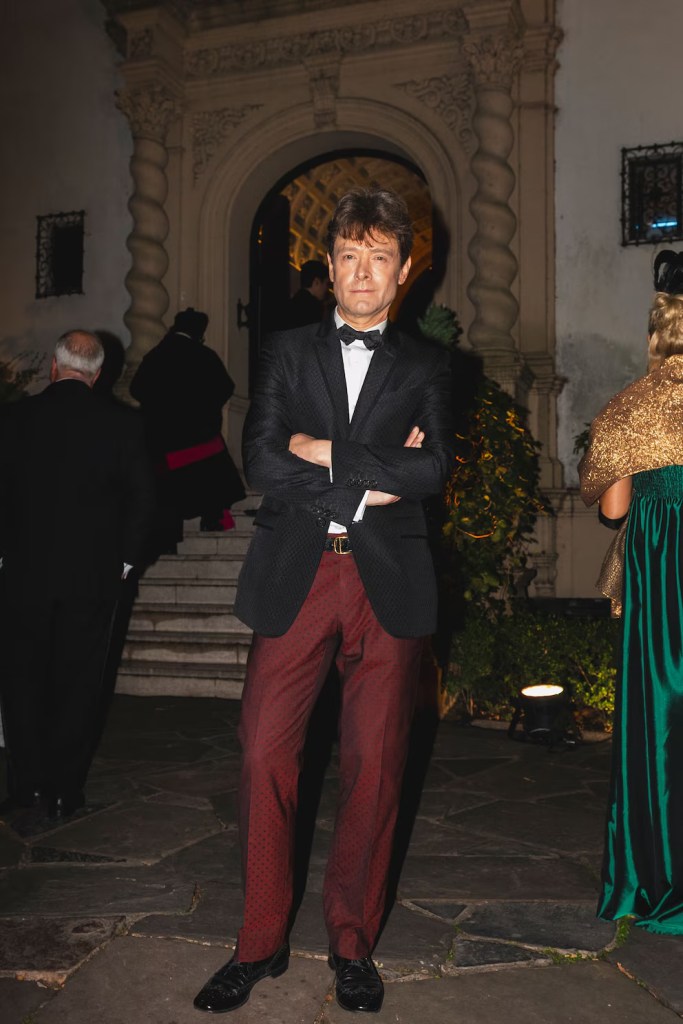
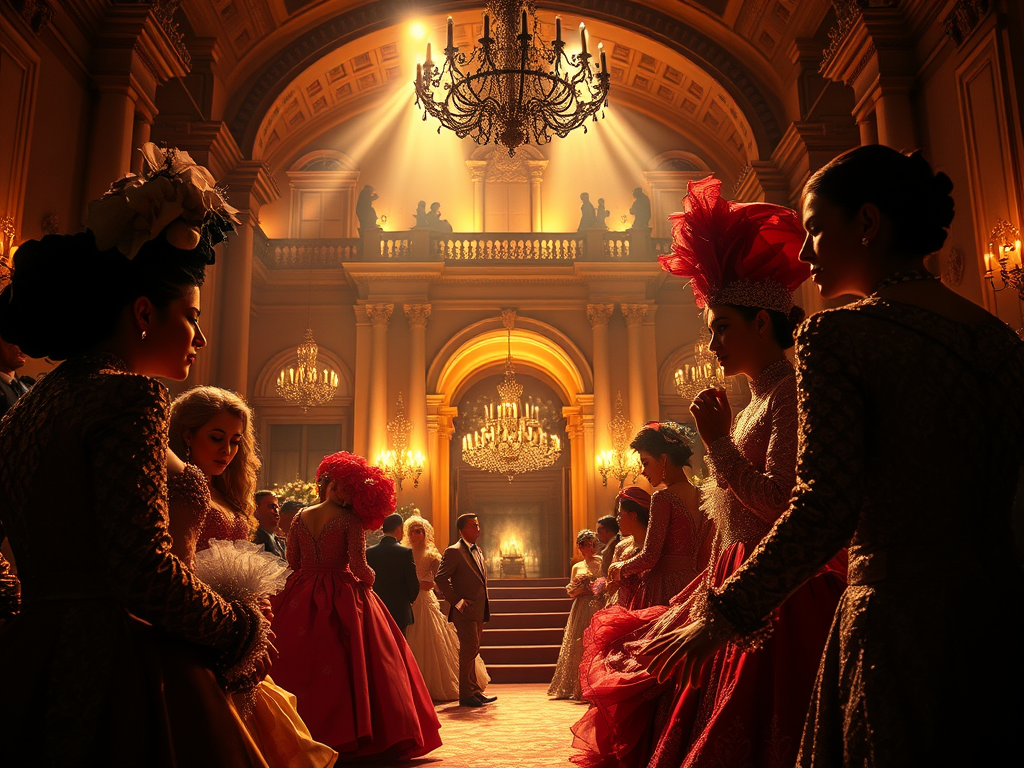
The event promised historical rigor but delivered aesthetic drag: not a tribute to the 18th century, but a visual karaoke where Rococo mingled with haute couture, wigs with camp style, and sparkling gowns closer to Liberace than to any creole viceroy’s consort. More than a sense of the past, what we saw was an accumulation of signs. Signs without reference, without time, without feeling. And that is both its power and its misery: a spectacle without history for a class that desperately needs to be without one.
The Museum as Baroque Device
It is no coincidence that this gala was held at the so-called “Palacio Noel”: an architectural fantasy built in 1922 by architect and landscape designer Martín Noel, who imagined an idealized, homogenized vision of the Viceroyalty through a pastiche of Hispano-colonial motifs. The palace is not colonial—but it pretends to be. And that founding fiction is reactivated every time the Isaac Fernández Blanco Museum hosts one of these aristocratizing balls: the building itself is already a cultural drag performance, a nostalgic prosthesis simulating a tradition that never existed.
This architecture of simulacrum becomes the perfect set for the event: a space that doesn’t represent the past, but a decorative, pasteurized version of it—stripped of conflict. As Baudrillard would put it, we’re not looking at a forgery, but at a model without an original—a pure simulacrum. And like all simulacra, its function is to erase history in order to install the present as spectacle.
Under the direction of Guiomar de Urgell, the Isaac Fernández Blanco Museum functioned as a space of patrimonial pedagogy and symbolic containment. Her curatorial vision—while still shaped by the elitist gaze inherent to colonial collecting—respected archives, narrated historical tensions, and at least attempted to sustain a coherent institutional discourse around viceregal culture. In contrast, today’s administration reduces that legacy to event décor, replacing curatorial work with the production of atmospheres. No longer research, just ambiance; no longer museum policy, just era-themed marketing. What was once a cabinet of study is now a rental hall, and where there was once historical narrative, now there’s an ahistorical ball, with patrimonial objects serving as backdrops for selfies. The museum has dressed itself up as a private club for the tacky elite.
Drag and Class: The Usurped Nobility
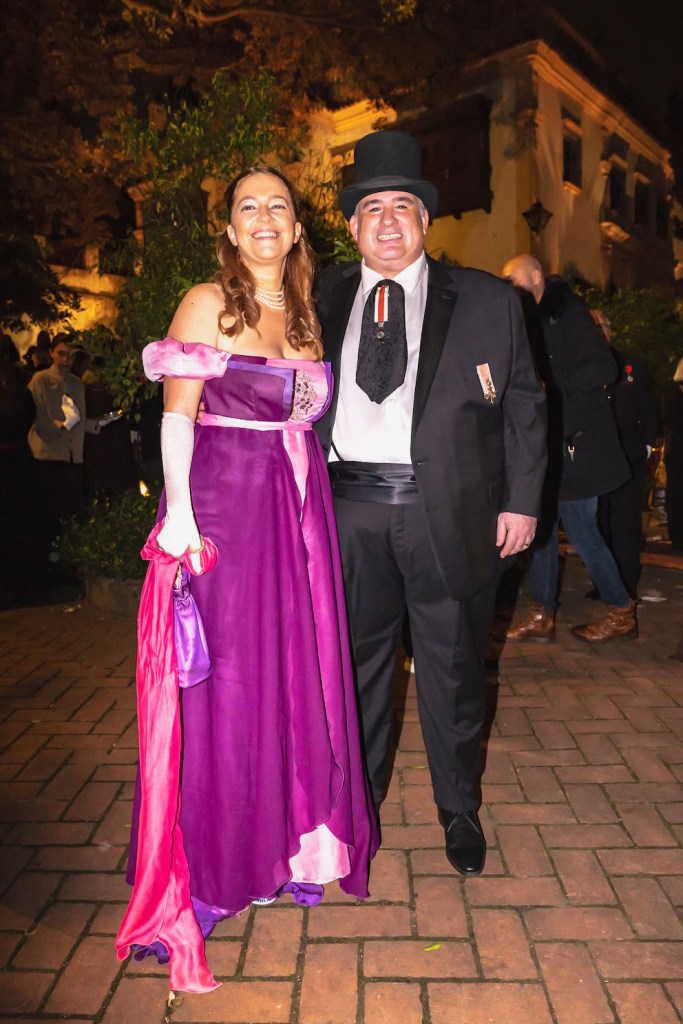
Who attends the sarao? Who dresses up as viceroys and vicereines? Not the descendants of any colonial aristocracy, but a hybrid, belated bourgeoisie that plays dress-up to simulate lineage. This is cultural drag in the literal sense: present-day bodies wearing borrowed costumes to inhabit a scene that does not belong to them. A cardboard aristocracy staging itself as chosen, refined, out-of-time.
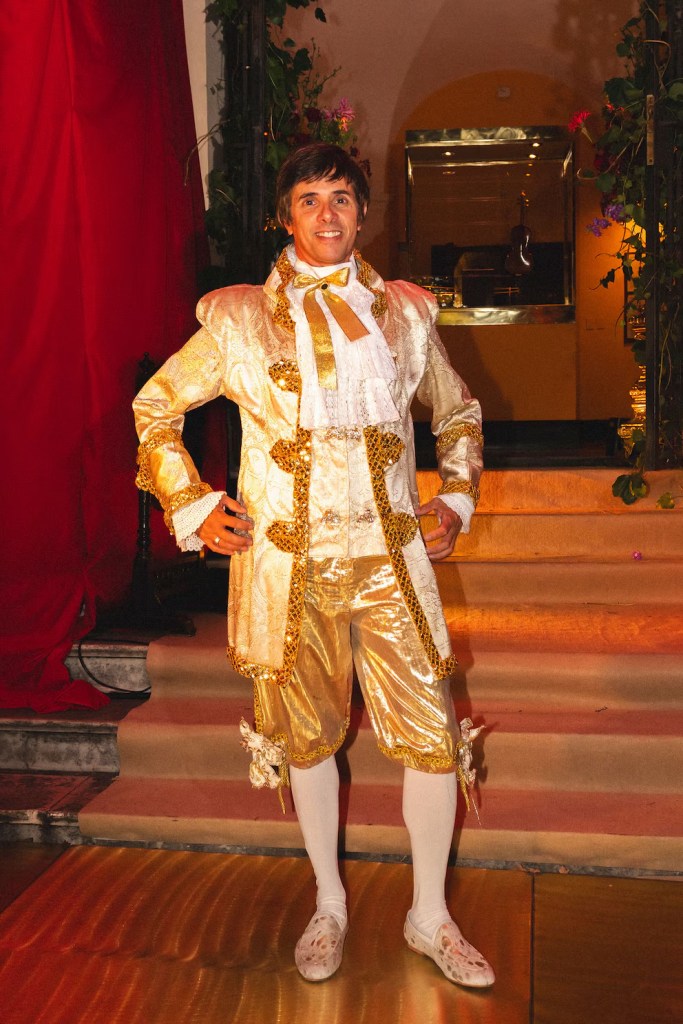
What’s most striking is that this drag is not irreverent. There is no irony in the outfits, no carnivalesque excess like the Latin American baroque theorized by Severo Sarduy. There’s no critique. Just stylization. Sarduy saw the baroque as joyful distortion, as an eccentric strategy against colonial power. Here, the gesture is inverted: the elite does not deform power, it imitates it. Embalms it. Mimes it without tension.
Gambotta and the Absence of Punctum
In his essay Punctum. Images Between Pain and Celebration, Martín Gambotta revisits Barthes’ punctum as that which pierces the image, wounds it, escapes the control of the scenic apparatus. In the “Sarao del Virrey,” there is no punctum. No rupture, no accident. Only pure studium: a decorative surface without affect. An Instagram reel with nothing left behind. The aesthetic on display—performative luxury, frozen smiles, fake lineage—is designed to avoid disruption. Everything has been choreographed so that nothing hurts.
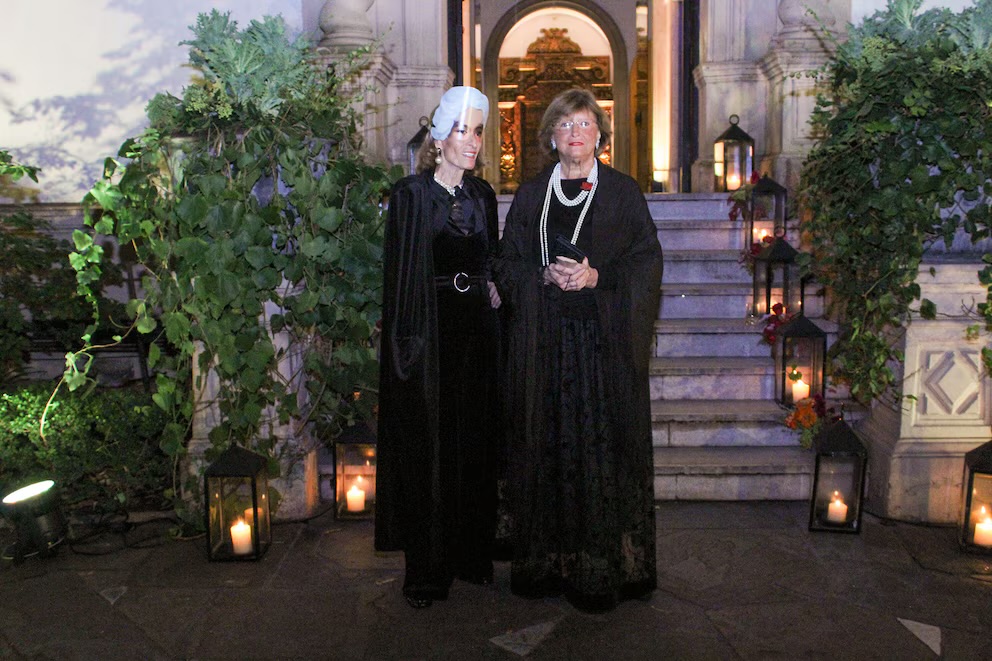
And that’s the most painful part: that in the midst of an unprecedented economic crisis, with more than 50% of the population living below the poverty line, there are sectors of society organizing palace balls in public museums with ticket prices reaching up to $5,000, and no one makes a sound. The sarao is not just a party; it is a collective anesthetic.
Baroque Without Politics
Bolívar Echeverría described the baroque as a figure of survival: a cultural form that blends the elite and the popular, the European and the mestizo, to resist capitalist modernity. But the baroque on display at the Sarao survives nothing—it merely performs. Its accumulation of signs is not hybridization, but fetishism. Not mixture, but aspiration. Not pain, but performance.
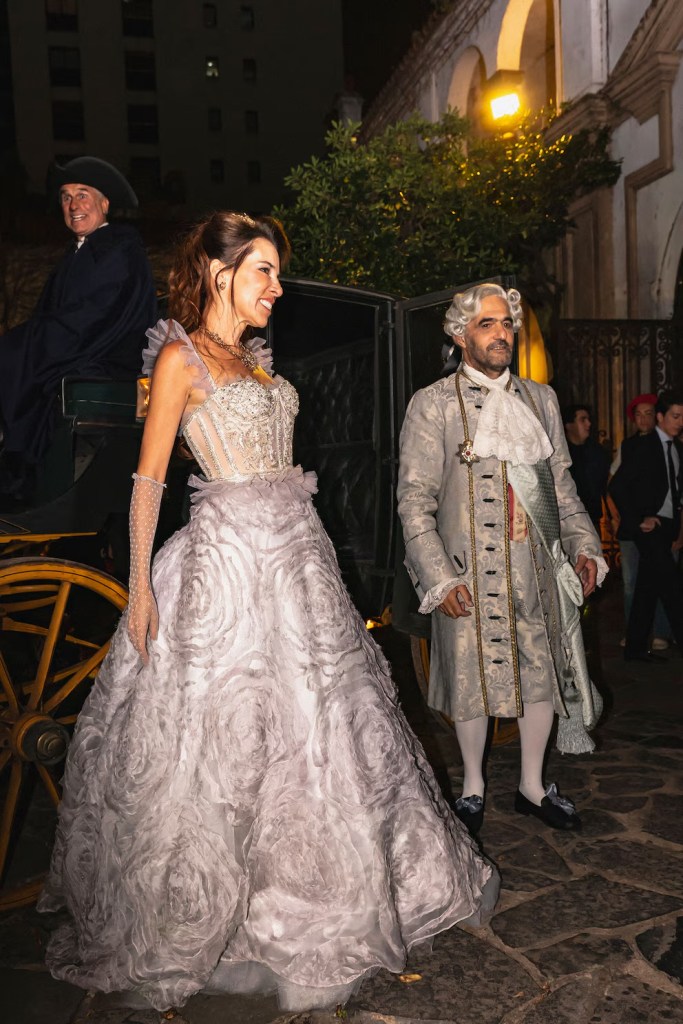
This is not the baroque of the people, nor of rebellion. It is the boutique baroque. The baroque of Argentina’s upper class dancing in a museum while the state collapses outside. Not as a gesture of insensitivity, but as a simulation of immunity.
Conclusion: The Future as Past Scenery
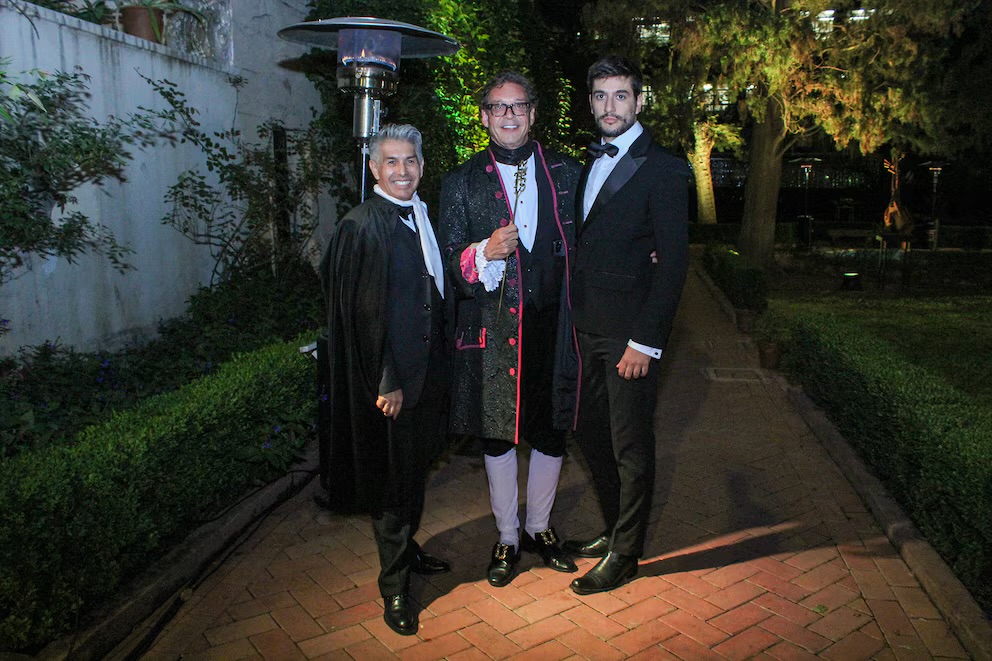
And yet, even on theatrical terms, it fails to shine. Because unlike Camp—as theorized by Susan Sontag, with its radical gesture of aesthetic excess, conscious exaggeration, and political irony—the Fernández Blanco spectacle has neither style nor parody. If the Met’s Camp gala was a drag opera of global visual culture, the Buenos Aires Sarao is its provincial imitation: graceless, timid, and staged with prop-room leftovers.
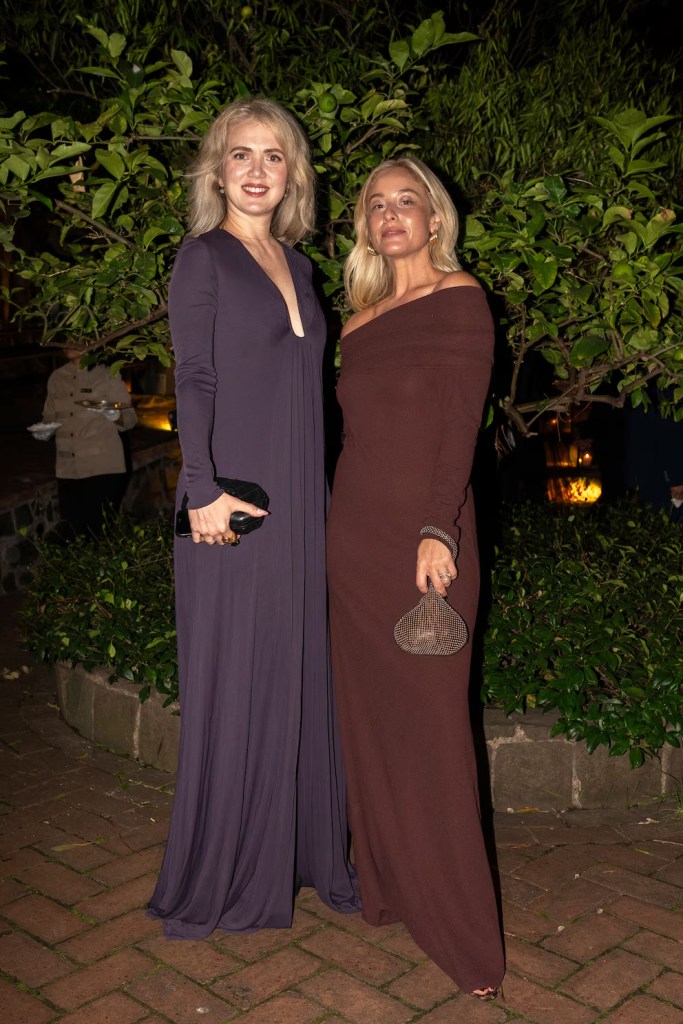
At the Met, Billy Porter arrived hoisted on a litter like a queer Cleopatra. At the Sarao, a woman with a hyphenated last name poses in a party-store tiara before a neocolonial window. The difference is not just budgetary—it’s cultural literacy. Because Camp, when it works, puts power into crisis through excess. But the Sarao settles for kitsch: cobblestone made of foam, costumes with no bodies inside, and a poor man’s nostalgia from a class that has forgotten it was never noble… only newly rich.


 Loveartnotpeople.blog
Deja una respuesta