“Terrible mistake to be in psychoanalysis.”
—David Dimbleby, looking at at one of Ken Kiff’s drawings
Review of Drawing the Unspeakable at the impressive Towner Eastbourne, co-curated by David and Liza Dimbleby
Drawing the Unspeakable is an exhibition at Towner Eastbourne co-curated by renowned broadcaster David Dimbleby and his daughter, artist Liza Dimbleby. Running from October 5, 2024, to April 27, 2025, the show features over 200 works exploring how drawing can express “unspeakable” experiences beyond words—namely, war, trauma, and memory. Or so they claim. In reality, the images are a rather overwhelming excuse to negotiate a different kind of unspeakability: sex, reproduction, pain, loneliness, and selective blindness.

Parental Socratism
Uniquely, the exhibition’s interpretation includes printed conversational dialogues between father and daughter alongside the artworks. These dialogues highlight Liza’s art-savvy insights and David’s characteristically dry, down-to-earth responses, reflecting a personal dynamic that requires contextualization. The genesis of this exhibition lies in their shared practice during the COVID-19 lockdown, when they exchanged drawings instead of letters—finding solace and connection through visual expression. This intimate gesture has since blossomed into a public curatorial act that underscores the power of drawing to convey what words often cannot.

The handout provided with the entrance ticket opens with a quote from Louise Bourgeois: “I make drawings to suppress the unspeakable… The motivation of the work is to destroy the unspeakable.” This is, of course, linked to the show’s title—a heavy claim, as always with Bourgeois—but one that sets the tone for the Dimblebys’ curatorial duet. They follow with the question: “What do we do when a situation feels unspeakable? When our body is disturbed—unsettled by emotion, fraught with feeling, which cannot be put into words?” This is where I begin to hesitate. Because David Dimbleby made a reputation with words—measured, framed, even surveilled and broadcast weekly on the BBC. And now, faced with the specter of his own death, amid the specific threat COVID-19 posed for people his age—a context that cannot be ignored—the exchange of images that codify the “unspeakable” is motivated, quite simply, by fear of death.

We can all relate to that. But what the exhibition offers is the chance to delve into their relationship, and into Liza’s view of art and, more specifically, of drawing. More importantly, despite herself, she allows him to be a parent again—at that age when parents, even monumental ones, begin their slow return to childhood. A caveat: this is not yet David’s case. His interventions still frame his daughter, and the collaboration becomes an act of love in its imbalance.
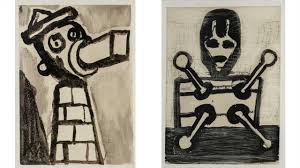
The Art of Postponement
He speaks through drawing—drily, metaphorically. Father and daughter displace their fears into the realm of discernment, using “art” as a way of being together without really having to talk. But he is the expert in communication, and he manages to convey the message. This is Englishness at its most aesthetic: emotion displaced into gesture, grief redirected into curated feelings. But it comes at a price—a rhetoric of feeling.
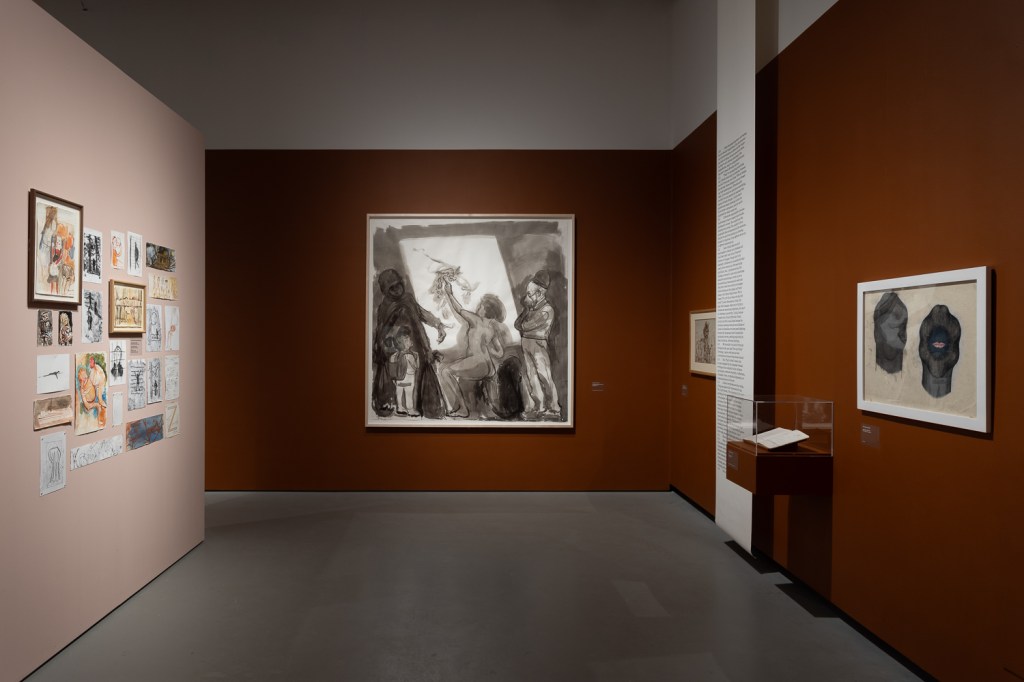
As the reader can see, this is a much more complex show than it seems at first glance. There are many drawings—perhaps too many. The curatorial criteria are structured around large themes that coalesce around trauma and loneliness, possibly as their logical outcome. “The drawings shown here are reacting to the experience of being a body in the world. A body that suffers conflicting and ambivalent emotion, that can wound and be wounded, combined with others in games, in desire. A body that can gestate new bodies and give birth. A body that is full of other bodies, haunted by the insistent presence of others, lost or living, suggesting that the boundaries between us are not as impermeable as we think. Yet our belief in the power of boundaries or borders can motivate the displacement of others by force—bodies being dispossessed, tortured, and killed,” says the daughter.

Game of Mirrors
I am not a fan of psychoanalytic approaches to art, but Jacques Lacan is an almost obvious reference after that statement. When she says the drawings react to the experience of being a body in the world, she signals a return to the infant’s pre-mirror chaos—a confrontation with embodiment not as self-possession, but as vulnerability, division, and permeability. Hence: “A body that suffers conflicting and ambivalent emotion, that can wound and be wounded, combined with others in games, in desire…” According to Lacan, desire is never simply about the object—it’s always mediated by the desire of the Other. Emotions are ambivalent because desire is structured by lack, not need. Games and desire are not innocent: they are fields where the subject is both constituted and alienated through language, the gaze, and power. The body is not autonomous but relational—its suffering and pleasure come from being entangled in the field of the Other’s desire. The jouissance (excessive enjoyment/pain) evoked by “being wounded and wounding” taps into the Real—the part of experience that escapes symbolization but insists through trauma, rupture, repetition. This is illustrated in the show through Paula Rego and Kara Walker’s representations of triggering events of individual trauma. Bourgeois, by contrast, conveys that trauma can only be accessed through displacement, allegory, opacity. Jackowski’s essays in obscene obliteration of the body aren’t trauma, but catharsis. There’s a constant danger in the show of conflating traumatic narratives with identity—which opens the door to NHS traumatology.

This shifts our perspective: the show is not merely a display of drawings but becomes an in situ installation. Eastbourne, like Bexhill and Hastings, are places of retirement, or purgatory. Penelopean places where time becomes elastic—a place to wait. Here, gestation is not a metaphor for creation but for being nostalgically inhabited by the Other. These are towns where the body is haunted, permeable, even undone.

Perhaps this explains the show’s obsession with assorted bodies—Leo Kossoff, Ansel Krut, even James Gillray’s wonderful portrait of George Humphrey II, “made during a period of mental disturbance”—whatever that means. Liza oscillates between stigmatized identities (mental health, trauma, foreignness) and the haunted body, which I believe is the most compelling aspect of an otherwise overambitious show. In her own words: “A body that is full of other bodies, haunted by the insistent presence of others, lost or living…” Lost or living? Friendship and kinship as both ownership and detachment. A subject is never whole; it is always split, barred, decentered. In Lacanian ethics, the Real always returns—and when it does, it often appears as trauma, horror, or forced expulsion: the radical instability of the body, the fantasy of borders, and the violence of the symbolic order. This can be illustrated as interpersonal theatre (Rego), historical rupture (Goya), or, more problematically, as the diary of an African immigrant—a ventriloquizing mistake. This is where England, and particularly English middle-class women, often go wrong.

In her writing and curation, Liza Dimbleby pivots from a poetic meditation on bodily permeability to a sweeping indictment of borders and state violence. “Our belief in the power of boundaries or borders,” she writes, “can motivate the displacement of others by force—bodies being dispossessed, tortured and killed.” It’s a familiar liberal curatorial reflex: begin with fragility, end with a moral gesture toward global injustice. She uses Ken Kiff, Ansel Krut, Jackowski, and—deliberately, I call it this way—“the African immigrant notebook,” who is granted the privilege of representation (which we must assume is a white privilege, forced through the witnessing of his own horror and pain). But the leap from wombs and hauntings to torture and displacement feels extractive—not because the themes aren’t linked, but because the connection is not thought through. Instead of interrogating how borders function legally, economically, historically, Dimbleby collapses political violence into emotional metaphor, with the skin as Europe’s allegory. Borders become feelings; dispossession becomes a psychic wound. The aestheticization of atrocity under the guise of “drawing the unspeakable” is not critique—it’s catharsis masquerading as politics. Leaving that part of the exhibition, one wonders: who, exactly, does this gesture serve? And is art here another form of displacement?
A Very, Not That Intimate, Play
Liza is not stupid—she senses the danger of her ambition. David sees it clearly. But the title of the show is the mortgage that is never paid. If the subject is unspeakable, we fall into ironic detachment (David) and academic overqualification (Liza). Their impossible exchange—because they don’t really listen to each other—is where the wonder of the show resides. These exchanges are hung from the ceiling, creating a parallel exhibition where words are framed and the unspeakable becomes very speakable—but still unsaid. A Socratic comedy of errors: his ego plays the sage, her art-world tics become noise. But this is how parents and children speak, so let’s explore that.

The real theme of the show is not the unspeakable but the ambivalence of art—presented as humanistic, but deeply postmodern. In one dialogue panel, Liza enacts a kind of childishness: “With an image, you can say three things at once… An image can hold ambivalence.” David replies with a more grounded tone: “Drawing is more complex than [an] idea expressed in words… You couldn’t write a paragraph summarising all your emotions from looking at a drawing because it’s layered. It has different stories in it, different implications.” Liza’s poetic phrasing is grounded by David’s pragmatic wisdom. Ambivalence is not a place to hide or exploit; it comes with a cost. To postpone, to delay, to deny meaning—these are also forms of dying.
Psychoanalysis hovers over the show, though David clearly opposes it. A big presentist mistake would have been to turn a show about drawing into one about trauma. One delightful exchange appears in a banner: Liza mentions that “[Ken Kiff] was in psychoanalysis and so a lot of his drawings come from the unconscious.” David interjects with a dry one-liner: “Terrible mistake to be in psychoanalysis.” Let me interject, too: “Terrible!” Liza attempts to counter his dryness with an even drier defense, turning it into a tool of artistic self-management: “That’s what you think. But for a lot of artists, it’s very generative.” This light back-and-forth—Liza offering scholarly context, David quipping with skeptical clarity—typifies their rapport. His interruption brings humor and paternal realism; her rejoinder keeps things anchored in the art. These conversational moments are displayed on the gallery walls and lend the scholarship the intimacy of a family exchange—avoiding what could have easily been a tightly academic disaster.

These dialogic labels are key to the exhibition’s emotional and curatorial tone. I would almost prefer to see the show as a play without images—which is the opposite of their intent. The manichean curation of Drawing the Unspeakable moves from rhetorical darkness—“violence, darkness and grief,” as Liza puts it—to moments shot through with “unspeakable love.” And it is that very English, unspeakable love that makes this a great show. The inclusion of David and Liza’s voices brings warmth through dryness. Liza is passionate and nuanced, if enclosed in the formalism of art education. David is honest, unsentimental—and unknowable. After seeing the show, I know he is sharp, dry, intelligent. But I do not know what he thinks.
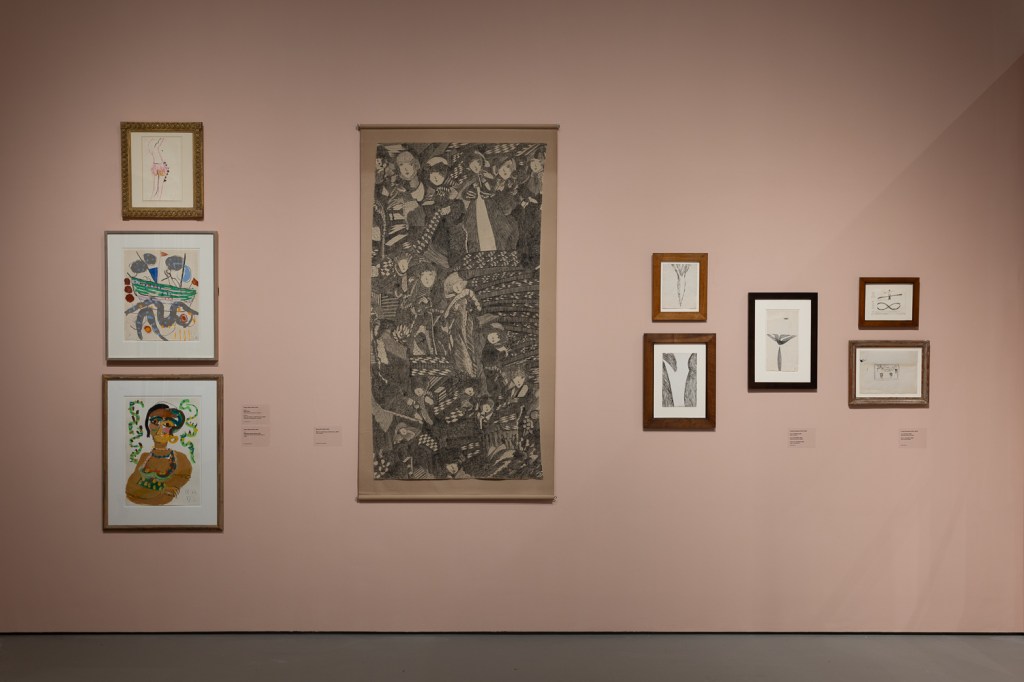
Rather than a single authoritative voice, the show offers two intergenerational voices grappling with meaning—more like eavesdropping than being taught. It demystifies the content but, at times, feels traumatic. Beneath the politeness, two specters haunt the exhibition: Elektra and Medea. Not just classical references, but energies—coded, sublimated, unmistakable. Elektra: the loyal daughter bound to the father’s symbolic law. Medea: the rejected outsider, who uses fury and technique. The show doesn’t stage these myths, but they flicker at its edges—especially in Liza’s darker, more agitated careerism. One wonders: is this collaboration also a containment? A managed passing of the torch—from patriarchal speech to female image-making—under the sign of grief?
De la BBC a Elektra: lo indecible según los Dimbleby
Dibujar lo indecible es una exposición en Towner Eastbourne, co-curada por el reconocido periodista David Dimbleby y su hija, la artista Liza Dimbleby. Inaugurada el 5 de octubre de 2024 y abierta hasta el 27 de abril de 2025, la muestra reúne más de 200 obras que exploran cómo el dibujo puede expresar experiencias “indecibles”, más allá de las palabras: la guerra, el trauma, la memoria. O eso dicen. En realidad, las imágenes funcionan como una excusa desbordante para negociar otro tipo de indecibilidad: el sexo, la reproducción, el dolor, la soledad y una ceguera selectiva.
De forma singular, la interpretación curatorial incluye diálogos impresos entre padre e hija dispuestos junto a las obras. Estos intercambios destacan las observaciones agudas de Liza sobre arte y las respuestas características de David: secas, terrenales, revelando una dinámica familiar que merece ser contextualizada. La exposición nace del intercambio de dibujos entre ambos durante el confinamiento por COVID-19, cuando, en lugar de cartas, se enviaban imágenes, encontrando consuelo y conexión a través de la expresión visual. Ese gesto íntimo se transforma aquí en un acto público de curaduría que subraya el poder del dibujo para decir lo que las palabras no alcanzan.
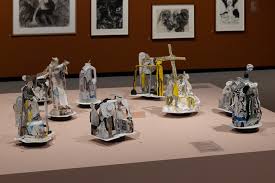
El folleto que se entrega con la entrada comienza con una cita de Louise Bourgeois: “Hago dibujos para suprimir lo indecible… La motivación de la obra es destruir lo indecible”. Esto, por supuesto, remite al título de la muestra: una afirmación densa, como todas las de Bourgeois, pero que marca el tono del dúo curatorial. Luego agregan: “¿Qué hacemos cuando una situación parece indecible? Cuando nuestro cuerpo se ve perturbado—conmovido por emociones, tensionado por sentimientos que no pueden ponerse en palabras?”. Y aquí es donde comienzo a dudar. Porque David Dimbleby construyó su reputación con palabras—palabras medidas, enmarcadas, incluso vigiladas, y transmitidas semanalmente por la BBC. Y ahora, frente a la muerte propia, ante la amenaza que el COVID-19 representó para personas de su edad—un contexto ineludible—lo que motiva el intercambio de imágenes que codifican lo ‘indecible’ es el miedo a morir.
Podemos identificarnos con eso. Pero lo que la exposición nos ofrece es la posibilidad de entrar en su vínculo, y en la mirada de Liza sobre el arte y, en particular, sobre el dibujo. Más importante aún, a pesar de sí misma, ella le permite a él volver a ser padre—a esa edad en que los padres, incluso los monumentales, comienzan su camino de regreso a la infancia. Un matiz: este no es aún el caso de David, cuyas intervenciones enmarcan a su hija y hacen que la colaboración se vuelva un acto de amor en el desequilibrio.
Él habla a través del dibujo, tanto literal como metafóricamente. Padre e hija desplazan sus temores al terreno del discernimiento, y usan el “arte” como una forma de estar juntos sin tener que hablar realmente. Pero él es el experto en comunicación, y logra transmitir el mensaje. Esta es la inglesidad en su versión más estética: emoción desplazada al gesto, duelo reconducido a sentimientos curados. Pero eso tiene un precio: una retórica de la sensibilidad.
Como puede verse, esta es una muestra mucho más compleja de lo que aparenta. Hay muchos dibujos—quizás demasiados. Los criterios curatoriales se organizan en torno a grandes temas que confluyen en torno al trauma y la soledad, posiblemente como desenlace lógico. “Los dibujos aquí reaccionan a la experiencia de ser un cuerpo en el mundo. Un cuerpo que sufre emociones ambivalentes y contradictorias, que puede herir y ser herido, que se combina con otros en juegos, en el deseo. Un cuerpo que puede gestar nuevos cuerpos y dar a luz. Un cuerpo lleno de otros cuerpos, acosado por la presencia insistente de otros, perdidos o vivos, lo que sugiere que las fronteras entre nosotros no son tan impermeables como creemos. Sin embargo, nuestra creencia en el poder de los límites o las fronteras puede motivar el desplazamiento de otros por la fuerza: cuerpos desposeídos, torturados y asesinados”, dice la hija.
No soy adepto de los enfoques psicoanalíticos en el arte, pero Jacques Lacan aparece casi como una referencia obligada tras esa afirmación. Cuando ella dice que los dibujos reaccionan a la experiencia de ser un cuerpo en el mundo, señala un regreso al caos pre-especular del infante—una confrontación con la corporalidad no como posesión del yo, sino como vulnerabilidad, división, permeabilidad. De ahí: “Un cuerpo que sufre emociones ambivalentes, que puede herir y ser herido, combinado con otros en juegos, en deseo…”. Según Lacan, el deseo nunca se dirige simplemente al objeto—está mediado por el deseo del Otro. Las emociones son ambivalentes porque el deseo está estructurado por la falta, no por la necesidad. Juegos y deseo no son inocentes: son campos donde el sujeto se constituye y se aliena a través del lenguaje, la mirada y el poder. El cuerpo no es autónomo, sino relacional—su sufrimiento y su placer provienen del entrelazamiento con el deseo del Otro. La jouissance (disfrute/dolor excesivo) evocada por “herir y ser herido” toca lo Real—esa parte de la experiencia que escapa a la simbolización, pero que insiste a través del trauma, la ruptura, la repetición. Esto se ilustra en la muestra con las representaciones de traumas individuales de Paula Rego y Kara Walker. Bourgeois, en cambio, transmite que el trauma solo puede abordarse a través del desplazamiento, la alegoría, la opacidad. Los ensayos de Jackowski sobre la obliteración obscena del cuerpo no son trauma sino catarsis. Hay un riesgo constante en la muestra de convertir los relatos traumáticos en identidades, lo cual abre la puerta a la traumatología estilo NHS.
Esto nos obliga a ver la muestra no como una colección de dibujos, sino como una instalación in situ. Eastbourne, como Bexhill y Hastings, son lugares de retiro, o purgatorios. Lugares “penelópeos” donde el tiempo se vuelve elástico: lugares de espera. En estos pueblos, la gestación no es metáfora de creación sino de ser habitado nostálgicamente por el Otro. Son lugares donde el cuerpo está acosado, permeable, incluso deshecho.
Tal vez por eso una parte importante de la exposición gira en torno a cuerpos diversos—Leo Kossoff, Ansel Krut, incluso el maravilloso retrato de George Humphrey II de James Gillray, “hecho durante un período de perturbación mental”, sea lo que sea que eso signifique. Liza oscila entre las identidades estigmatizadas (salud mental, trauma, extranjería, etc.) y el cuerpo espectral, que para mí es, con mucho, lo más interesante de una muestra excesivamente ambiciosa. En sus propias palabras: “Un cuerpo lleno de otros cuerpos, acosado por la presencia insistente de otros, perdidos o vivos…”. ¿Perdidos o vivos? La amistad y el parentesco como propiedad y desapego, al mismo tiempo. El sujeto nunca es un todo; ya está dividido, barrado, descentralizado. En la ética lacaniana, lo Real siempre retorna—y lo hace en forma de trauma, horror o expulsión forzada: la inestabilidad radical del cuerpo, la no-autonomía del sujeto, la fantasía de las fronteras, la violencia del orden simbólico. Esto puede ilustrarse como teatro interpersonal (Rego), momento histórico de violencia extrema (Goya), o como el diario de un inmigrante africano—lo cual es un espacio muy problemático de la muestra, un error ventrílocuo. Aquí es donde Inglaterra—y, usualmente, las mujeres inglesas de clase media—se equivocan.
En sus textos y curaduría, Liza Dimbleby pasa de una meditación poética sobre la permeabilidad del cuerpo a una acusación general contra las fronteras y la violencia estatal. “Nuestra creencia en el poder de los límites o las fronteras”, escribe, “puede motivar el desplazamiento de otros por la fuerza: cuerpos desposeídos, torturados y asesinados.” Es un reflejo curatorial liberal conocido: comenzar con la fragilidad y terminar con un gesto moral hacia la injusticia global. Usa a Ken Kiff, Ansel Krut, Jackowski y—lo digo deliberadamente así—“el cuaderno del inmigrante africano”, a quien se le otorga el privilegio de estar allí (lo que debemos asumir es un privilegio blanco, por el hecho de presenciar su propio horror y dolor). Pero el salto del útero y los fantasmas al desplazamiento y la tortura se siente extractivo—no porque los temas no estén relacionados, sino porque la conexión no está pensada. En lugar de interrogar cómo funcionan realmente las fronteras—legal, económica, históricamente—Dimbleby subsume la violencia política en una metáfora emocional, con la piel como alegoría de Europa. Las fronteras se vuelven sentimientos; la desposesión, una herida psíquica. La estetización de la atrocidad bajo el pretexto de dibujar lo “indecible” no es crítica, sino catarsis disfrazada de política. Al salir de esa parte de la exposición, uno se pregunta a quién, exactamente, sirve ese gesto. Y si el arte, en este caso, no es también una forma de desplazamiento.
Liza no es tonta—intuye el peligro de su ambición. David lo ve con claridad. Pero el título de la muestra es la hipoteca que nunca se paga. Si es indecible, caemos en el desapego irónico (David) o en la sobrecalificación académica (Liza). En ese intercambio imposible—porque no se escuchan realmente—es donde sucede la maravilla de la muestra. Estos intercambios están colgados del techo, creando una exposición paralela donde las palabras están enmarcadas y lo indecible se vuelve muy decible, pero aún no se atreven a decírselo. Un intercambio socrático como comedia de errores, donde el ego de él exhibe sabiduría y los tics del mundo del arte de ella se vuelven ruido. Pero así es como hablan los padres y los hijos. Vale la pena explorar ese intercambio.
Por supuesto, el tema central de la muestra no es lo indecible sino la ambivalencia del arte, presentada como humanista pero profundamente posmoderna. En uno de los paneles, Liza enuncia con infantilismo: “Con una imagen, podés decir tres cosas a la vez… Una imagen puede sostener ambivalencia”. David responde con tono más práctico: “El dibujo es más complejo que una idea expresada en palabras… No podrías escribir un párrafo resumiendo todas tus emociones al ver un dibujo porque tiene capas. Tiene distintas historias, distintas implicaciones.” La frase técnica y poética de Liza sobre la ambigüedad es aterrizada por la sabiduría de David. La ambivalencia no es un refugio ni un capital extractivo: siempre tiene un precio. Postergar, negar, dilatar el sentido—son formas de morir.
El psicoanálisis sobrevuela la muestra, aunque David lo rechaza claramente. Sería un error presentista convertir una exposición sobre el dibujo en una sobre el trauma. Un delicioso intercambio aparece en uno de los carteles: Liza menciona que “[Ken Kiff] estaba en psicoanálisis y muchos de sus dibujos vienen del inconsciente.” David interrumpe con una frase seca: “Grave error estar en psicoanálisis.” Dejo mi propia intervención: “¡Grave!”. Liza intenta contrarrestar su sequedad con aún más sequedad, convirtiéndolo en herramienta de autogestión artística: “Eso pensás vos. Pero para muchos artistas, es muy generativo.” Este ida y vuelta—ella aportando contexto teórico, él lanzando una ironía escéptica—tipifica su relación. La interrupción de él trae humor y realismo paternal; la respuesta de ella, ancla la conversación en el arte. Estos momentos están exhibidos en las paredes de la galería y dan a la erudición el tono de un diálogo familiar, evitando lo que pudo ser un desastre académico.
Estas etiquetas dialogadas son clave para el tono emocional y curatorial de la muestra. Yo preferiría verla como una obra de teatro sin imágenes—lo opuesto a su intención. La curaduría maniquea de Drawing the Unspeakable transita de la oscuridad retórica—“violencia, oscuridad y dolor”, según Liza—a momentos atravesados por un “amor indecible”. Y es ese amor indecible, muy inglés, lo que hace que esta sea una gran muestra. La inclusión de las voces de David y Liza aporta calidez a través de la frialdad. Liza es apasionada y matizada, aunque atrapada en la formalidad del mundo artístico. David es seco, inteligente. Pero es difícil conocerlo. Después de ver la muestra, sé que es agudo y seco. Pero no sé qué piensa.
En lugar de una voz única, la muestra ofrece dos voces intergeneracionales enfrentándose al sentido—como si escucháramos detrás de una puerta sus reflexiones personales. Ayuda a desmitificar lo que podría ser inaccesible, pero a veces resulta traumático. Bajo la cortesía, dos espectros recorren la muestra: Electra y Medea. No solo como referencias clásicas, sino como energías—codificadas, sublimadas, pero inconfundibles. Electra: la hija leal atada al orden simbólico del padre. Medea: la outsider que, al ser abandonada, elige la furia y el fuego en nombre de la técnica. La muestra no escenifica estos mitos explícitamente, pero titilan en sus bordes—sobre todo en la carrera más oscura, más agitada de Liza. Uno se pregunta: ¿es esta colaboración también una forma de contención? ¿Una transición gestionada del habla patriarcal a la imagen femenina, bajo el signo del duelo?

 Loveartnotpeople.blog
Deja una respuesta