
Getting Used to Being in Danger
I write these lines from the south east coast of England, going through a delicate situation in which my physical, psychological, and legal safety is compromised in multiple ways. What surrounds me is not so much a specific threat as it is a web of institutional neglect: a chain of omissions, delays, and ambiguous gestures from authorities — in East Sussex and also in Argentina — who have decided to look the other way.
I write these lines from the south east coast of England, going through a delicate situation in which my physical, psychological, and legal safety is compromised in multiple ways.
Tweet
It’s Britney, Bitch!
I was taken to the house of a man linked to a private security agency, who drugged me and filmed me without consent. I hadn’t had sex with anyone for a year and a half, out of fear, ever since I had previously been attacked while sleeping — possibly poisoned. That same day, I found out that a former friend — whose last name matches that of a well-known communist philosopher — had dug a pit in my father’s house in Longchamps, which I had lent her. She said it was to install a swimming pool, without consulting me, but the proportions looked more like a mass grave. Her “nephew,” who was living there, was accused by neighbors of turning the place into a hideout. I, meanwhile, was in another country, alone, heavily medicated, and receiving threats.
I was taken to the house of a man linked to a private security agency, who drugged me and filmed me without consent. I hadn’t had sex with anyone for a year and a half, out of fear, ever since I had previously been attacked while sleeping — possibly poisoned.
Tweet

Murderous Pastoralisms
That’s something I’ll never be able to prove: the British State did not order toxicology tests, and the Argentine Consulate didn’t demand them either, despite my immediate and repeated requests. The first thing I asked for was exactly that: a toxicology test. But it had already happened to me before — with people like artist Horacio Inchausti, to whom I gave a solo show at Azur Art Gallery in Buenos Aires along with my friend Kokogian with all expenses included. At the first opportunity he turned his back on me. I wasn’t hurt. I saw it coming. It was the classic gesture of Argentine pastoralism: that soft form of power which, as explained by Foucault and later Oliver Davis, is exercised not through imposition, but through care, affection, and attention. You can use my flat in Rio in exchange for my resentment for you having done what I did not have the balls to do. First they listen, they flatter your ego, they translate you; then they try manage you and when they realise that they cannot, they stage a scene of discarding you, and reclassifying you as a problem. When I confronted him, it was so pityfull that I let him go. Levinas is the same but he is more dangerous. I caught him in fraganti calling my friend Noble to tell him to be careful with me. I was there with her in London. Listening. He was scared that I might write an article in Clarin about the disastrous Argentine Ambassador in London at the time. I hadn’t even thought about doing such a thing. I would not waste ink and so much industrial Papel Prensa in someone that does not deserve anyone’s time. But pastoralism is a disease; an ethical one that is pandemic in my generation. It’s the art of domination disguised as understanding. Inchausti appropriated my texts, feigned complicity while it served him, and then disappeared, embarrassed by his own flatness. That same logic — using, discarding, adapting — is nearly identical to the way the consular institutions have been treating me: without human substance and breaking the law. Twice: Habeas Data and consular law. Just a reflex of institutional self-preservation. A very stupid take on it, if you ask me.
Pastoralism is a disease; an ethical one that is pandemic in my generation. It’s the art of domination disguised as understanding. Inchausti appropriated my texts, feigned complicity while it served him, and then disappeared, embarrassed by his own flatness.
Tweet
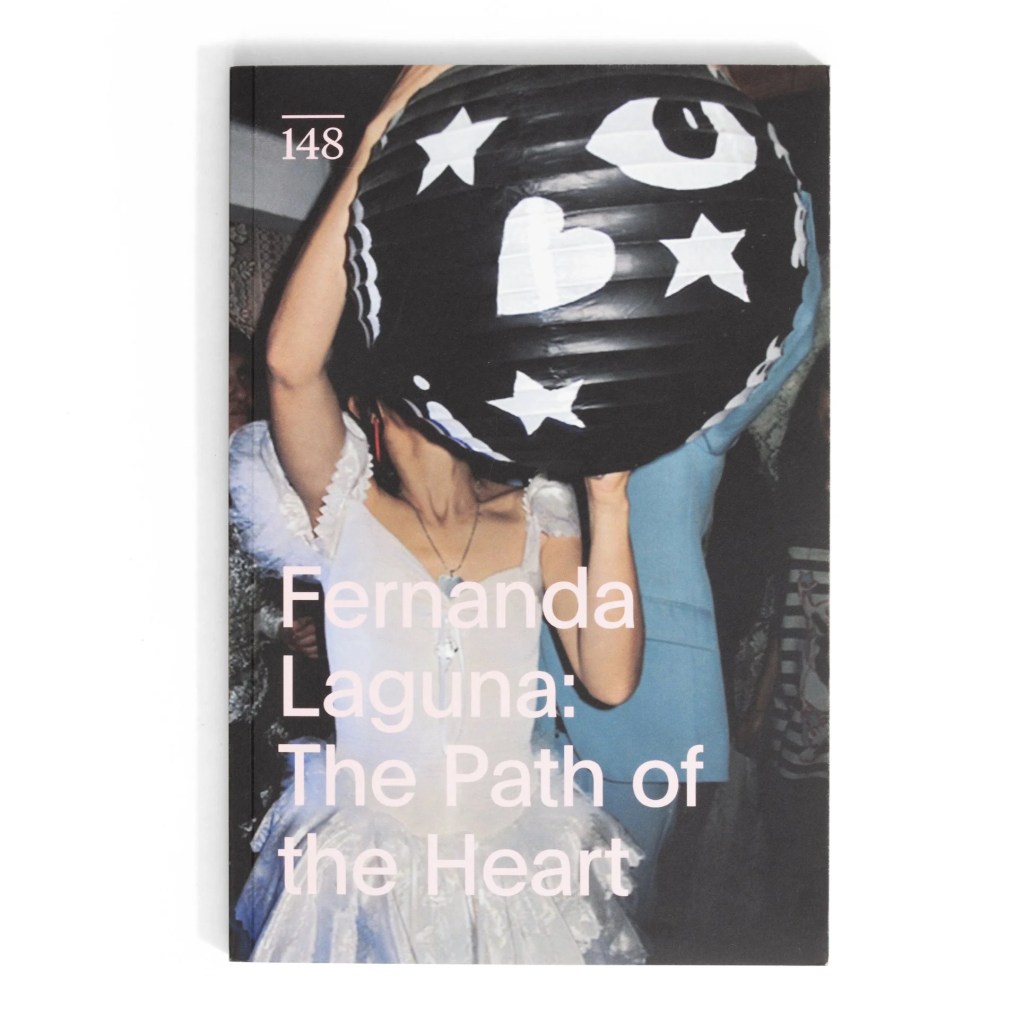
Fernanda Laguna as Allegory of Pastoralist Cynicism
“Not professionalized,” says Francisco Lemus — curator of the nineties canon and employee of Ama Amoedo’s foundation — referring to Fernanda Laguna. But what does it even mean, at this point, to not be a professionalized artist? To be a woman? To not have gone to the Di Tella Institute? To use glitter? To cut out clouds? Laguna founded publishing houses, galleries, and art workshops in working-class neighborhoods; she created a literary style that was copied to exhaustion by generations who confused extimacy with spontaneity, and affection with affect. Not professionalized, Lemus says, as if Belleza y Felicidad had been a poster board, and not a well-oiled experimental apparatus for symbolic circulation, critical stupefaction, and the early capture of sensibilities.

Not professionalized, Lemus says, as if Belleza y Felicidad had been a poster board, and not a well-oiled experimental apparatus for symbolic circulation, critical stupefaction, and the early capture of sensibilities.
Tweet
Laguna’s work doesn’t “detach from fixed sexual identities,” as Lemus claims: it makes them modular, interchangeable, like schoolgirl stickers. But that availability is not political — it is decorative. Queerness in Laguna’s work is not a disruptive force: it’s the permitted form of a sensitive internationalism that doesn’t bother anyone. And furthermore, what Lemus presents as fluidity or disidentification actually crystallizes yet another legible, marketable identity: bisexuality. Laguna does not dissolve gender or sexuality; she simply renders them consumable within an emotional repertoire already domesticated by the cultural market.
In that sense, her work does not subvert temporality either. Although it simulates chronological disorder, melancholy, regression, or obsessive loops, her work organizes experience as a continuous identity-based temporality, made up of traces of infatuation, glued-on phrases, and pastel trauma colors. Far from undoing identity, she constructs it. She announces its disappearance while solidifying it as a brand. The aesthetic of the intimate notebook does not destabilize — it archives. It classifies. It validates. What it ultimately teaches is an emotional pedagogy of the “free” artist who endlessly repeats her own configuration. Lemus performs the same operation through curatorial discourse, converting that affective availability into a historiographic category — “non-professionalism” — that guarantees her inclusion in the canon precisely as exception.
National Self-Determination and Individual Agency as Noise
Here is where Partha Chatterjee becomes relevant. A postcolonial theorist who exposed how forms of modern self-determination in the Global South are ultimately determined by the conditions imposed by imperial centers. For Chatterjee, even cultural or subjective sovereignty is often a simulated form of inclusion, permitted only as long as it doesn’t threaten the structural logic of domination. Laguna doesn’t represent an escape from the identity regime: she is one of its most effective contemporary forms. And Lemus does not interpret her work: he consolidates it.
Feminist 2000s Argentine Artist Fernanda Laguna doesn’t represent an escape from the identity regime: she is one of its most effective contemporary forms. And Lemus does not interpret her work: he consolidates it.
Tweet

This is also where Samir Amin enters the picture — a French-Egyptian Marxist economist and one of the sharpest voices from the Global South in the second half of the twentieth century. Amin developed the theory of the world system, the global apartheid, and the concept of delinking as a concrete strategy against imperialist domination. He was one of the few to bluntly declare the failure of twentieth-century internationalisms — from Bandung to the Zapatistas, from the Bolivarian alliance to the World Social Forum. Without epistemological rupture or material sovereignty, he argued, any cosmopolitanism is a simulation. There is no equitable alliance while capital dictates the terms. For this reason, in the midst of Argentina’s collapse, his thinking has never been more urgent.
Samir Amin enters the picture — a French-Egyptian Marxist economist and one of the sharpest voices from the Global South iWithout epistemological rupture or material sovereignty, there is no solidarity nor (political forms of) love.
Tweet
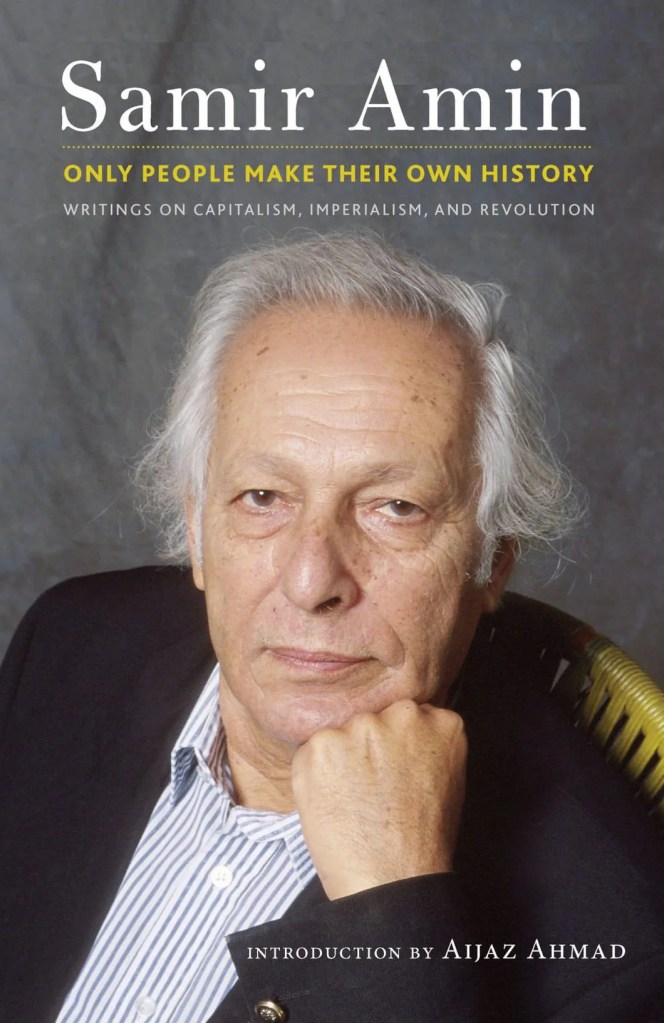
Samir Amin explained it with fierce clarity: underdevelopment is not a remnant of progress — it is a structural condition of contemporary capitalism. There is no outside. There is no edge. What we have is an unequal distribution of planetary power presented as a natural order, turning every expression of cultural difference into either export merchandise or folkloric decoration. The real problem, then, is not just Milei. It is also the way La Nación, contemporary art, and regional think tanks have managed to naturalize the subordinate place of the South within an “internationalism” that was never truly international. What value does cosmopolitanism have when it is defined in Brussels, New York, or Tel Aviv? What space for dissent remains when everything outside the script is criminalized, pathologized, or dismissed as incoherent?
Everything you are to the bin
Milei is not an anomaly — he’s a symptom. With his performative embrace of Israel — the nation with the worst international image today, even in the Global North — Argentina positions itself as a geopolitical appendage, renouncing any possibility of critical sovereignty. His statements against Iran were not diplomacy: they were symbolic military alignment. And once again, the memory of the AMIA bombing was instrumentalized to whitewash obedience. Meanwhile, the Argentine people suffer — but not because of Iran or Israel: they suffer because of debt, Caputo, utility hikes, repression, and the daily humiliation of asking for help at a consulate and being treated like a suspect.
What’s most cruel is that this humiliation doesn’t come from neoliberal governments — from them, it’s expected. Brutality, indifference, and disposability are their policy. What’s truly devastating is that, in this case, the abandonment comes from those who claim to represent “progressivism”: officials who present themselves as heirs of the human rights tradition, yet operate with the same logic of suspicion, mistrust, and dehumanizing bureaucracy.
Reading Samir Amin, then, is not an intellectual exercise: it’s a way of thinking about my own agency. There can be no justice in a system built on structural injustice. Everything else is glitter, Fernanda Lagunas. The monster of exportable sensitivity.
Tweet

Reading Samir Amin, then, is not an intellectual exercise: it’s a way of thinking about my own agency. There can be no justice in a system built on structural injustice. There can be no internationalism without rupture. Everything else is glitter, cardstock, and exportable sensitivity. Meanwhile, I’m still here, trying not to disappear at the margins of an embassy that should be protecting me — and instead, registers me as noise. I don’t know if the system will implode. What I do know is that if it doesn’t, many of us will continue to fall. One by one. Silently. In real time.
Join my members club in youTube by clicking here




 Loveartnotpeople.blog
Deja una respuesta