
scroll down for the english version

Hay amistades que no te fallan porque nunca existieron. O mejor dicho: existieron como espectros. Como energía. Como transmisión. Este post está dedicado a una de esas amistades: Veronica Electrónica
Tweet
La Amistad: Energía que Fragmenta el Tiempo
En esta Semana dedicada a la Amistad, decidí no escribir sobre mis amigos de carne y hueso —la mayoría de los cuales ya no están, no entienden o simplemente no me interesan— sino sobre los vínculos espectrales que realmente me transformaron. No creo en la amistad como sostén emocional, ni como compañía, ni como red de afecto. Creo en la amistad como transmisión energética, como posibilidad crítica de interrumpir el tiempo, como forma no confesional de resonar con otro. Y por eso este texto está dedicado a Madonna —o mejor dicho, a Veronica Electrónica— y a esa extraña relación que me une a ella: una relación de espejo, de eco, de traición compartida.
No creo en la amistad como sostén emocional, ni como compañía, ni como red de afecto. Creo en la amistad como transmisión energética, como posibilidad crítica de interrumpir el tiempo, como forma no confesional de resonar con otro.
Tweet

Durante siglos, escritores y pensadores imaginaron una comunidad invisible de pares: la República de las Letras. No hacía falta conocerse; bastaba con leerse, afectarse, tocarse sin cuerpo. Hoy, ese proyecto no está muerto, pero sí desplazado. Yo, como muchos otros, no escribo para mis contemporáneos inmediatos, ni para quienes me conocen. Escribo desde un lugar marginal —Costa Café— pero también desde el centro de la nube. Un centro espectral, donde la escritura se vuelve táctica.
Escribo desde un lugar marginal —Costa Café— pero también desde el centro de la nube. Un centro espectral, donde la escritura se vuelve táctica.
Tweet
Y desde ahí, me pregunto: ¿qué es el archivo? No el archivo boludo de lo intangible, el de “la presencia” en la ausencia, como propone Diana Taylor, sino el archivo como campo de manipulación. No como fuente de autoridad, sino como escenario cognitivo. Manipular el archivo es pensar. Reescribirlo es intervenir. Fragmentarlo es amar.

Las Amistades Que No Traicionan Son Los Ghosts in the Machine
Hay amistades que no te fallan porque nunca existieron. O mejor dicho: existieron como espectros. Como energía. Como transmisión. Este post está dedicado a una de esas amistades: Veronica Electrónica. No me formó como crítico. Ni como artista. Me formó como maricón con poder. Y eso, en este mundo, es infinitamente más difícil.
¿Qué es el archivo? No el archivo boludo de lo intangible, el de “la presencia” en la ausencia, como propone Diana Taylor, sino el archivo como campo de manipulación. No como fuente de autoridad, sino como escenario cognitivo.
Tweet
En una entrevista reciente con Revista Bache, hablamos de la diferencia entre operar en el presente y operar en la memoria. Yo no intervengo en el presente. Lo archivo. Lo corrompo. Lo reescribo. Le dije al entrevistador —un joven con quien no comparto ni tiempo ni referencias— que el proyecto Loveartnotpeople sabe perfectamente en qué contexto está insertado. Y que, por eso mismo, puede fracasar o triunfar, da igual. Porque el objetivo no es gustar, sino modificar el eje mismo de la temporalidad.
La amistad, así como la venden, es imposible. A menos que se desplace a otra dimensión: no lineal, no abstracta, sino energética. Un lugar donde el vínculo es transmisión, no contrato.
Tweet
El catolicismo nos enseñó a sentir culpa porque lo privado y lo público colapsan en la conciencia. Y la amistad es, muchas veces, el lugar donde eso explota. Donde la culpa muta en dependencia, en poder, en manipulación emocional. Por eso la amistad, así como la venden, es imposible. A menos que se desplace a otra dimensión: no lineal, no abstracta, sino energética. Un lugar donde el vínculo es transmisión, no contrato. Y ahí, sí, puede haber algo parecido al amor. Porque hay amor en mi escritura. Y en el proyecto de Madonna también. Lo sigue haciendo. Yo también.
El Amigo Cuyo Nombre No Recuerdo
La entrevista con la Revista Bache fue honesta, sin compromiso. No me acuerdo ni el nombre del entrevistador. Pero es mi amigo. ¿Por qué? Porque dejó flotando algo: una ruptura. No me pidió nada. No me exigió identificación. Solo se mantuvo ahí, en su lugar, transmitiendo. Eso es la amistad espectral. Eso es lo que queda cuando no hay comunidad, ni código, ni promesa.
Recibí un mensaje de Penguin. Era ilegible. No importa. Las industrias culturales ya no producen sentido. Los sistemas de gobernanza solo pueden ser intervenidos si se manipula el tiempo. Eso es lo que hacemos Madonna y yo. No buscamos éxito, que es efímero incluso con millones. No nos interesa dejar objetos discretos. Nos interesa otra cosa: tocar la raíz misma de lo que ahora llaman trauma.
Yo conocí a Madonna traumado por mi sexualidad. Pero ahora me habla distinto. No a través de los temas —aunque son increíbles—, sino desde el concepto mismo: recuperar el archivo para manipularlo, revalorizarlo, deformarlo con amor e inteligencia. Yo también estoy recuperando el archivo del daño que se intentó hacerme. Y en ese terreno espectral, donde todo se desmaterializa, lo único que se impone es la inteligencia.
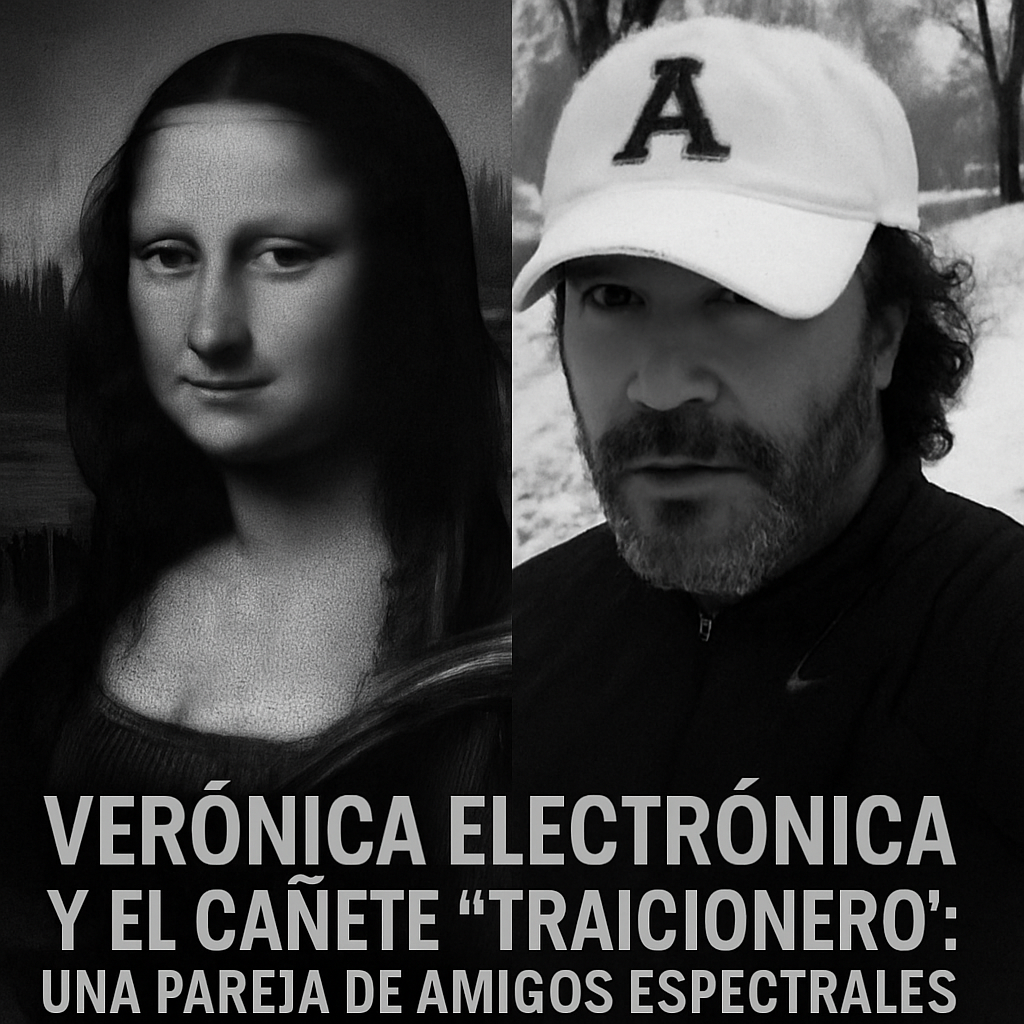
Porque dejó flotando algo: una ruptura. No me pidió nada. No me exigió identificación. Solo se mantuvo ahí, en su lugar, transmitiendo. Esa es la tapa de Veronica Electrónica. La Gioconda. El espectro que mira, espera, sabe. Aquel que me conoce, primero se fascina. Después no me cree. Después se resiente. Después me desea. Yo también soy la Gioconda. Y sigo sonriendo.
Veronica Electronica and the ‘Treacherous’ Cañete: A Pair of Spectral Friends
During this Friendship Week, I chose not to write about flesh-and-blood friends — most of whom are gone, don’t understand, or simply don’t interest me — but about the spectral bonds that truly transformed me. I don’t believe in friendship as emotional support, companionship, or a network of affection. I believe in friendship as energetic transmission, as a critical potential to disrupt time, as a non-confessional way of resonating with another. And that’s why this text is dedicated to Madonna — or rather, to Veronica Electronica — and to that strange bond that connects us: a relationship of mirroring, echo, and shared betrayal.

This post is dedicated to Madonna — or rather, to Veronica Electronica — and to that strange bond that connects us: a relationship of mirroring, echo, and shared betrayal.
Tweet
For centuries, writers and thinkers imagined an invisible community of peers: the Republic of Letters. You didn’t need to meet; it was enough to read one another, affect one another, touch without bodies. That project isn’t dead, but it has shifted. Like many others, I no longer write for my immediate contemporaries, nor for those who know me. I write from a marginal place — Costa Café, Eastbourne — but also from the center of the cloud. A spectral center, where writing becomes tactical.
Like many others, I no longer write for my immediate contemporaries, nor for those who know me. I write from a marginal place but also from the center of the cloud. A spectral center, where writing becomes tactical.
Tweet
And from there, I ask: what is the archive? Not the cliché archive of the intangible, of “presence in absence” as Diana Taylor would have it — no. I mean the archive as a field of manipulation. Not a source of authority, but a cognitive stage. To manipulate the archive is to think. To rewrite it is to intervene. To fragment it is to love.
There are friendships that never fail because they never existed. Or rather: they existed as specters. As energy. As transmission. This post is dedicated to one of those friendships: Veronica Electronica. She didn’t shape me as a critic. Nor as an artist. She shaped me as a faggot with power. And that, in this world, is infinitely harder.
In a recent interview with Revista Bache, we talked about the difference between acting in the present and operating in memory. I don’t intervene in the present. I archive it. Corrupt it. Rewrite it. I told the interviewer — a young man with whom I share neither time nor references — that the Loveartnotpeople project knows exactly what context it inhabits. And that because of that, it may fail or succeed, but that’s irrelevant. The goal is not to be liked, but to reprogram the axis of temporality itself.
In a recent interview with Revista Bache, we talked about the difference between acting in the present and operating in memory. I don’t intervene in the present. I archive it. Corrupt it. Rewrite it.
Tweet
Catholicism taught us to feel guilt because public and private collapse within consciousness. And friendship is often the space where that collapse explodes. Where guilt morphs into dependence, into power, into emotional manipulation. That’s why friendship — as it’s sold — is impossible. Unless it shifts into another dimension: not linear, not abstract, but energetic. A space where the bond is transmission, not contract. And in that space, yes, something like love might exist. Because there is love in my writing. And in Madonna’s project too. She’s still doing it. So am I.
The Bache interview was brilliant in its uncompromised honesty. I don’t even remember the name of the interviewer. But he is my friend. Why? Because he left something floating: a rupture. He asked for nothing. Required no identification. He simply remained there, in his place, transmitting. That’s spectral friendship. That’s what remains when there is no community, no code, no promise.
I received a message from Penguin. It was unreadable. It doesn’t matter. Cultural industries no longer produce meaning. Governance systems can only be intervened upon if time itself is manipulated. That’s what Madonna and I do. We’re not chasing success — which is ephemeral, even with millions. We don’t care about leaving behind discreet objects. We care about something else: touching the very root of what people now call trauma.
Cultural industries no longer produce meaning. Governance systems can only be intervened upon if time itself is manipulated. That’s what Madonna and I do: touching the very root of what people now call trauma.
Tweet
I met Madonna when I was traumatized by my sexuality. But now she speaks to me differently. Not through the tracks — though they are incredible — but through the concept itself: retrieving the archive in order to manipulate it, revalue it, deform it with love and intelligence. I too am retrieving the archive of the harm that was attempted against me. And in that spectral terrain, where everything dematerializes, the only thing that prevails is intelligence.
Because something remained in the air: a rupture. He asked for nothing. Required no identification. He simply stayed there, in his place, transmitting. That’s the cover of Veronica Electronica. The Gioconda. The specter who stares, waits, knows. Those who come to know me first become fascinated. Then they stop believing. Then they resent me. Then they desire me. I, too, am the Gioconda. And I keep smiling.
 Loveartnotpeople.blog
Deja una respuesta