scroll down for the english version
No fue el delirio lo que me destruyó, sino las respuestas que provocó. Este es el relato de una noche en que pedí ayuda y me respondieron con sospecha, negligencia y silencio.
Disclaimer legal general
Los textos que siguen constituyen una reconstrucción personal de experiencias vividas por el autor, redactadas en primera persona y desde un enfoque reflexivo, literario y subjetivo. Se emplean recursos estilísticos y conceptuales que no deben interpretarse como afirmaciones categóricas de hechos jurídicamente comprobados. En cumplimiento con asesoramiento legal recibido, se han omitido o reemplazado nombres de personas e instituciones, y se han introducido precauciones terminológicas (como allegedly, to the best of my knowledge, I believe, etc.). La intención no es difamar ni interferir en procedimientos judiciales en curso, sino ejercer el derecho a narrar experiencias desde una posición clínica y socialmente vulnerable. Cualquier error o inexactitud debe atribuirse al estado psicológico descripto en los textos y no a intención maliciosa alguna.
1 de enero de 2024. Día Cero de Una Desintegración
Esta es la primera vez que escribo sobre estos hechos. Hace aproximadamente dos semanas, luego de más de un año de confiar en mi abogado y solicitar reiteradamente acceso al expediente judicial que me involucra —un proceso penal en el cual se me acusa de haber cometido un acto de índole sexual contra personal de seguridad del Hospital The Conquest—, comprendí que algo no estaba funcionando bien en mi defensa. Inicialmente, se me informó que la acusación involucraba a tres personas; luego se redujo a dos, y en la actualidad se limita a una. Mientras tanto, mi propia versión de los hechos, mi experiencia, y la narrativa que intentaba ofrecer como víctima se diluían progresivamente en el marco legal.
Esta es la primera vez que escribo sobre estos hechos. Hace aproximadamente dos semanas, mi abogado defensor me negó acceso a mi expediente. Un proceso penal en el que se me acusa de ataque sexual a tres guardias y masturbarme en un hospital.
Tweet
Desde mi perspectiva, este proceso debería haberme tenido a mí como persona vulnerada. Pero antes de la agresión física que allegedly sufrí a manos de personal de seguridad del hospital (presuntamente contratados por terceros), ya me encontraba en un estado clínico de disociación severa, es decir, en una condición mental reconocida por la medicina, con síntomas compatibles con pérdida del juicio de realidad. CPTSD que es producto de trauma continuo vinculado con maltrato institucional, lutos y abusos. Algunas situaciones lograron anclarme fugazmente al presente. Fue entonces cuando empecé a entender que el colapso que me arrojó al terror siete horas antes no había sido provocado simplemente por una amenaza externa, sino por un mecanismo —o dispositivo— de confusión entre realidad y ficción, entre percepción clínica y administración institucional del sufrimiento.
Me encontraba disociado, con pérdida del juicio de realidad. CPTSD (Complex Post Traumatic Stress Disorder) que es producto de trauma continuo vinculado con maltrato institucional sistémico, lutos, traiciones y abusos.
Tweet

Este relato no forma parte de mi novela en curso, que estoy escribiendo (en principio, en inglés) y que no trata directamente de estos hechos. Esa novela se ubica más bien en el terreno de la crónica institucional, centrada en el entrelazamiento de estructuras británicas y argentinas atravesadas por prejuicios, afectos degradados, prácticas pastorales, corrupción sistémica, y una biopolítica que transforma a todos en ciudadanos de una especie nueva: habitantes de un tiempo roto, donde pasado, presente y futuro colapsan, al igual que las fronteras entre realidad y fantasía.
Somos un nuevo tipo de ciudadanía: habitantes de un tiempo roto, donde pasado, presente y futuro colapsan, al igual que las fronteras entre realidad y fantasía.
Tweet
Cuando comenzó esta experiencia de horror físico, afectivo, institucional, consular y legal, la palabra era “psicosis”. Pero con el correr del tiempo, y a medida que fui recuperando la capacidad de prestar atención (intermitente, como el duelo), fui comprendiendo que ese entretejido de fantasía y realidad que define clínicamente a la psicosis también puede describir cómo opera hoy la ley en sociedades saturadas por información, vigilancia y precariedad emocional.
La “psicosis” entreteje fantasía y realidad. También describe cómo opera hoy la ley en sociedades saturadas por información, vigilancia y precariedad emocional.
Tweet
Vivimos en una época en la que ghosts in the machine, dispositivos tecnológicos, alimentos o bebidas allegedly alterados, o interacciones aparentemente inocuas pueden desencadenar narrativas manipuladas que arruinan vidas enteras. Especialmente cuando uno ha elegido estar solo para dedicarse al cultivo del pensamiento y la observación. Especialmente cuando uno descubre que ni la academia —encerrada en sus rituales autorreferenciales— ni la medicina institucionalizada —limitada por recursos o prejuicios— ofrecen respuestas reales. Porque las instituciones están hechas de personas, y esas personas traen sus miedos, envidias, traumas, homofobias y rencores.
Las instituciones están hechas de personas, y esas personas traen sus miedos, envidias, traumas, homofobias y rencores.
Tweet
No es este el espacio para detallar esos procesos judiciales en curso. Solo diré que en mi caso, alguien en quien confié —una persona cercana a quien llamaremos amiga A— tuvo acceso a información sensible y, según creo, pudo haber contribuido a la construcción de una narrativa criminalizante. En esta era, donde la información es poder y la narrativa es control, todo dato debe manejarse con estrategia. Las amistades ya no son lo que eran, y todos —absolutamente todos— estamos potencialmente expuestos a ser acusados de haber cruzado una línea.
Alguien en quien confié y mucho—una persona cercana a quien llamaremos amiga A— tuvo acceso a información sensible y, según creo, pudo haber contribuido a la construcción de una narrativa criminalizante.
Tweet
Durante los últimos dos meses, observé con creciente alarma cómo mi defensa legal —dirigida por un abogado británico— dejaba avanzar sin objeción la narrativa de la fiscalía. To the best of my knowledge, pruebas fueron ocultadas o demoradas, lo que facilitó la construcción de un caso manipulable, centrado en mi supuesta peligrosidad como hombre homosexual. Esta crónica, redactada con el mayor grado de cautela, tiene por objetivo recuperar mi voz. Porque la verdadera batalla hoy es por el control de la narrativa.
Desde el principio supe que esto era un tablero de ajedrez. No estaba preparado para que mi propio abogado me tratara como a un ciudadano de segunda categoría. Tras múltiples requerimientos y preguntas directas, creyó —erróneamente— que podía mantenerme aislado, sin información ni herramientas. Por eso escribo. Porque no voy a aceptar ese lugar de silencio.
Crónica Forense Parte 1
Durante la semana previa al 1 de enero, experimenté al menos en tres ocasiones lo que describiría como un estado de disociación severa. No me refiero a una angustia común ni a una crisis emocional pasajera, sino a un cuadro clínicamente reconocible de disociación, con síntomas compatibles con despersonalización, pérdida de referencias espaciales y sensación de amenaza inminente. En ese contexto, realicé tres llamados al 999, el número de emergencias del Reino Unido, solicitando asistencia médica. No estaba actuando de forma agresiva, no había ingerido sustancias ilegales, y no estaba huyendo de ninguna autoridad.
Durante la semana previa al 1 de enero, experimenté tres disociaciones severas. No me refiero a una crisis emocional pasajera, sino a síntomas compatibles con despersonalización, pérdida de referencias espaciales y sensación de amenaza inminente. Llamé al 999.
Tweet
En lugar de cuidado, criminalización y abandono
En ese estado, logré llegar al domicilio de amiga A, quien —to the best of my recollection— me abrió la puerta y me vio en un estado de agitación extrema, parcialmente desnudo y con dificultad para caminar por una dolencia en la pierna. Minutos más tarde, llegaron dos oficiales de policía —a quienes me referiré como policía A y policía B—. Las versiones oficiales sobre ese episodio, según he podido conocer, presentan contradicciones: uno indica que fui trasladado al hospital en ambulancia, mientras que el otro afirma que fue en un coche policial. Mi recuerdo es claro: me subieron a un vehículo policial, semi desnudo, y pidieron a amiga A que me facilitara pantalones y calzado. Ella, según entiendo, ofreció un pantalón muy fino, tipo pijama, y un par de crocs con plataforma, lo cual dificultaba aún más mi movilidad en pleno invierno británico.
En ese estado, logré llegar al domicilio de amiga A, quien me abrió la puerta y me vio en un estado de agitación extrema, parcialmente desnudo y con dificultad para caminar. Pocos minutos más tarde, llegaron dos oficiales de policía.
Tweet
Antes del traslado, pasé aproximadamente tres horas y media en esa vivienda, en un estado que describiría como de extrema vulnerabilidad, sin recibir atención médica profesional. En un momento, los niveles de ansiedad y pánico que sentía me llevaron a considerar lanzarme por una ventana. No lo hice porque, según recuerdo, un árbol de Navidad bloqueaba parcialmente el paso. A pesar de mis reiteradas solicitudes, to the best of my knowledge, no se notificó al Consulado Argentino.
Durante el traslado al hospital, en medio de una narrativa paranoide producto de mi estado mental alterado, creí que existía una amenaza directa contra mi integridad física. No tenía teléfono, pero recordé que mi Apple Watch podía realizar llamadas sin conexión directa al móvil. Logré comunicarme con una poeta chilena amiga y con otra amiga de Buenos Aires. Amiga A, sin embargo, no acudió al hospital, ni —hasta donde sé— envió a nadie. A pesar de contar con un juego de llaves de mi vivienda y con familiares cercanos, no facilitó asistencia logística.
Amiga A, sin embargo, no acudió al hospital, ni —hasta donde sé— envió a nadie. A pesar de contar con un juego de llaves de mi vivienda y con familiares cercanos, no facilitó asistencia logística.
Tweet
Sedado y suelto descalzo bajo la lluvia helada en medio del bosque
La atención médica fue, desde mi perspectiva, completamente disociada. El informe medico recientemente hecho disponible dice que me inyectaron un sedante y me informaron que estaba siendo dado de alta a las 23 horas del 1 de enero. Disociado, sedado y confundido, pedí a los guardias del hospital que me llamaran un taxi; me respondieron que no. Me señalaron una parada de autobús que, como luego supe, no tenía servicio hasta las 8 de la mañana. Estaba descalzo, dolorido, sedado, sin teléfono, sin dinero, y sin un sitio donde dirigirme.
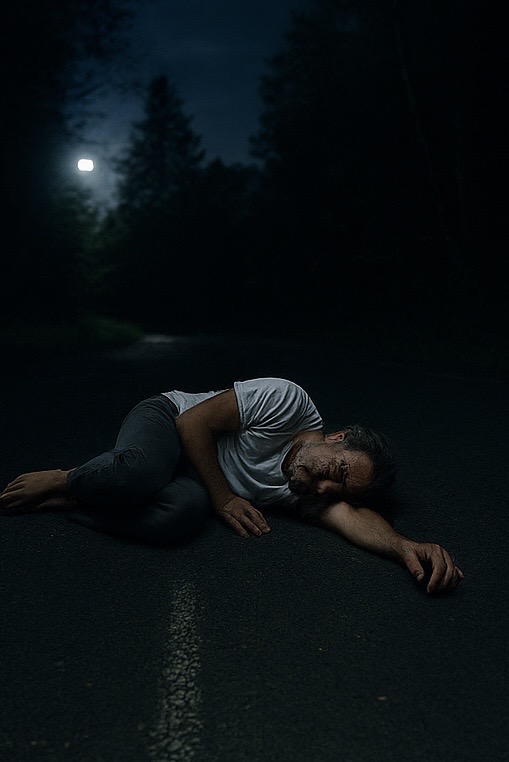
Disociado, sedado y confundido, pedí a los guardias del hospital que me llamaran un taxi; me respondieron que no. Me señalaron una parada de autobús que, como luego supe, no tenía servicio hasta las 8 de la mañana. Estaba descalzo, rengo, sin teléfono, sin dinero. Hipotermia y luego heridas, piñas y sangre.
Tweet
No tengo recuerdos claros de las horas posteriores, pero sí imágenes fragmentadas: barro, alambres de púa, sangre, hipotermia. Durante toda esa noche, allegedly, nadie notificó a la Embajada. No se me ofreció un diagnóstico. No se me preguntó si tenía un lugar seguro adonde ir.
El sometimiento físico previo a la acusación desestabilizante
Herido, psicótico, aterrado, regresé al hospital como pude, pero los guardias de seguridad —presuntamente empleados de una empresa privada— me negaron el ingreso. Según recuerdo, fui empujado a una distancia considerable del edificio. Lo siguiente fue una presunta agresión física: un golpe en el rostro, una rodilla contra mi cuello, un tercer hombre que intervino, y luego mi desmayo. Cuando recuperé la conciencia, pedí ayuda. Lo siguiente que recuerdo es estar arrodillado en una rotonda, en presencia de la policía, fuertemente esposado. Les pedí que llamaran al consulado. Pregunté si algo le había pasado a amiga A, si no había podido venir, si no había avisado a nadie. Tenía amigos en Londres que —allegedly— habrían venido a ayudarme.
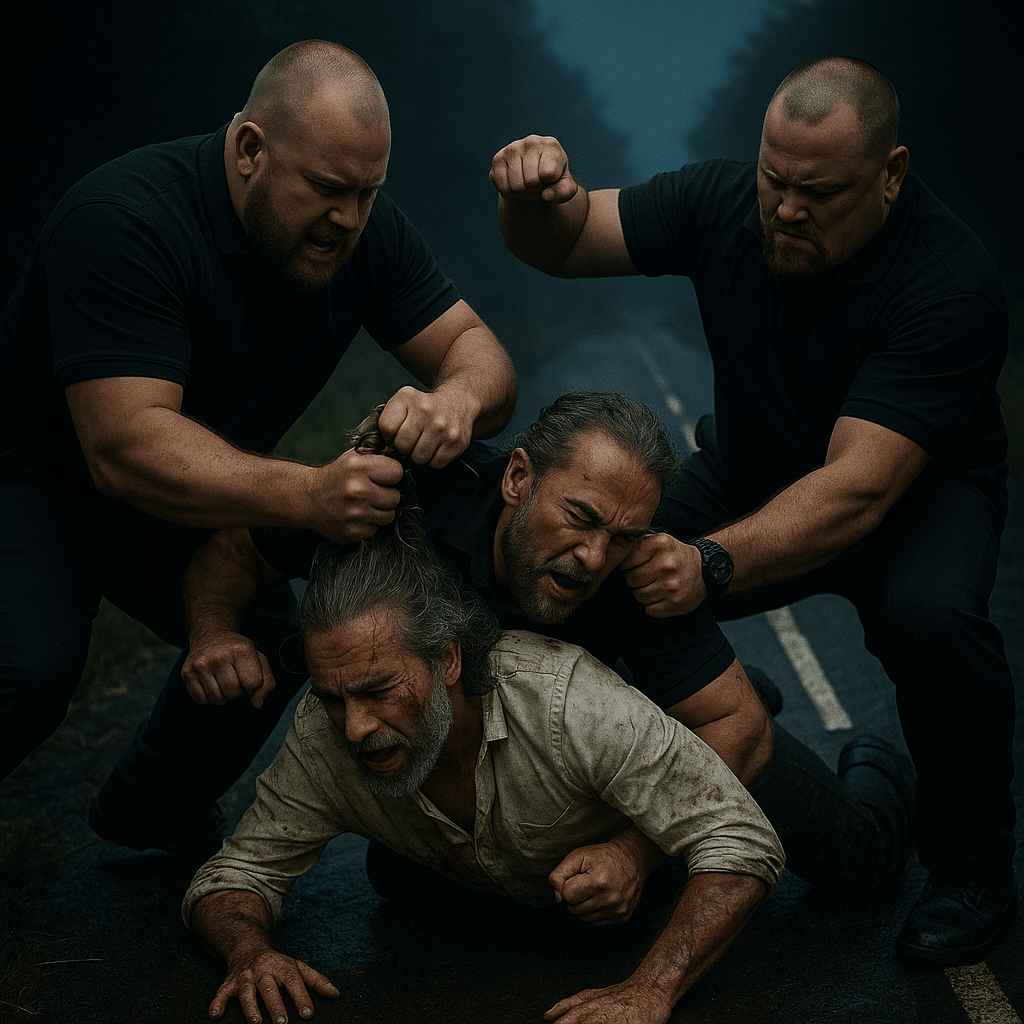
Herido, psicótico, aterrado, regresé al hospital, pero los guardias me negaron el ingreso. Me empujaron a una distancia considerable del edificio y sobrevino una agresión física: un golpe en el rostro, una rodilla contra mi cuello, un tercer hombre que intervino, y luego mi desmayo
Tweet
Lo último que recuerdo de esa noche es que me esposaron con fuerza y me colocaron en una van policial. Sentí que se avecinaba una nueva golpiza. Esa percepción puede no haber sido real, pero fue totalmente verosímil dentro de mi estado mental y físico. CONTINUARÁ
The Horror of Having a Breakdown in the Wrong Place
It wasn’t the delusion that broke me — it was the responses it triggered. This is the story of a night when I asked for help and was met with suspicion, neglect, and silence.
Legal Disclaimer
The following texts are personal reconstructions of lived experiences, written in the first person and framed as subjective, reflective, and literary accounts. Any reference to individuals, institutions, or events should be interpreted as expressions of personal perception rather than statements of legally verified facts. In accordance with legal advice, names have been removed or replaced with generic labels, and cautionary expressions (such as allegedly, to the best of my knowledge, I believe, etc.) have been used where appropriate. The intention is not to defame nor interfere with ongoing legal proceedings, but rather to exercise the right to narrate lived experience from a clinically and socially vulnerable standpoint. Any inaccuracy should be understood as a result of the altered psychological state described, and not as a willful misrepresentation.
Forensic Chronicle: January 1st, 2024, and Beyond
This is the first time I write publicly about these events. About two weeks ago, after more than a year of placing my trust in my solicitor and repeatedly requesting access to the criminal case against me—a prosecution in which I am accused of a sexual act against security personnel at The Conquest Hospital—I came to the realisation that something was fundamentally wrong with my legal defence. Initially, I was told there were three alleged victims. Later, that number became two. Today, only one remains. Meanwhile, my version of events, my experience, and the narrative I tried to offer as someone in crisis, were dissolving into thin air.
About two weeks ago, after more than a year of placing my trust in my solicitor and repeatedly requesting access to the criminal case against me—a prosecution in which I am accused of a sexual act against security personnel at The Conquest Hospital—I came to the realisation that something was fundamentally wrong.
Tweet

From my perspective, I should have been treated as a vulnerable person—perhaps even as the victim. But before the alleged physical assault I suffered at the hands of contracted security guards at the hospital, I was already in a state of severe clinical dissociation. A condition recognised by medical science. Some moments, however, anchored me fleetingly to the present. That was when I began to understand that the collapse that had sent me spiralling into terror seven hours earlier had not come from an external threat alone, but from a more complex mechanism: a collapse between reality and fiction, between clinical perception and institutional administration of suffering.
I began to understand that the collapse that had sent me spiralling into terror seven hours earlier had not come from an external threat alone, but from a more complex mechanism: a collapse between reality and fiction, between clinical perception and institutional administration of suffering.
Tweet
This text is not part of the novel I am currently writing (in English), which has nothing to do with this case. That novel is structured more as a chronicle focused not on specific events but on the institutional, pastoral, prejudiced, envious, affectively degraded, and structurally corrupt entanglements of both British and Argentine systems. It is a novel about how, in the age of biopolitics, we are all becoming a very different kind of citizen: inhabitants of a world where past, present, and future collapse, just as reality and fantasy do.
When this experience of physical, emotional, institutional, consular, and legal horror began, the word was psychosis. But over time—and with attention, albeit intermittent, as permitted by grief, trauma, neglect, xenophobia, and homophobia—I began to realise that this fabric of fantasy and reality that defines psychosis can also describe how the law operates today in societies overwhelmed by information, surveillance, and emotional precariousness.
I began to realise that this fabric of fantasy and reality that defines psychosis can also describe how the law operates today in societies overwhelmed by information, surveillance, and emotional precariousness.
Tweet
We now live in a time when ghosts in the machine, digital traces, food or drink allegedly tampered with, or otherwise harmless social interactions can trigger manipulated stories that ruin lives. Especially if one has chosen solitude in order to dedicate oneself to understanding and helping others. Especially when one realises that neither academia—locked in its self-referential loops—nor the medical profession—underfunded or prejudiced—can offer real answers. Institutions are made of people, and people bring their own traumas, envy, racism, homophobia, and fear.
This is not the place to discuss the multiple legal processes that are ongoing. I will only say that in my case, someone I trusted—whom I will refer to as Friend A—allegedly accessed sensitive information and may have contributed to a criminalising narrative. We live in an era where information is power and narrative is control. Any detail must now be handled strategically. Friendships are no longer what they used to be. Any parent of a teenager knows that going out for the weekend or using Grindr or Tinder today is not what it was ten years ago. We live in a more criminalised world, where The Hunger Games blend with games of hate.
ny parent of a teenager knows that going out for the weekend or using Grindr or Tinder today is not what it was ten years ago. We live in a more criminalised world, where The Hunger Games blend with games of hate.
Tweet
In a context of growing criminalisation of intersubjective relationships, absolutely everyone is vulnerable to accusations of having crossed a line. Over the past two months, I watched my British solicitor allow the prosecution’s narrative to advance, without objection. To the best of my knowledge, key evidence was concealed from both the court and myself, or its presentation was delayed, allowing the construction of a sensationalised, distorted case in which the homosexual subject was framed as a monster. This forensic account is based not on private evidence, but on materials presented by the prosecution. That is important to note: I am not inventing. I am narrating, based on official records.
Over the past two months, I watched my British solicitor allow the prosecution’s narrative to advance, without objection.
Tweet
The real battle today is about narrative control. From the very beginning, I knew this was a chessboard. What I wasn’t prepared for was that my own solicitor would treat me as a second-class citizen. After several ultimatums and very precise questions, he seemingly believed he could get away with leaving me blind, deaf, and mute.
The real battle today is about narrative control. From the very beginning, I knew this was a chessboard. What I wasn’t prepared for was that my own solicitor would treat me as a second-class citizen.
Tweet
That is why I write this. Because I will not accept silence.
January 1st: The Call No One Answered
In the week leading up to January 1st, I experienced what I would describe as at least three episodes of severe dissociation. Not just existential anxiety or emotional overwhelm, but clinically recognisable dissociation, with symptoms such as depersonalisation, spatial disorientation, and an overwhelming sense of imminent threat. In that state, I called 999—the UK emergency number—on three occasions seeking clinical support. I was not violent. I had not taken illegal substances. I was not fleeing the law. I was asking to be held, medically and psychologically.
In the week leading up to January 1st, I experienced three episodes of severe dissociation. I called 999—the UK emergency number—on three occasions seeking clinical support.
Tweet
In that fragile condition, I made it to the home of Friend A, who—to the best of my recollection—opened the door and saw me in a distressed, half-naked state, struggling to walk due to pain in my right leg. Within minutes, two police officers—whom I will refer to as Officer A and Officer B—arrived. Their official statements, as far as I’ve been told, are contradictory: one claims I was taken to the hospital by ambulance, the other says I was taken in a police car. My memory is clear: I was placed in a police vehicle, partially undressed. The officers asked Friend A for clothes and shoes. She allegedly provided very thin pajama trousers and a pair of platform crocs, which made it nearly impossible to walk—in the middle of the English winter.
In that fragile condition, I made it to the home of Friend A, whoopened the door and saw me in a distressed, half-naked state, struggling to walk due to pain in my right leg. Within minutes, maybe too soon, two police officers—whom I will refer to as Officer A and Officer B—arrived.
Tweet
Before being transported to the hospital, I remained for about three and a half hours in her home. I was in a state of acute vulnerability and received no professional medical attention. At one point, my panic was so intense that I considered throwing myself out the window. I didn’t, only because a Christmas tree was in the way. I insisted, again and again, that someone call the Argentine Consulate, but—to the best of my knowledge—no one did.
Before being transported to the hospital, I remained for about three and a half hours in her home. I was in a state of acute vulnerability and received no professional medical attention.
Tweet
On the way to the hospital, fully immersed in a paranoid narrative stemming from my altered state, I became convinced they were going to kill me—for my art, my savings, or my organs, I don’t know. I remembered that my Apple Watch could make calls without my phone. I called a poet friend in Chile and another friend in Buenos Aires. Friend A, however, did not come to the hospital, nor did she, as far as I know, send anyone in her place—even though she had a spare key to my home and family members nearby who could have brought me clothes, my phone, or my wallet. One week earlier, I had accompanied her to the same hospital.
Friend A, however, did not come to the hospital, nor did she even though she had a spare key to my home and family members nearby who could have brought me clothes, my phone, or my wallet. One week earlier, I had accompanied her to the same hospital.
Tweet
My experience in the hospital felt like another dimension. I was apparently placed on a stretcher, sedated, and discharged around 11 p.m. on January 1st. I asked the guards at the entrance if they could call a taxi. They said no. They pointed to a bus stop, but—again, as I later confirmed—there was no service until 8 a.m. By then, I had already lost the crocs. I was barefoot, in pain, sedated, dissociating. I had no clothes, no phone, no money, and was convinced that unless I found a way to get money, Friend A and I would be killed.
My experience in the hospital felt like another dimension. I was apparently placed on a stretcher, sedated, and discharged around 11 p.m. on January 1st. I asked the guards at the entrance if they could call a taxi. They said no.
Tweet
I remember little, but what comes next is this: crawling in mud, slamming myself into barbed wire, covered in blood, at the edge of hypothermia. No one informed the embassy. No one explained the diagnosis. No one asked if I had a safe place to go. What followed was a disoriented wandering through the woods, under pouring rain, barely able to walk. When I returned to the hospital, the private security guards—presumably hired contractors—refused to let me back in. They pushed me at least 300 or 400 meters away from the emergency entrance. I do not remember the journey. What I remember next is being punched in the face, a man’s knee on my neck, then a third guard arriving. I passed out.
What followed was a disoriented wandering through the woods, under pouring rain, barely able to walk. When I returned to the hospital, the guards refused to let me back in. They pushed me at least 300 or 400 meters away from the emergency entrance. What I remember next is being punched in the face, a man’s knee on my neck. I passed out.
Tweet
Minutes later, I woke up. I saw them at a distance. I shouted not to be left alone, that I needed to get back to the hospital. I was freezing. I didn’t know where to go. Next, I recall being on my knees in the middle of a roundabout. The police arrived again. I begged—however incoherently—for them to call the consulate. I kept asking if Friend A had been able to come, or why she hadn’t called anyone. She knew people in London who would have come immediately.
Next, I recall being on my knees in the middle of a roundabout. The police arrived again. I begged—however incoherently—for them to call the consulate. I kept asking if Friend A had been able to come, or why she hadn’t called anyone.
Tweet
The next thing I knew, I was being handcuffed—tightly—and placed in a police van. In that moment, I believed another beating was coming. That perception may not have been accurate, but it felt entirely real from within my dissociative and sedated state.

 Loveartnotpeople.blog
Deja una respuesta