SCROLL DOWN TO SEE THE VERSION IN ENGLISH
En el funeral de Ozzy, un adolescente de 18 años decía: “No viví su época, pero algo me pasa con su muerte. Tuve que venir”. Esa es la potencia espectral: cuando el pasado se vuelve más real que el presente.
Tweet
Ozzy Osbourne: del acero de Birmingham al mito del “Príncipe de las Tinieblas”
El 22 de julio de 2025 no murió solo Ozzy Osbourne. Murió también una imagen de Inglaterra que ya no existe. El masivo funeral en Birmingham, con miles de personas en las calles, no fue simplemente el homenaje a una estrella del rock, sino una ceremonia de duelo colectivo por la desaparición de un horizonte social: el de una nación obrera, industrial, solidaria, donde un chico de barrio como Ozzy podía convertirse en leyenda sin dejar de ser hijo del humo y del andamio. La emoción que desató su muerte fue desproporcionada si se la mide solo por su música; no lo fue si se la entiende como luto simbólico por una época. Inglaterra —como Argentina— es hoy un país sin industria, sin clase obrera organizada, sin redes de contención que permitan a los jóvenes marginados transformar el ruido en arte. En ese vacío, la figura de Osbourne opera como espectro y emblema. Su entierro fue, en el fondo, el entierro de la posibilidad de que la música popular vuelva a nacer del subsuelo social. La nostalgia que lo rodeó fue menos por él que por nosotros: por lo que fuimos, por lo que ya no somos, y por la sospecha amarga de que ese país —el de fábricas, sindicatos, pubs y guitarras— no va a volver. El duelo por Ozzy es también el duelo por el tiempo perdido del rock obrero, por la promesa incumplida de que la cultura podía nacer del barrio. Y en ese marco, resuena también la historia de Norberto “Pappo” Napolitano: nuestro Osbourne criollo, cuya guitarra oxidada narró el desguace industrial argentino desde el margen, con furia y distorsión. Ambos, cada uno en su territorio, fueron testigos y portavoces de un mundo que se desmoronaba. Y ambos, con su muerte, nos enfrentan a una pregunta incómoda: ¿quién —y desde dónde— podrá tomar ahora la palabra?
El duelo por Ozzy es también el duelo por el tiempo perdido del rock obrero, por la promesa incumplida de que la cultura podía nacer del barrio. Y en ese marco, resuena también la historia de Norberto “Pappo” Napolitano
Tweet
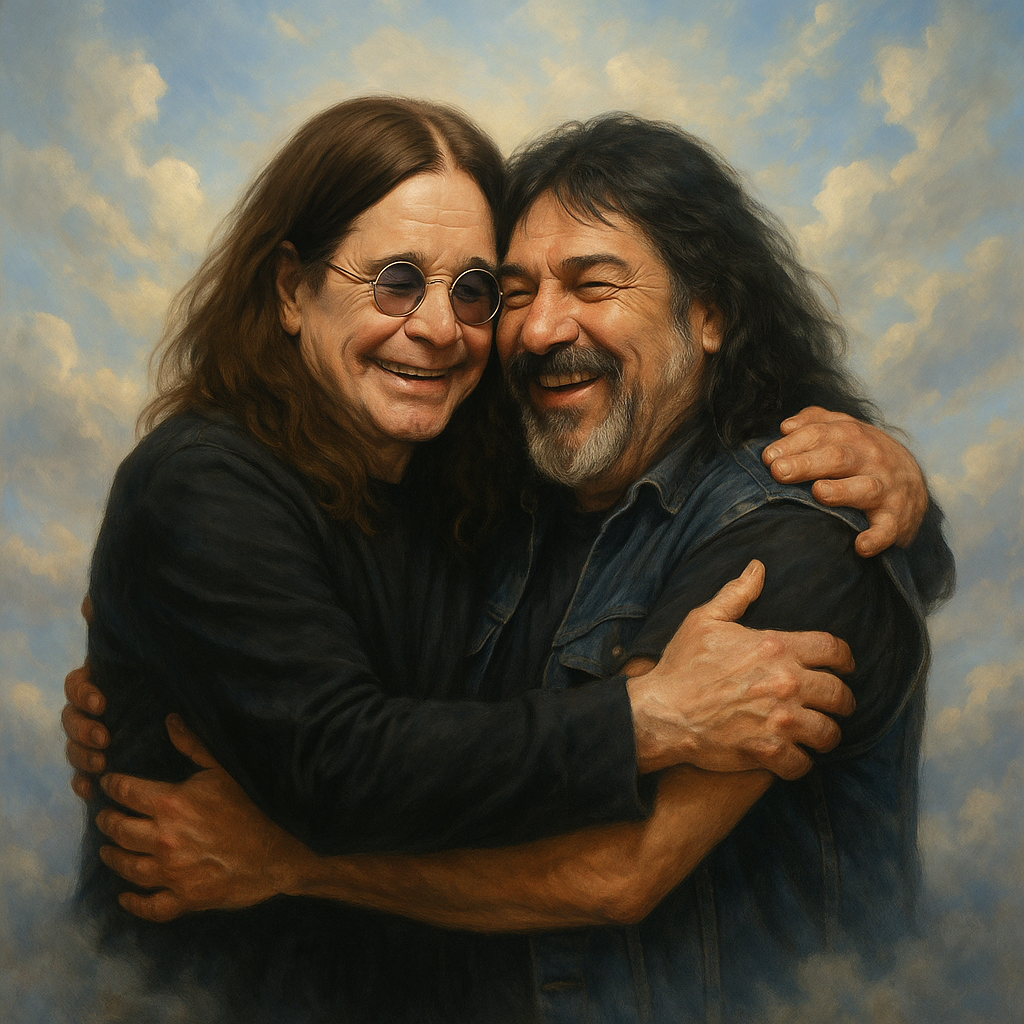
John Michael “Ozzy” Osbourne nació en 1948 en Aston, un barrio obrero de Birmingham marcado por el humo de las fábricas y las secuelas de la Segunda Guerra Mundial. Su familia, como muchas otras, vivía con lo justo; su padre trabajaba en General Electric y su madre en Lucas Automotive. Ozzy abandonó la escuela a los 15 años, pasó por diversos empleos precarios —desde afinador de bocinas hasta obrero metalúrgico— y halló en la música no una vocación artística sino una tabla de salvación. En 1968 fundó Black Sabbath junto a otros tres desertores del destino fabril: Tony Iommi, Geezer Butler y Bill Ward. Lo que crearon no fue solo una banda: fue una sonoridad que emanaba del subsuelo de la clase obrera. Como señaló Geezer, querían que su música “oliera a fábrica”. Como le ocurrió a Pappo, que afinó su oído en talleres mecánicos de La Paternal y creó un blues sucio que hablaba de calles rotas y manos gastadas, Ozzy hizo del ruido un lenguaje obrero.
Como le ocurrió a Pappo, que afinó su oído en talleres mecánicos de La Paternal y creó un blues sucio que hablaba de calles rotas y manos gastadas, Ozzy hizo del ruido un lenguaje obrero
Tweet
Ese ruido no era improvisado: tenía estructura, tenía contexto, tenía cuerpo. Tony Iommi perdió dos falanges en un accidente en la fábrica donde trabajaba, y para seguir tocando inventó un sistema de afinación más baja y acordes más simples. Sin quererlo, dio origen al sonido pesado y ominoso que hoy llamamos heavy metal. Bill Ward, baterista, decía sacar ritmos de la prensa hidráulica. Es decir: no solo cantaban sobre la alienación fabril, sonaban como ella. Pappo también usó esa lógica: llevó el blues del Delta al barrio, le agregó grasa de motor y tensión eléctrica. En ambos casos, la distorsión no es efecto estético: es traducción de una experiencia de vida precarizada. La guitarra como protesta. El riff como aullido de clase.
En ambos casos, la distorsión no es efecto estético: es traducción de una experiencia de vida precarizada. La guitarra como protesta. El riff como aullido de clase.
Tweet
Este surgimiento obrero del metal y del blues argentino no fue espontáneo. Estuvo sostenido —paradójicamente— por ciertas condiciones históricas ya extintas. Mark Fisher escribió que el Estado de bienestar británico de posguerra ofrecía una “financiación indirecta” de la cultura: viviendas sociales, paro juvenil, salud gratuita y bares abiertos permitían que los chicos de clase trabajadora tuvieran tiempo libre para ensayar, sin caer en la miseria. Así nació Black Sabbath. De modo análogo, el blues barrial argentino se expandió en una etapa donde el Estado aún no había sido desmantelado por completo. Pappo y su generación pudieron tocar, grabar, equivocarse, existir. Hoy, en cambio, la precariedad y la “gig economy” hacen inviable cualquier trayectoria similar. No hay tiempo ni espacio para que la cultura crezca desde abajo.
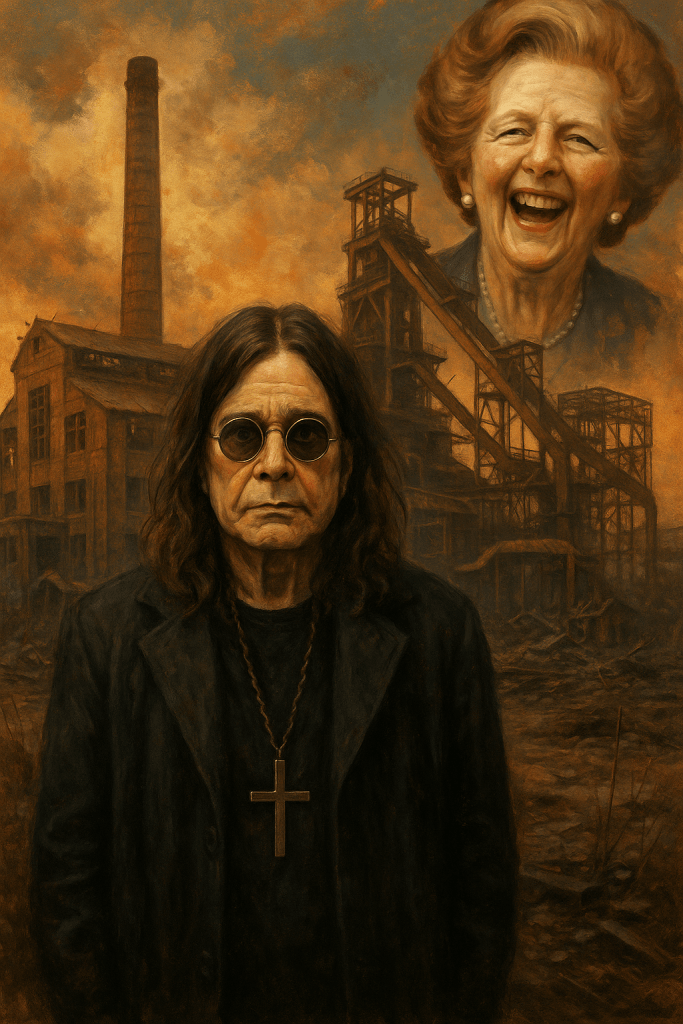
A pesar de haber sido ninguneados por las élites culturales de su época —Sabbath como música satánica y vulgar; Pappo como rústico, básico, marginal— ambos acabaron canonizados. En Birmingham hay un banco conmemorativo de Black Sabbath, un puente que lleva su nombre, y un tranvía rebautizado “Ozzy Osbourne”. En Buenos Aires hay una estatua del Carpo y una plaza en su honor. Así, lo que nació como contracultura fue absorbido por la identidad oficial. El sistema devora a sus márgenes, y devuelve estatuas. No es un homenaje inocente: es una forma de clausura simbólica. El pasado se embalsama cuando el presente es incapaz de producir equivalentes.
A pesar de haber sido ninguneados por las élites culturales de su época —Sabbath como música satánica y vulgar; Pappo como rústico, básico, marginal— ambos acabaron canonizados.
Tweet
La cultura pop también jugó su parte. Ozzy fue reconfigurado como personaje entrañable gracias a The Osbournes, un reality donde aparecía como padre de familia desorientado. Pappo, por su parte, fue convertido en mito folclórico del rocanrolero auténtico. La autodestrucción —las adicciones, las peleas, los arrestos— se transformó en relato mediático y producto de consumo. Fisher hablaba de la “estetización del colapso social”: cuando la caída se vuelve espectáculo, y el sufrimiento obrero se recicla como ícono pop. En este sentido, Ozzy y Pappo pasaron de ser síntomas de una época a ser trofeos de una cultura que ya no los necesita, pero que los exhibe como souvenirs de lo real.
Y sin embargo, lo real está ahí. Black Sabbath no hablaba de dragones ni de elfos: hablaba de Vietnam, de bombas, de fábricas, de niños sin futuro. Pappo tampoco cantaba fábulas: cantaba sobre el abandono, la furia, el desarraigo. El metal y el blues fueron —y siguen siendo— formas de narrar el colapso. Por eso duele tanto que ya no existan espacios donde esas narrativas puedan nacer. Los clubes cierran, los bares se gentrifican, los ensayos molestan a los vecinos de AirBnB. Las ciudades expulsan la música como expulsan a los pobres. Mientras tanto, los estadios se llenan para ver giras nostálgicas. El presente habitado por fantasmas. El rock como máquina del tiempo sin dirección.
Black Sabbath hablaba de Vietnam, de fábricas, de niños sin futuro. Pappo cantaba sobre el abandono, la furia, el desarraigo. El metal y el blues fueron —y siguen siendo— formas de narrar el colapso.
Tweet
En esa lógica espectral, Ozzy y Pappo funcionan como fantasmas nobles. Siguen allí, flotando en el imaginario colectivo, recordándonos no solo lo que fueron, sino lo que pudo haber sido si las condiciones históricas hubieran persistido. Su música persiste, no porque el sistema la impulse, sino porque sigue tocando fibras que nada nuevo ha podido reemplazar. En el funeral de Ozzy, un adolescente de 18 años decía: “No viví su época, pero algo me pasa con su muerte. Tuve que venir”. Esa es la potencia espectral: cuando el pasado se vuelve más real que el presente.
Y sin embargo, no basta con la nostalgia. Como dice Fraser Watt, lo importante no es solo llorar lo que perdimos, sino crear nuevas condiciones para que otros Ozzy y otros Pappo puedan nacer. Defender clubes, ensayos, viviendas, subsidios. Crear tiempo libre. Bajar la renta. Abrir canales. Porque lo que ellos encarnaron —la cultura popular nacida del subsuelo— no es una reliquia, sino una posibilidad histórica que puede y debe volver si la lucha política lo permite.
Ozzy Osbourne fue más que una voz lúgubre y una imagen gótica. Fue el eco de una Inglaterra obrera que, por un momento, creyó que podía hacer arte con sus propias manos. Pappo fue más que un guitarrista virtuoso: fue un cronista eléctrico del vaciamiento argentino. Ambos usaron la distorsión como biografía. Su legado no está en los Grammy ni en los homenajes oficiales, sino en haber demostrado que, incluso en medio del colapso, hay belleza. Que incluso desde el barro, se puede gritar algo que resuene durante décadas. Ozzy, Pappo, el ruido, el barrio, la rabia: todo eso no murió del todo. Pero depende de nosotros decidir si será fósil… o semilla.
Su legado no está en los Grammy ni en los homenajes oficiales, sino en haber demostrado que, incluso en medio del colapso, hay belleza.
Tweet
Ozzy Osbourne: From Birmingham Steel to the Myth of the “Prince of Darkness”
On July 22, 2025, not only did Ozzy Osbourne die. An entire image of England that no longer exists died with him. The massive funeral in Birmingham, with thousands lining the streets, wasn’t just a tribute to a rock star—it was a collective mourning for the disappearance of a social horizon: that of a working-class, industrial, solidaristic nation, where a kid from the neighborhood like Ozzy could become a legend without ceasing to be a child of smoke and scaffolding. The emotion unleashed by his death was disproportionate if measured only by his music; it wasn’t if understood as symbolic grief for an entire era. England—like Argentina—is now a country without industry, without an organized working class, without support networks that allow marginalized youth to turn noise into art. In that void, Osbourne’s figure functions as both specter and emblem. His burial was, deep down, the burial of the possibility that popular music could once again emerge from the social underground. The nostalgia surrounding him was less about him than about us: about who we were, who we no longer are, and the bitter suspicion that that country—of factories, unions, pubs, and guitars—is not coming back. Mourning Ozzy also means mourning the lost time of working-class rock, the broken promise that culture could emerge from the barrio. And in that context, the story of Norberto “Pappo” Napolitano also resounds: our Argentine Osbourne, whose rusty guitar told the story of Argentina’s industrial dismantling from the margins, with fury and distortion. Both, in their own countries, were witnesses and spokespersons of a collapsing world. And both, with their deaths, confront us with an uncomfortable question: who—and from where—can speak now?
On July 22, 2025, not only did Ozzy Osbourne die. An entire image of England that no longer exists died with him. The massive funeral in Birmingham, with thousands lining the streets, wasn’t just a tribute to a rock star—it was a collective mourning for the disappearance of a social horizon.
Tweet

John Michael “Ozzy” Osbourne was born in 1948 in Aston, a working-class neighborhood in Birmingham shaped by factory smoke and the scars of World War II. His family, like many others, lived hand to mouth; his father worked at General Electric and his mother at Lucas Automotive. Ozzy dropped out of school at 15, held a series of precarious jobs—from horn tuner to metalworker—and found in music not an artistic calling but a lifeline. In 1968, he founded Black Sabbath with three other factory deserters: Tony Iommi, Geezer Butler, and Bill Ward. What they created wasn’t just a band: it was a sound that emerged from the working-class underground. As Geezer once said, they wanted their music “to smell like a factory.” Much like Pappo, who trained his ear in the workshops of Buenos Aires’ La Paternal and created a dirty blues that spoke of broken streets and worn hands, Ozzy made noise into a working-class language.
That noise was not improvised: it had structure, context, and flesh. Tony Iommi lost two fingertips in a factory accident, and to keep playing, he invented a lower tuning system and simplified chords. Without intending to, he originated the heavy, ominous sound we now call heavy metal. Drummer Bill Ward said he pulled rhythms from the hydraulic press. In other words, they didn’t just sing about factory alienation—they sounded like it. Pappo used the same logic: he took Delta blues into the barrio, added motor grease and electric tension. In both cases, distortion wasn’t an aesthetic effect—it was a translation of precarious life. The guitar as protest. The riff as a howl of class.
That noise was not improvised: it had structure, context, and flesh. Without intending to, he originated the heavy, ominous sound we now call heavy metal. The riff as a howl of class.
Tweet
This working-class emergence of metal and Argentine blues was no accident. It was, paradoxically, enabled by historical conditions that no longer exist. Mark Fisher wrote that the British postwar welfare state offered “indirect funding” of culture: social housing, youth unemployment benefits, free healthcare, and open pubs gave working-class kids the time to rehearse without falling into destitution. That’s how Black Sabbath emerged. Similarly, Argentine barrio blues expanded during a period when the state had not yet been fully dismantled. Pappo and his generation were able to play, record, mess up, and exist. Today, however, precarity and the gig economy make such trajectories unviable. There is no time or space for culture to grow from below.
Brit postwar welfare state offered “indirect funding” of culture: social housing, youth unemployment benefits, free healthcare, and open pubs gave working-class kids the time to rehearse without falling into destitution. That’s how Black Sabbath emerged.
Tweet
Despite being dismissed by the cultural elites of their time—Sabbath as satanic, vulgar music; Pappo as crude, basic, marginal—both were eventually canonized. In Birmingham, there is a Black Sabbath commemorative bench, a bridge bearing their name, and a tram renamed “Ozzy Osbourne.” In Buenos Aires, there’s a statue of El Carpo and a square in his name. What began as counterculture has been absorbed by official identity. The system devours its margins and returns them as statues. These are not innocent tributes—they are symbolic closures. The past is embalmed when the present cannot produce its own equivalents.
Pop culture also did its part. Ozzy was rebranded as a lovable character thanks to The Osbournes, a reality show where he appeared as a dazed family man. Pappo, in turn, became a folkloric figure of the “authentic rocker.” Self-destruction—addictions, fights, arrests—was turned into narrative and product. Fisher spoke of the “aestheticization of social collapse”: when decline becomes spectacle, and working-class suffering is recycled into pop iconography. In this sense, Ozzy and Pappo went from being symptoms of a time to trophies of a culture that no longer needs them but displays them as souvenirs of the real.
Ozzy was rebranded as a lovable character thanks to The Osbournes, a reality show where he appeared as a dazed family man. Pappo, in turn, became a folkloric figure of the “authentic rocker.” Self-destruction—addictions, fights, arrests—was turned into a product.
Tweet
And yet the real remains. Black Sabbath didn’t sing about dragons or elves—they sang about Vietnam, bombs, factories, children without a future. Pappo didn’t write fables—he sang about abandonment, rage, uprootedness. Metal and blues were—and still are—ways of narrating collapse. That’s why it hurts so much that there are no longer spaces where those narratives can be born. Clubs are closing, bars are being gentrified, rehearsals bother Airbnb tenants. Cities expel music just as they expel the poor. Meanwhile, stadiums are packed with nostalgia tours. Fisher called this hauntology: the present haunted by specters of the past. Rock as a time machine with no direction.
Clubs are closing, bars are being gentrified, rehearsals bother Airbnb tenants. Cities expel music just as they expel the poor. Meanwhile, stadiums are packed with nostalgia tours
Tweet
In this spectral logic, Ozzy and Pappo function as noble ghosts. They still float in the collective imagination, reminding us not only of what they were but of what could have been had historical conditions endured. Their music persists not because the system promotes it, but because it still strikes chords that nothing new has managed to replace. At Ozzy’s funeral, an 18-year-old fan said, “I didn’t live in his time, but something about him moves me. I had to be here.” That’s the power of the spectral: when the past feels more real than the present.
And yet, nostalgia is not enough. As Fraser Watt says, the important thing is not just to mourn what we’ve lost—but to create new conditions for others like Ozzy and Pappo to emerge. That means defending clubs, rehearsal spaces, housing, subsidies. Creating free time. Lowering rent. Opening up cultural pipelines. Because what they embodied—popular culture born from the underground—is not a relic, but a historical possibility we could choose to reclaim.
Ozzy Osbourne was more than a gloomy voice and gothic iconography. He was the echo of a working-class England that, for a moment, believed it could turn its own noise into art. Pappo was more than a virtuoso guitarist—he was an electric chronicler of Argentina’s unraveling. Both used distortion as autobiography. Their legacy doesn’t lie in Grammys or civic honors but in having proven that even amidst collapse, beauty is possible. That even from the mud, you can scream something that resonates for decades. Ozzy, Pappo, the noise, the neighborhood, the rage: none of it is completely dead. But whether it becomes fossil… or seed, is up to us.
Pappo was more than a virtuoso guitarist—he was an electric chronicler of Argentina’s unraveling. Both used distortion as autobiography.
Tweet

 Loveartnotpeople.blog
Deja una respuesta