SCROLL DOWN FOR THE ENGLISH VERSION
ArteBA es ante todo la escenografía de un circuito cerrado que ha fracasado en insertarse en el mercado internacional, pero que sobrevive como ritual de una élite que se reafirma a sí misma.
Tweet
ArteBA, en su forma actual, es ante todo la escenografía de un circuito cultural cerrado que ha fracasado en insertarse en el mercado internacional, pero que sobrevive porque funciona como un ritual performativo donde la élite económica, política y simbólica argentina se reafirma a sí misma. Cada edición no es tanto un mercado como una puesta en escena: una representación en la que se repiten gestos, roles y discursos hasta producir, por mera reiteración, la ilusión de que existe un centro pujante del arte argentino. Lo que se preserva y celebra no es la circulación real de obras en el mundo ni el ascenso de artistas a los grandes circuitos, sino la capacidad de una clase para ocupar el escenario y ser el contenido mismo del espectáculo. ArteBA se sostiene como una mascarada donde la cultura es el pretexto y la verdadera obra es la reproducción de estatus.

Esta dinámica se sostiene en una lógica performativa en la que el acto repetido crea la apariencia de realidad. La feria se monta cada año con una estructura teatral que garantiza que todos los elementos visibles —stands, discursos, cócteles, cortes de cinta, cobertura mediática— encajen en un libreto consensuado. La teatralidad funciona como un dispositivo de control: el guion excluye el conflicto, minimiza cualquier referencia a la precariedad de los artistas o a la falta de competitividad del arte argentino en el exterior, y maximiza la impresión de consenso y éxito. El público que asiste, los medios que cubren y los protagonistas que posan actúan dentro de un marco de convenciones que define qué es posible mostrar y qué queda fuera de cuadro. En este sentido, la feria no es un espacio de negociación de significados —como podría serlo una performance abierta— sino una repetición ritual que consolida un orden simbólico.
La teatralidad anual de ArteBA funciona como un dispositivo de control (social): el guión excluye el conflicto, minimiza cualquier referencia a la precariedad de los artistas o a la falta de competitividad del arte argentino, y maximiza la impresión de consenso y éxito.
Tweet
Ese orden oculta un hecho incómodo: el arte argentino contemporáneo, medido en términos de mercado, no figura entre las mercancías culturales codiciadas en las grandes plazas internacionales. No hay artistas que, gracias a ArteBA, se hayan instalado con precios sostenidos en subastas de Londres, Nueva York o Hong Kong. Las cifras son elocuentes: el volumen anual de ventas de arte en Argentina es ínfimo comparado con Brasil o México; la presencia de obras argentinas en remates globales es esporádica y marginal. Fuera de excepciones históricas como Lucio Fontana, apropiado por la narrativa italiana, o Julio Le Parc, cuya carrera se desarrolló en París, no hay nombres que movilicen capital especulativo internacional. Esta ausencia se disfraza en la feria con otros indicadores: número de visitantes, cantidad de galerías, participación de sponsors, visitas de curadores extranjeros cuidadosamente guiadas por recorridos que refuerzan la narrativa oficial. El simulacro de vitalidad sustituye la discusión sobre por qué el arte argentino no logra romper el cerco.
Ese orden ArteBAiesco oculta un hecho incómodo: el arte argentino contemporáneo, medido en términos de mercado, no figura entre las mercancías culturales codiciadas en las grandes plazas internacionales.
Tweet

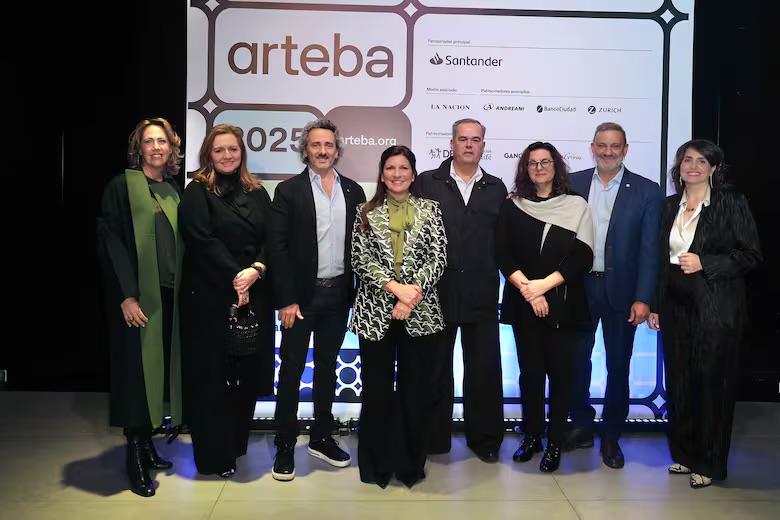
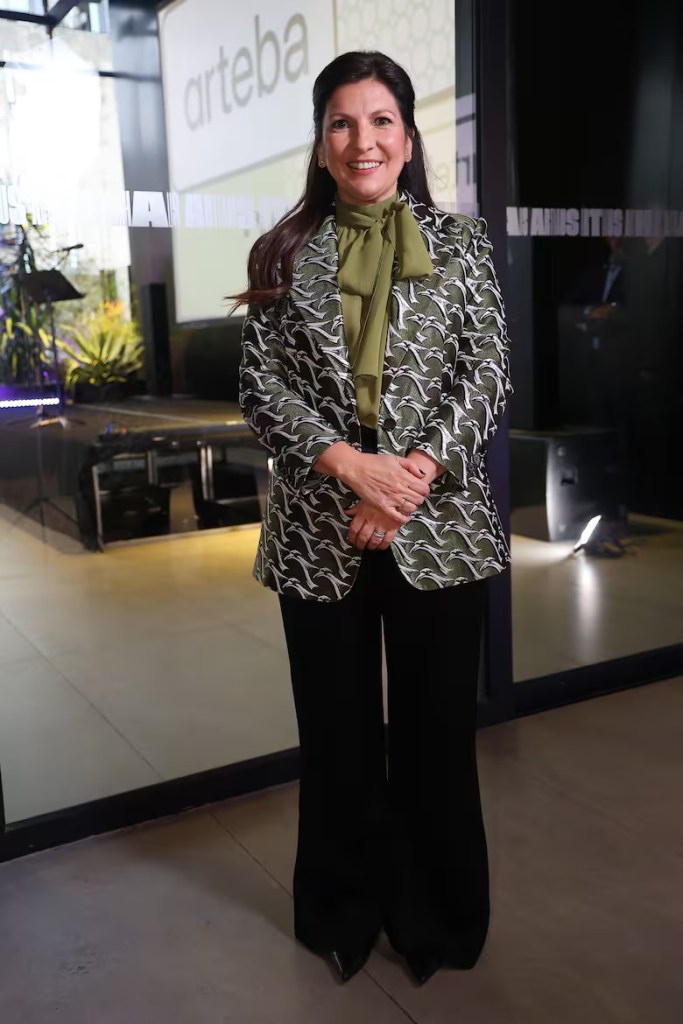
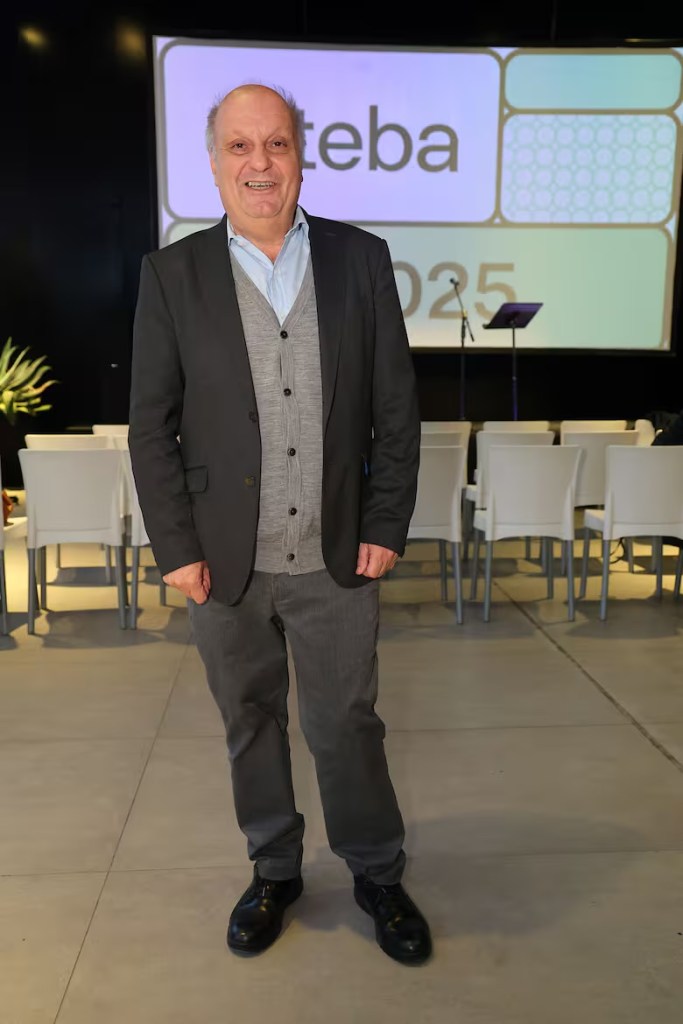
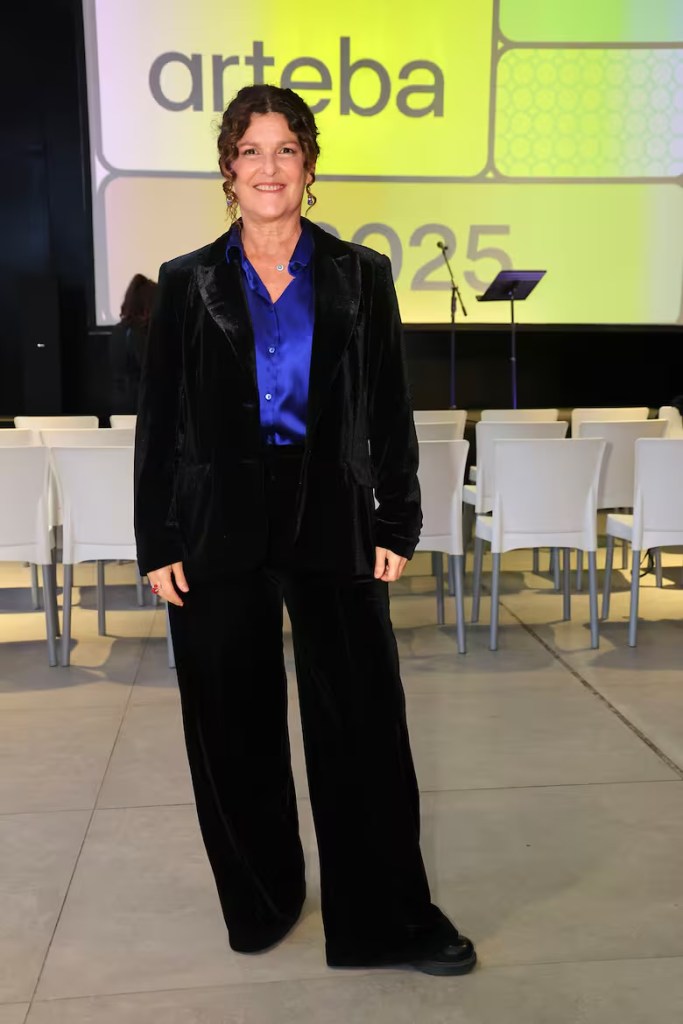
En esta obra colectiva, cada personaje cumple una función precisa. Amalia Amoedo aparece como la heredera filantrópica, el linaje Fortabat convertido en presencia legitimante; su falda de Loewe y su cartera Gucci son signos visibles de distinción que, bajo la luz de la inauguración, son también guion. Leonardo Cifelli, secretario de Cultura, es el funcionario impecablemente ataviado que proyecta institucionalidad sin riesgo, la presencia estatal que respalda el ritual sin cuestionarlo. Larisa Andreani, presidenta de la fundación, encarna a la gestora corporativa que domina la escena entre políticos y banqueros, confirmando que el capital privado es el sostén de la cultura pública. Gabriela Ricardes, ministra porteña, aporta la bendición oficial, un asentimiento que naturaliza la alianza entre gobierno local y sector privado. Hernán Lombardi, figura histórica de la política cultural, trae continuidad y consenso transversal. Guillermo Tempesta Leeds, presidente de un banco, representa al capital financiero vestido para la foto; Sofía Weil de Speroni y José Luis Lorenzo representan la alta sociedad que da soporte simbólico; Verónica Cheja es la estratega de comunicación que cuida cada ángulo de la imagen. Andrés Brun es el coleccionista joven que rejuvenece el relato; Geo Valdez, la cuota de frescura galerística; Maximiliano Tomás, el intelectual-gestor que certifica relevancia cultural.
Cada uno de ellos contribuye a la ilusión de diversidad y vitalidad, pero todos pertenecen al mismo ecosistema de privilegios. Su interacción —brindis, fotos, saludos estudiados— es parte del libreto. La gestualidad y la estética personal no son accesorias: son el contenido. Vestirse, moverse, sonreír en el momento justo es lo que convierte a cada uno en parte del decorado humano que sostiene la feria. Así, la presentación anual se convierte en un acto patrimonial en sí mismo, una tradición del presente que no necesita del éxito internacional para validarse, porque su función no es competir afuera sino consolidar adentro.
Es una comedio de errores como Much Ado About Nothing. Cada uno de ellos contribuye a la ilusión de diversidad y vitalidad, pero todos pertenecen al mismo ecosistema de privilegios. Su interacción es parte del libreto (con actores, actrices y proxenetas).
Tweet
Este montaje se refuerza con la estrategia de mostrar un acceso selectivo a los visitantes internacionales, guiándolos por un recorrido que confirma la narrativa institucional y evita exponer la fragmentación real del mercado. El resultado es un simulacro autocontenido que sólo necesita repetirse para seguir funcionando. Como en cualquier performance sostenida en el tiempo, la reiteración garantiza la estabilidad del significado: la imagen de arteBA como sinónimo de arte argentino. La teatralidad, en este caso, no abre interrogantes; los cierra. No hay grietas en el decorado porque cualquier fisura pondría en riesgo la ficción.

ArteBA, así entendida, es un ritual de autocelebración que desplaza el foco del arte hacia la sociabilidad y el capital simbólico de sus protagonistas. La cultura se convierte en un marco donde la élite reproduce su imagen de sí misma, en el que las obras y los artistas son telón de fondo. La ausencia de conflicto, la previsibilidad de las puestas y la repetición de los mismos elencos año tras año consolidan un presente perpetuo: el de una feria que no impulsa transformaciones, sino que administra su propio mito. Mientras este ritual se mantenga intacto, el arte argentino seguirá representando el papel de protagonista en una obra que fuera de este escenario casi nadie ve.
ArteBA es un ritual de autocelebración que desplaza el foco del arte hacia la sociabilidad de sus mecenas. La cultura se convierte en un marco donde la élite reproduce la imagen que tiene de sí misma, donde las obras y los artistas son comodines sin mucha importancia.
Tweet
ArteBA as a Repeated Performance that Justifies the Narrative of a Social Order Irrelevant to the World and Does Not Help Artists
ArteBA, in its current form, is first and foremost the stage set for a closed cultural circuit that has failed to insert itself into the international market, but survives because it functions as a performative ritual where Argentina’s economic, political, and symbolic elite reaffirms itself. Each edition is less a market than a staged production: a representation in which gestures, roles, and speeches are repeated until, through sheer reiteration, they create the illusion of a thriving center of Argentine art. What is preserved and celebrated is not the real circulation of works in the world nor the ascent of artists to the great circuits, but the ability of a class to occupy the stage and be the content of the spectacle itself. ArteBA is sustained as a masquerade where culture is the pretext and the true work is the reproduction of status.

This dynamic is sustained by a performative logic in which the repeated act creates the appearance of reality. The fair is mounted each year with a theatrical structure that ensures that all visible elements—stands, speeches, cocktails, ribbon-cuttings, media coverage—fit into a consensual script. The theatricality functions as a device of control: the script excludes conflict, minimizes any reference to the precariousness of artists or to the lack of competitiveness of Argentine art abroad, and maximizes the impression of consensus and success. The audience that attends, the media that cover it, and the protagonists who pose all act within a framework of conventions that defines what can be shown and what is left out of frame. In this sense, the fair is not a space for negotiation of meanings—as an open performance might be—but a ritual repetition that consolidates a symbolic order.
That order conceals an uncomfortable fact: contemporary Argentine art, measured in market terms, does not appear among the coveted cultural commodities in the major international markets. There are no artists who, thanks to ArteBA, have achieved sustained prices at auctions in London, New York, or Hong Kong. The numbers are eloquent: the annual volume of art sales in Argentina is tiny compared to Brazil or Mexico; the presence of Argentine works in global auctions is sporadic and marginal. Outside of historical exceptions such as Lucio Fontana, claimed by the Italian narrative, or Julio Le Parc, whose career developed in Paris, there are no names that mobilize international speculative capital. This absence is masked in the fair with other indicators: number of visitors, number of galleries, sponsorship participation, visits by foreign curators carefully guided through routes that reinforce the official narrative. The simulacrum of vitality replaces the discussion of why Argentine art cannot break through the barrier.

In this collective play, each character fulfills a precise function. Amalia Amoedo appears as the philanthropic heiress, the Fortabat lineage turned into legitimizing presence; her Loewe skirt and Gucci bag are visible signs of distinction that, under the inauguration lights, are also script. Leonardo Cifelli, Secretary of Culture, is the impeccably dressed official projecting institutionality without risk, the state presence that supports the ritual without questioning it. Larisa Andreani, president of the foundation, embodies the corporate manager dominating the scene among politicians and bankers, confirming that private capital is the backbone of public culture. Gabriela Ricardes, city minister, provides the official blessing, an assent that naturalizes the alliance between local government and the private sector. Hernán Lombardi, a historic figure in cultural politics, brings continuity and cross-party consensus. Guillermo Tempesta Leeds, bank president, represents financial capital dressed for the photograph; Sofía Weil de Speroni and José Luis Lorenzo represent high society lending symbolic support; Verónica Cheja is the communications strategist who guards every angle of the image. Andrés Brun is the younger collector refreshing the narrative; Geo Valdez, the touch of gallery freshness; Maximiliano Tomás, the intellectual-manager certifying cultural relevance.
Each of them contributes to the illusion of diversity and vitality, but all belong to the same ecosystem of privilege. Their interaction—toast, photos, studied greetings—is part of the script. Gestures and personal aesthetics are not accessories: they are the content. Dressing, moving, smiling at the right moment is what turns each one into part of the human set that sustains the fair. Thus, the annual presentation becomes a patrimonial act in itself, a tradition of the present that does not need international success to validate itself, because its function is not to compete outside but to consolidate inside.
This staging is reinforced by the strategy of showing selective access to international visitors, guiding them through a route that confirms the institutional narrative and avoids exposing the market’s real fragmentation. The result is a self-contained simulacrum that only needs to be repeated to keep working. As in any performance sustained over time, repetition guarantees the stability of meaning: the image of ArteBA as synonymous with Argentine art. The theatricality, in this case, does not open questions; it closes them. There are no cracks in the set because any fissure would put the fiction at risk.
ArteBA, understood this way, is a ritual of self-celebration that shifts the focus from art to the sociability and symbolic capital of its protagonists. Culture becomes a framework where the elite reproduces its image of itself, in which works and artists are the backdrop. The absence of conflict, the predictability of the stagings, and the repetition of the same casts year after year consolidate a perpetual present: that of a fair that does not drive transformations, but manages its own myth. As long as this ritual remains intact, Argentine art will continue to play the role of protagonist in a work that, outside this stage, almost no one sees.


 Loveartnotpeople.blog
Deja una respuesta