En Español, Scrolling Down.
As participants in a Western culture intoxicated with its own sense of moral superiority, we must acknowledge that what we call free speech and democracy is itself a fantasy—one that England and the United States bear a particular responsibility for, since it was they who first weaponised it not merely as an ideology but, more precisely, as a theology.
As participants in a Western culture intoxicated with its own sense of moral superiority, we must acknowledge that what we call free speech and democracy is itself a fantasy—one that England and the United States bear a particular responsibility for…
Tweet
Instant Classics
Mary Beard and Charlotte Higgins’s Instant Classics podcast is productive precisely because it refuses to turn the classical past into a source of unquestionable authority. They demystify Socrates—not so much a martyr of free speech as a political operator whose method was destabilisation through the unsayable. Through these brilliant ladies discussion emerges that he was accused of introducing new gods and of corrupting the youth just after Athens had survived two authoritarian regimes and enacted a general amnesty; the polis had no interest in canonising a destabiliser. The context is the matter and matter seems also to be the matter. Beard’s most radical move in the discussion is to dissolve the Romantic distinction between Socratics and Sophists, concluding that “the philosopher trespassed the difference between parrhesia and lying.” Socrates was a sophist after all. In matters of speech, lying is a matter of perspective: beauty as truth is in the eye of the beholder.
Mary Beard and Charlotte Higgins’s Instant Classics podcast is productive precisely because it refuses to turn the classical past into a source of unquestionable authority. They demystify Socrates—not so much a martyr of free speech as a political operator.
Tweet
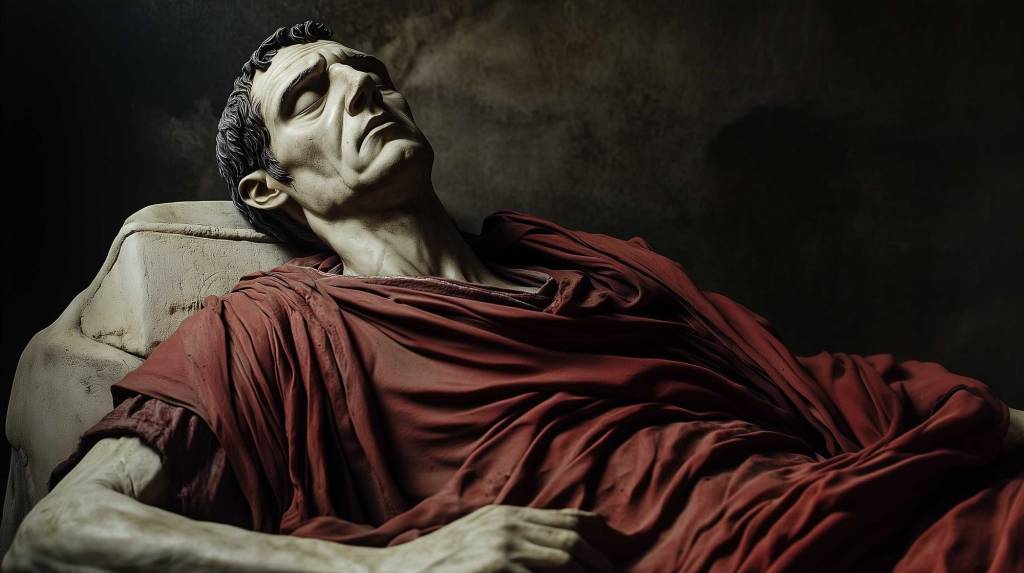
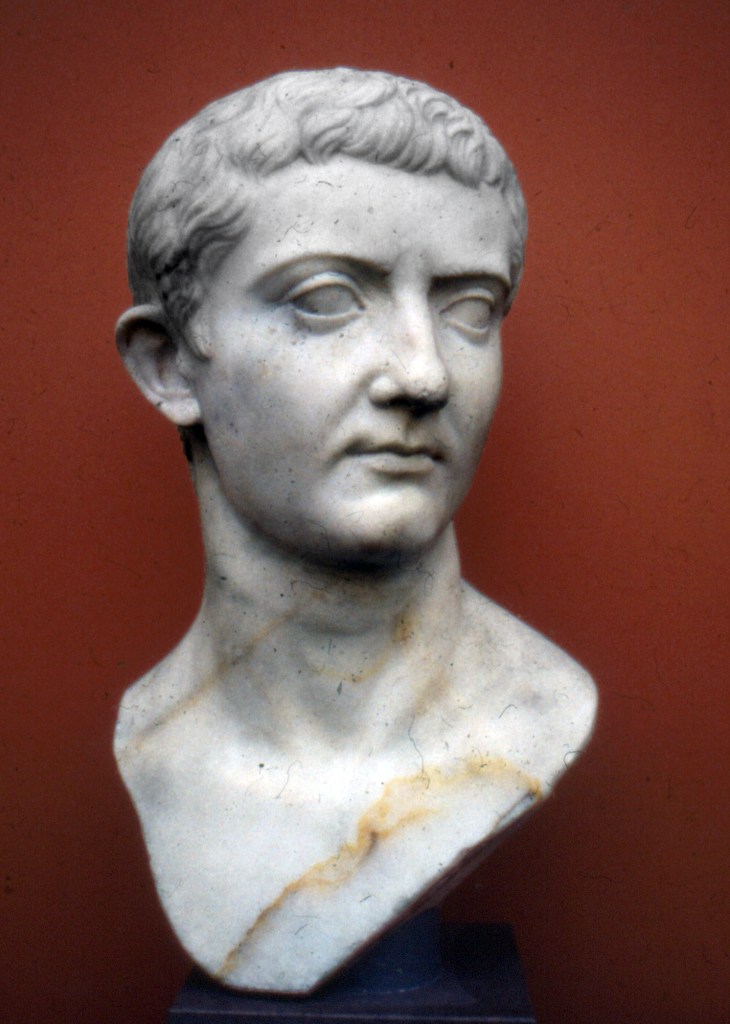
The Roman case of Cremutius Cordus extends this demystification. Under Tiberius, Cordus praised Brutus and Cassius as paradigms of liberty, even calling Cassius “the last true Roman.” For this he was condemned, chose suicide, and his books were ordered burned. His daughter, however, saved a copy. The question that emerges is whether the trial condemned the body or the words. The body perishes; words survive like ghosts, returning to haunt the living. Can words ever truly be silenced? This brings into the discussion the issue of time and timeliness. Speech is performative but, as Cordus said, could be detached from the utterer and fly not only in space but also in time.
The body perishes; words survive like ghosts, returning to haunt the living. This brings into the discussion the issue of time. Speech is performative but, as Cremutius Cordus said, it could be detached from the utterer.
Tweet
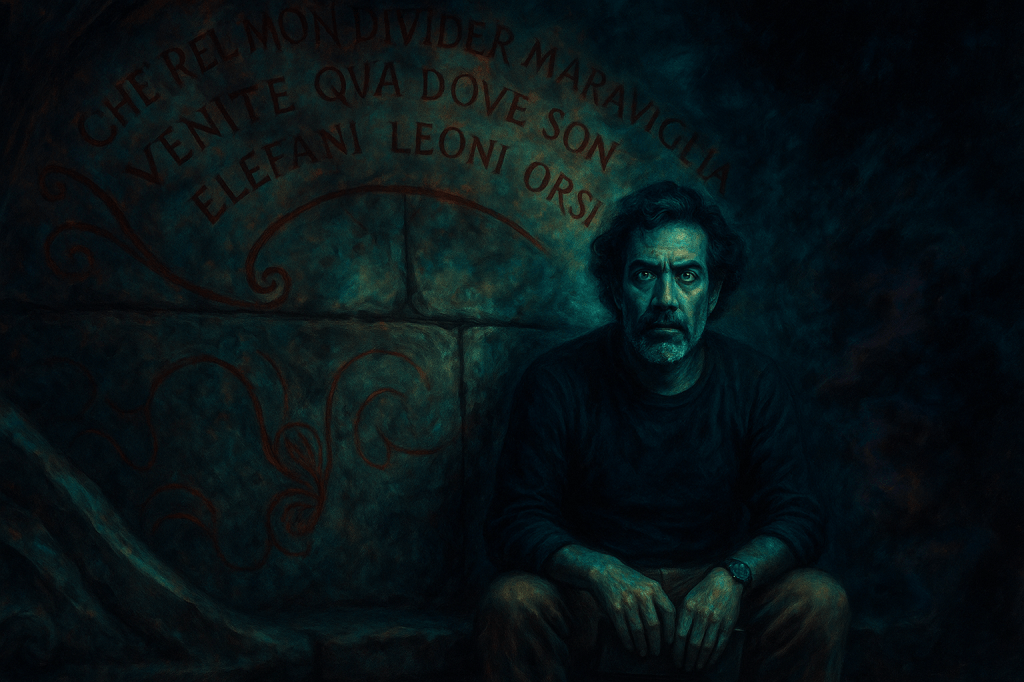
Francis Ford Coppola’s Megalópolis (2024): Utopia and Self-Induced Psychosis
Francis Ford Coppola’s Megalópolis (2024) (now in MUBI) stages this same tension: the perishable body and the undying quality of the immaterial. He does it in the figure of César Catilina, played by Adam Driver. The sci-fi film (now available in MUBI) takes place in a futuristic New Rome that Catilina (Driver) proposes to rebuild from a devastated Gotham City/Manhattan using Megalon, a miraculous material. The devastation was caused by inequality which means that for Coppola, social polarisation and the inequality of access to resources creates the opposite of utopia. But like Beard, Coppola asks important questions. At first, Catilina appears as a visionary, offering redemption through architecture and utopia. It is difficult not to think of AI and Sillicon Valley. But Megalon works less as stone than as a drug: it suspends humanity, dissolves reality, destabilises perception. Catilina is not a hero but a figure of renunciation, abandoning the real for an immaterial future inhabitable only as hallucination.
Coppola’s Megalópolis (2024) (MUBI) stages the tension between the perishable body and the undying quality of the immaterial. He does it in the figure of César Catilina, played by Adam Driver who appears as a visionary, offering redemption through utopia. Sillicon Valley? Less reality, more intoxication.
Tweet

Megalópolis thus opposes not simply the old and the new, but the material and the immaterial, the perishable and the spectral. What Catilina embodies is exactly what haunts any discussion of free speech: the moment when utterance detaches from the body and survives as an unreal force—obsessive, seductive, corrosive, can it be controlled? Yes, but only if we create a word that, as framed by Gilles Deleuze and Feliz Guattari’s Anti-Oedipus is “high”. For them drugs are not life but its simulation, the hallucinatory mirage of immanence. Desire, for them, is productive: it connects, assembles, proliferates. Drugs, by contrast, offer only the short-circuit of this process—a false intensity that consumes the body instead of expanding it. Drugs mimic the schizophrenic flow that breaks codes and deterritorialises, but in truth they lead back to exhaustion, dependence, and repetition. If life is the continual invention of connections, drugs are the parody of that invention: they suspend desire in an artificial paradise where the organism is drained of its powers. In this sense, the drug is the opposite of life—its counterfeit, its depletion disguised as plenitude.
If life is the continual invention of connections, drugs are the parody of that invention: they suspend desire in an artificial paradise where the organism is drained of its powers. In this sense, the drug is the opposite of life—its counterfeit, its depletion
Tweet
Loveartnotpeople
When I wrote my blog post on Freedom of Speech a couple of days ago, it was triggered by the advance of censorship from above in the United States: the sacking of Jimmie Kimmel and US Vice President’s Vance threatening anyone who posted anything against Charlie Kirk on social media: That person would not be allowed into “the coolest country” in the world, according to Trump. A country where free speech is hyperbolically defined by wealth and opportunism. And here we must return to Mary Beard’s podcast. But was not this always the case if seen from above and not from below. Or, to be more precise, if seen from mainstream political discussion instead of through the lens of how ideas, as subversive as they might be, always come back to haunt power.

In the UK, I truly came to terms with the objective limits of free speech when I started seeing dignified middle-class citizens being taken to jail simply for holding a placard in support of Palestine in front of the House of Parliament. That image echoed a warning from my supervisor at Warwick, who told me not to write in my blog—mainly inspired by Menippean satire—because (she was Irish and lived in Dublin): “Here, we don’t have the First Amendment.” I looked at her as if she was crazy. My blog has always been an instrument of political activism in my country. I am not new to political intervention; in fact, I occupied fairly high official positions before deciding to move to England to study. It has not been an easy path: I was kidnapped, suffered torture both here and there and worse of all, I am invisibilised. In my personal, public, and academic life, my destabilising style—very much akin to Socrates, as Mary Beard herself notes—brought me into collision with cultural differences that I only started to grasp, as a cultural analyst, almost a quarter of a century after moving here.
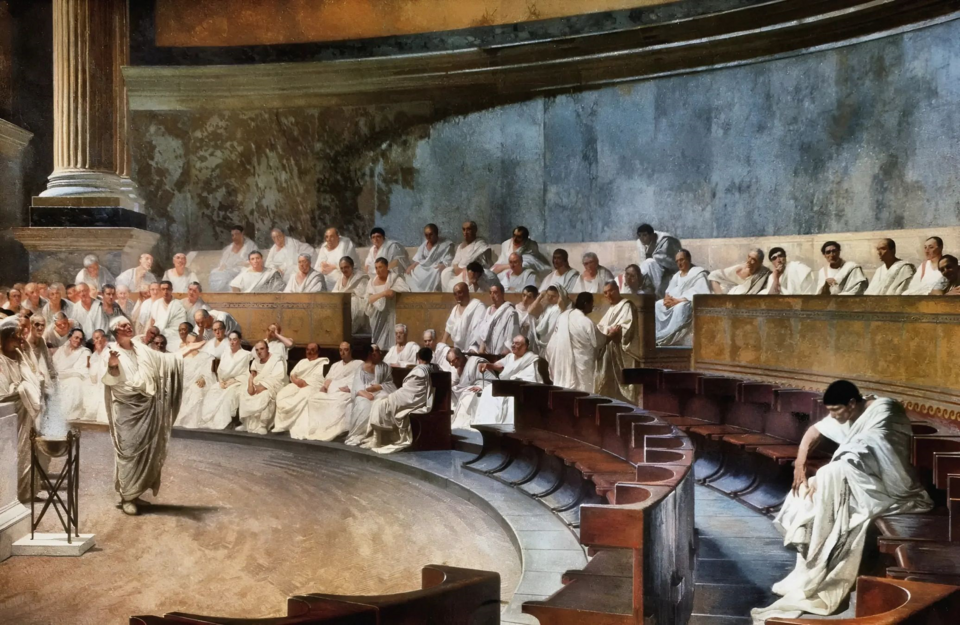
Beard’s reaction was timely. It addresses the question of Freedom of Speech in the wake of Tommy Robinson’s mobilisation, and how the far right flaunts that banner as if it were the very core of English democracy. And they may well be right. The problem is what happens once they come to power—or, put more systemically, what happens when the response to free speech emanates from a self-perpetuating system and, as Beard shows, comes from above.
Beard’s reaction was timely. It addresses the question of Freedom of Speech in the wake of Tommy Robinson’s mobilisation.The problem is what happens when the response to free speech emanates from a self-perpetuating system and, as Beard shows, comes from above.
Tweet
My own post—written the day after ABC sacked Jimmie Kimmel and another network sacked Jimmy Fallon, and recalling too my own experience when the Peter Marzio Award was rescinded because of my “alleged” writings on my blog—introduces something Beard and Higgins leave out: the issue of humour as a vehicle of political derision. Equally absent (from all three of us) is the issue of who has the power to name, to render visible or invisible. My History of Argentine Art which points at the continuity of racism that defines the culture of my country to date has not been quoted by any paper in academia. Doing so, might bring risks.
To speak of Freedom of Speech, then, is not to speak of the freedom of words themselves, but of the freedom of the one who utters them. Speech survives—haunting, for better or worse. To evaluate that survival we must always return to its material context. And that means confronting the immaterial fantasy we continue to inhabit: free speech and democracy, intoxicating fictions that promise authority while concealing fragility.
To speak of Freedom of Speech, then, is not to speak of the freedom of words themselves, but of the freedom of the one who utters them. Speech survives—haunting, for better or worse.
Tweet
Megalópolis, Mary Beard y una civilización intoxicada por la ilusión de la libertad de expresión

Como participantes de una cultura occidental intoxicada con su propio sentido de superioridad moral, debemos reconocer que lo que llamamos libertad de expresión y democracia no es más que una fantasía—una fantasía de la cual Inglaterra y Estados Unidos cargan con una responsabilidad particular, ya que fueron ellos quienes la convirtieron en un arma no solo como ideología, sino, más precisamente, como teología.
Instant Classics
El podcast Instant Classics de Mary Beard y Charlotte Higgins resulta productivo precisamente porque se rehúsa a convertir el pasado clásico en una fuente de autoridad incuestionable. Desmitifican a Sócrates—no tanto un mártir de la libertad de expresión como un operador político cuyo método fue la desestabilización a través de lo indecible. En la discusión de estas brillantes mujeres emerge que Sócrates fue acusado de introducir nuevos dioses y de corromper a la juventud justo después de que Atenas sobreviviera a dos regímenes autoritarios y promulgara una amnistía general; la polis no tenía interés en canonizar a un desestabilizador. El contexto es la materia, y la materia parece ser también el asunto. El gesto más radical de Beard en la discusión es disolver la distinción romántica entre socráticos y sofistas, concluyendo que “el filósofo transgredió la diferencia entre parrhesía y mentira”. Sócrates fue, después de todo, un sofista. En cuestiones de discurso, la mentira es una cuestión de perspectiva: la belleza como verdad está en el ojo de quien mira.
El caso romano de Cremucio Cordo extiende esta desmitificación. Bajo Tiberio, Cordo elogió a Bruto y Casio como paradigmas de la libertad, llegando incluso a llamar a Casio “el último verdadero romano”. Por ello fue condenado, eligió el suicidio y se ordenó quemar sus libros. Sin embargo, su hija guardó una copia. La pregunta que surge es si el juicio condenaba al cuerpo o a las palabras. El cuerpo perece; las palabras sobreviven como fantasmas, regresando para acechar a los vivos. ¿Pueden las palabras ser realmente silenciadas? Esto introduce en la discusión la cuestión del tiempo y la oportunidad. El discurso es performativo pero, como dijo Cordo, puede desprenderse del emisor y volar no solo en el espacio, sino también en el tiempo.

Megalópolis de Francis Ford Coppola (2024): Utopía y Psicosis Autoinducida
Megalópolis (2024) de Francis Ford Coppola escenifica esta misma tensión: el cuerpo perecedero y la cualidad inmortal de lo inmaterial. Lo hace en la figura de César Catilina, interpretado por Adam Driver. El film de ciencia ficción (disponible en MUBI) transcurre en una Nueva Roma futurista que Catilina (Driver) propone reconstruir desde una Gotham/Manhattan devastada usando Megalon, un material milagroso. La devastación fue causada por la desigualdad, lo que significa que, para Coppola, la polarización social y la inequidad en el acceso a los recursos generan lo opuesto a la utopía. Pero, al igual que Beard, Coppola plantea preguntas importantes.

Al principio, Catilina aparece como un visionario, ofreciendo redención a través de la arquitectura y la utopía. Es difícil no pensar en la IA y en Silicon Valley. Pero Megalon funciona menos como piedra que como droga: suspende la humanidad, disuelve la realidad, desestabiliza la percepción. Catilina no es un héroe, sino una figura de renunciamiento, alguien que abandona lo real en favor de un futuro inmaterial habitable solo como alucinación.
Megalópolis no opone simplemente lo viejo y lo nuevo, sino lo material y lo inmaterial, lo perecedero y lo espectral. Lo que Catilina encarna es exactamente lo que acecha cualquier discusión sobre la libertad de expresión: el momento en que lo enunciado se desprende del cuerpo y sobrevive como una fuerza irreal—obsesiva, seductora, corrosiva. ¿Puede ser controlada? Sí, pero solo si inventamos una palabra que, como plantean Gilles Deleuze y Félix Guattari en El Anti-Edipo, sea “alta”. Para ellos, las drogas no son la vida sino su simulacro, el espejismo alucinatorio de la inmanencia. El deseo, para ellos, es productivo: conecta, ensambla, prolifera. Las drogas, en cambio, ofrecen solo el cortocircuito de este proceso: una intensidad falsa que consume al cuerpo en lugar de expandirlo. Las drogas imitan el flujo esquizo que rompe códigos y desterritorializa, pero en verdad conducen de nuevo al agotamiento, la dependencia y la repetición. Si la vida es la invención continua de conexiones, la droga es la parodia de esa invención: suspende el deseo en un paraíso artificial donde el organismo queda drenado de sus fuerzas. En este sentido, la droga es lo opuesto a la vida: su falsificación, su agotamiento disfrazado de plenitud.
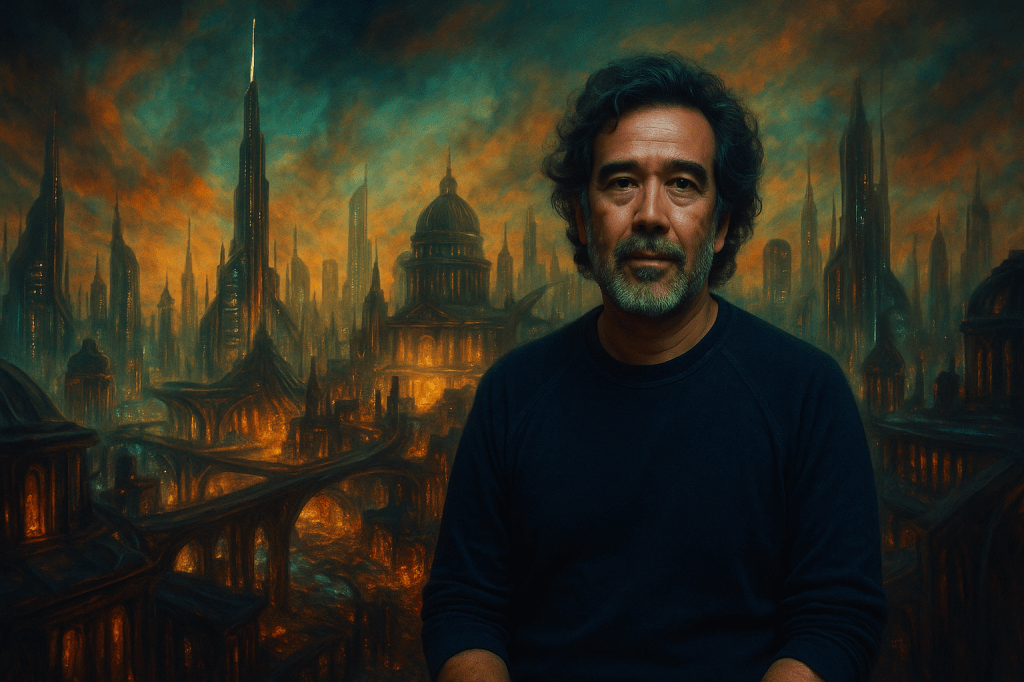
Loveartnotpeople
Cuando escribí mi post sobre la libertad de expresión hace unos días, fue motivado por el avance de la censura desde arriba en Estados Unidos: el despido de Jimmie Kimmel y la amenaza del vicepresidente Vance de que cualquiera que publicara algo contra Charlie Kirk en redes sociales no sería admitido en “el país más cool” del mundo, según Trump. Un país donde la libertad de expresión está definida hiperbólicamente por la riqueza y el oportunismo. Y aquí debemos volver al podcast de Mary Beard. Pero ¿acaso no fue siempre así, visto desde arriba y no desde abajo? O, para ser más precisos, visto desde la discusión política mainstream y no desde la lente de cómo las ideas, por subversivas que sean, siempre regresan a acechar al poder.
En el Reino Unido, realmente comprendí los límites objetivos de la libertad de expresión cuando empecé a ver a ciudadanos de clase media, dignos, siendo llevados a la cárcel simplemente por sostener un cartel en apoyo a Palestina frente al Parlamento. Esa imagen resonó con la advertencia de mi supervisora en Warwick, quien me dijo que no escribiera en mi blog—principalmente inspirado en la sátira menipea—porque (ella era irlandesa y vivía en Dublín): “Aquí no tenemos la Primera Enmienda.” La miré como si estuviera loca. Mi blog siempre ha sido un instrumento de activismo político en mi país. No soy ajeno a la intervención política; de hecho, ocupé cargos oficiales de bastante relevancia antes de decidir mudarme a Inglaterra para estudiar. No ha sido un camino fácil: fui secuestrado, sufrí tortura tanto aquí como allá y, lo peor de todo, he sido invisibilizado. En mi vida personal, pública y académica, mi estilo desestabilizador—muy parecido al de Sócrates, como la misma Mary Beard observa—me llevó a chocar con diferencias culturales que solo empecé a comprender, como analista cultural, casi un cuarto de siglo después de mudarme aquí.

La reacción de Beard fue oportuna. Ella aborda la cuestión de la libertad de expresión a raíz de la movilización de Tommy Robinson y cómo la extrema derecha enarbola esa bandera como si fuera el núcleo mismo de la democracia inglesa. Y quizá tengan razón. El problema es qué ocurre una vez que llegan al poder—o, dicho más sistémicamente, qué pasa cuando la respuesta a la libertad de expresión emana de un sistema auto-perpetuado y, como muestra Beard, proviene desde arriba.
Mi propio post—escrito el día después de que ABC despidiera a Jimmie Kimmel y otra cadena a Jimmy Fallon, y recordando también mi propia experiencia cuando se me rescindió el premio Peter Marzio debido a mis “supuestos” escritos en mi blog—introduce algo que Beard y Higgins dejan afuera: la cuestión del humor como vehículo de la irrisión política. Igualmente ausente (en las tres) está la cuestión de quién tiene el poder de nombrar, de volver visible o invisible. Mi Historia del Arte Argentino, que señala la continuidad del racismo que define la cultura de mi país hasta hoy, no ha sido citada por ningún paper académico. Hacerlo, podría traer riesgos.

Hablar de libertad de expresión, entonces, no es hablar de la libertad de las palabras en sí mismas, sino de la libertad de quien las pronuncia. El discurso sobrevive—acechando, para bien o para mal. Para evaluar esa supervivencia debemos volver siempre a su contexto material. Y eso significa confrontar la fantasía inmaterial que seguimos habitando: la libertad de expresión y la democracia, ficciones embriagadoras que prometen autoridad mientras esconden fragilidad.


 Loveartnotpeople.bloG
Deja una respuesta