Ryan Gander’s elevation to the Royal Academy’s 2026 Summer Exhibition is not an anomaly; it is the perfect expression of this lineage and of the times the UK is going through.
Tweet
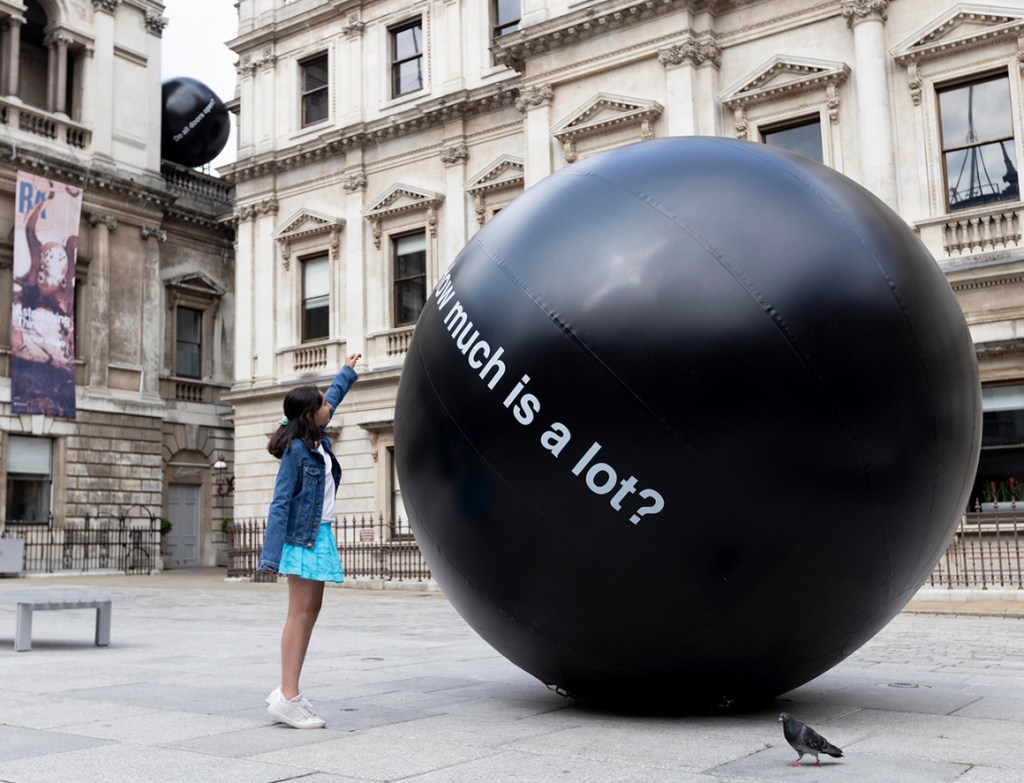
Ryan Gander is not a Young British Artist, yet he stands as their cleaned-up, post-2000, detoxed inheritor: a YBA 2.0 without blood, without risk, without flesh. If the 1990s turned art into a spectacle of shock and market expansion, the decades that followed demanded something different: intelligence without discomfort, conceptual play without political consequence, institutional compatibility without discomfort. Gander has become one of the clearest expressions of this phase. He represents a generation that inherited the cultural infrastructure built by the YBAs but replaced their danger with a refined, managerial cleverness. Ryan Gander’s elevation to the Royal Academy’s 2026 Summer Exhibition is not an anomaly; it is the perfect expression of this lineage and of the times the UK is going through.
If the 1990s turned art into a spectacle of shock and market expansion, the decades that followed demanded something different: intelligence without discomfort, conceptual play without political consequence, institutional compatibility without discomfort. Ryan Gander has become one of the clearest expressions of this phase
Tweet
The premise is simple: Gander embodies the post-YBA administered condition. Understanding him requires rethinking what “administration” means in the contemporary British visual arts ecosystem. It is not bureaucracy, not in the everyday sense. It is a cultural mode shaped by the consensus that followed the YBA explosion—a regime of risk-management, conceptual tidiness, institutional harmony, and the absorption of difference into managerial categories. Gander is the artist who crystallises this environment.
The premise is simple: Gander embodies the post-YBA administered condition. Understanding him requires rethinking what “administration” means in the contemporary British visual arts ecosystem.
Tweet
From High Art Lite to the Era of Cleverness: A Post-YBA Reading
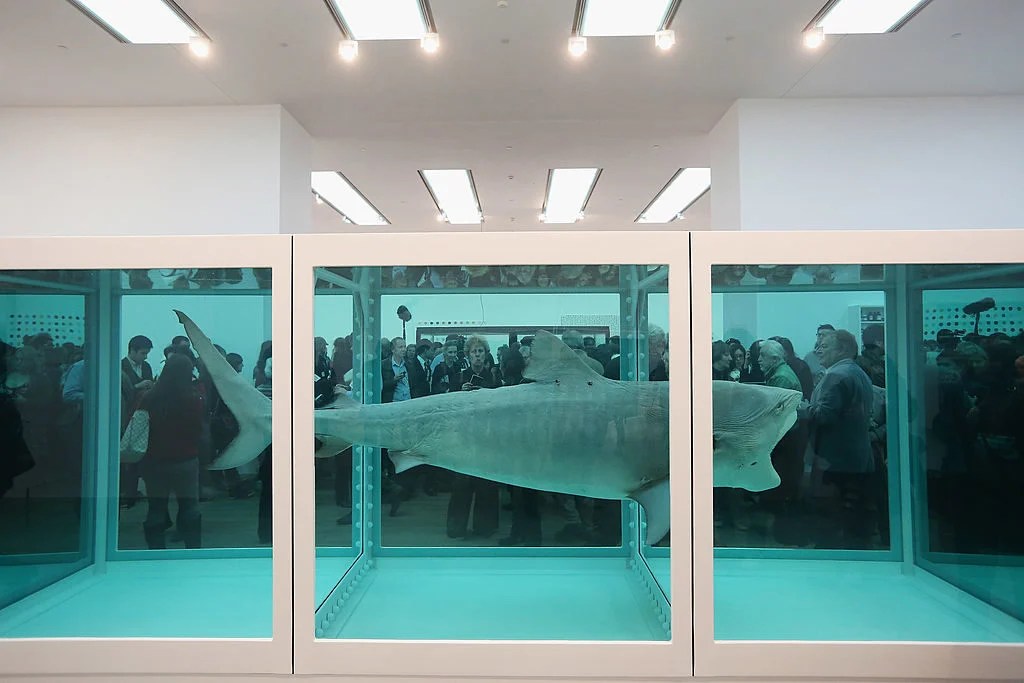
To understand Gander’s position one must revisit the aftermath of the YBAs. The 1990s in Britain were propelled by spectacle: animals in vitrines, unmade beds, tabloid sensations, Saatchi’s money, and the birth of an art-celebrity economy that thrived under New Labour’s cultural optimism. What defined that moment was less the content than the metabolism. Art moved fast, hit hard, sold well, travelled everywhere. It was ambitious, chaotic, deeply entrepreneurial. And for all its vulgarity, it carried a genuine charge: risk, youth, class resentment, sexuality, the shadow of Thatcher, the romance of the art-school dropout, the horror of tabloid fame.
By the early 2000s that metabolism was exhausted. The market had consolidated, museums professionalised, educational programmes expanded, and every institution wanted to signal openness, diversity, inclusion, creativity. Into that environment stepped artists like Gander, who inherited the aesthetic permissiveness created by the YBAs but translated it into a more stable, more curatorial, more conceptual idiom.
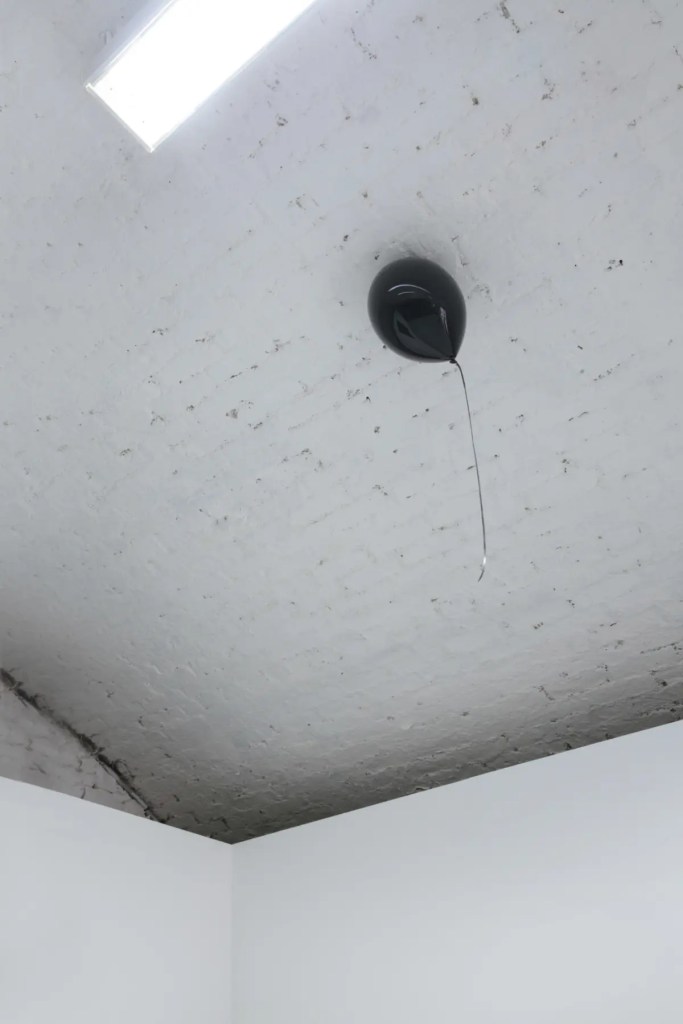
Gander’s practice rejects spectacle. It does not court media frenzy. It does not expose the institution to embarrassment. It produces manageable, elegant objects sustained by verbal intelligence. His work often consists of an absence—or a fragment, a gesture, a template—that acquires meaning through a narrative the viewer must complete. In that sense, he channels a form of “high art lite” without the vulgarity: everything is domesticated, orderly, tasteful. It is the aesthetic of a system that has learned to love conceptualism as long as it is tidy.
Ryan Gander’s is the aesthetic of a system that has learned to love conceptualism as long as it is tidy.
Tweet
This is not cynicism. It is a description of the environment. What Gander offers is perfectly suited to the era of cleverness: art that photographs well, reads well, supports institutional messaging around creativity and cognitive engagement, and never produces the kind of political or emotional disturbance that characterised the first wave of YBAs. If Emin and Hirst were expressions of a Britain still struggling with class, trauma, and post-Thatcher fragmentation, Gander emerges from a Britain that has already transformed those tensions into (now, failed) institutional programmes.
This is why his work often feels like the descendant of the YBAs without being one of them. Where they pushed, he smooths. Where they scandalised, he clarifies. Where they made tabloid chaos, he makes conceptual harmony. It is not a downgrade; it is an adaptation.
If Emin and Hirst were expressions of a Britain still struggling with class, trauma, and post-Thatcher fragmentation, Gander emerges from a Britain that has already transformed those tensions into (now, failed) institutional programmes.
Tweet
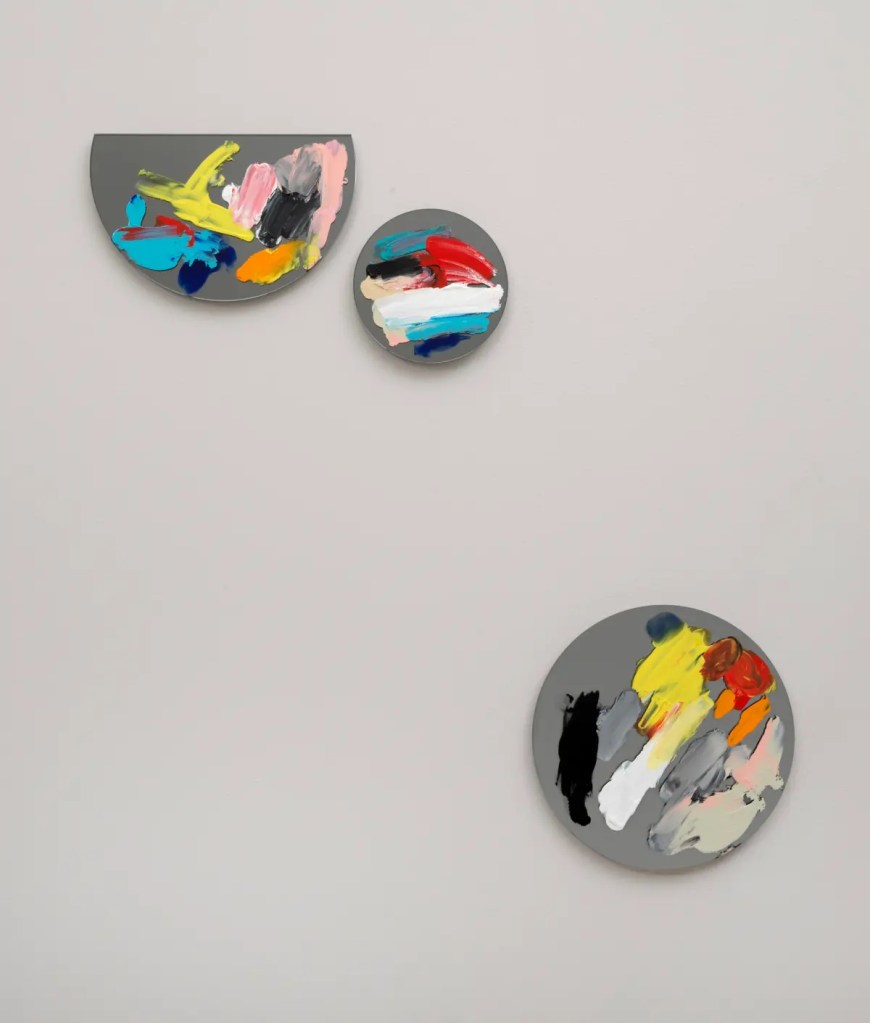
Disability, Inclusion, and the Administrative Gaze
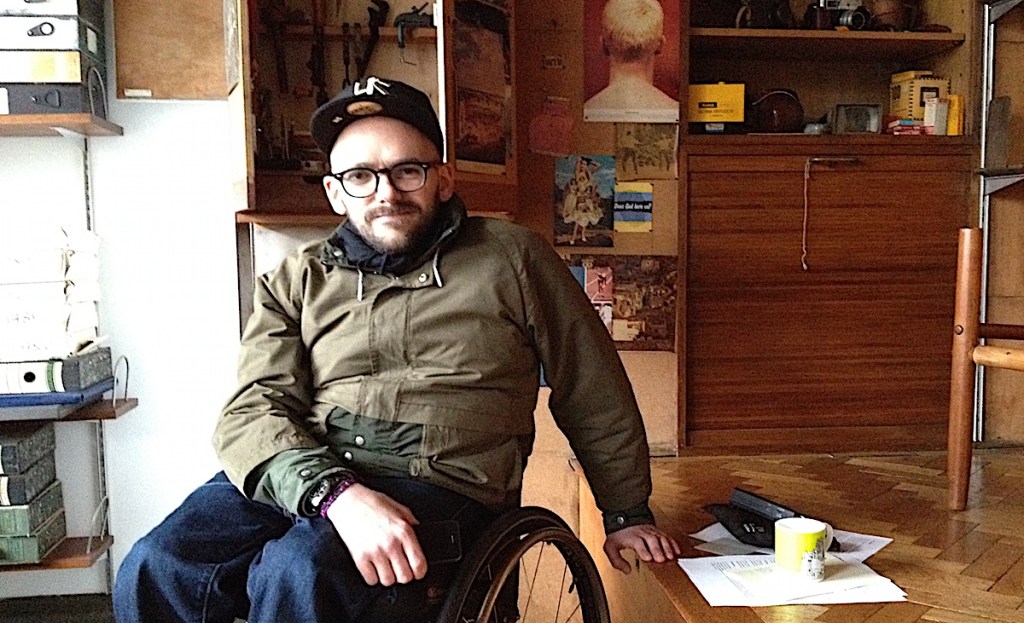
Gander’s public identity as a disabled artist is a crucial part of how he circulates institutionally. He uses a wheelchair. He speaks about exclusion in interviews. And he has described accessibility as “overrated” not because he rejects the principle, but because he believes imagination itself can function as a compensatory system. Yeah, right! That rhetorical position is extremely compatible with contemporary arts institutions, which are deeply invested in signalling inclusion while remaining ambivalent about structural reform. To understand why, in the art world, accessibility has become less a physical condition and more a textual regime: statements, labels, policies, education packs, press releases, files and public-facing messaging that frame inclusion as a moral horizon.
Gander as a disabled artist is a crucial part of how he circulates institutionally. He uses a wheelchair. He speaks about exclusion in interviews. And he has described accessibility as “overrated” not because he rejects the principle, but because he believes imagination itself can function as a compensatory system. Yeah, right!
Tweet
Gander fits perfectly within this chronotope. His disability is visible enough to grant the institution an aura of inclusivity, but his work does not force the institution to alter its infrastructure. His aesthetic—minimal, conceptual, elegantly absent—aligns itself to a discourse of imagination that makes physical difficulty seem secondary. In other words: the institution can celebrate him as a figure of inclusion without confronting the embodied inequalities that shape access to space, training, employment, visibility, and care.
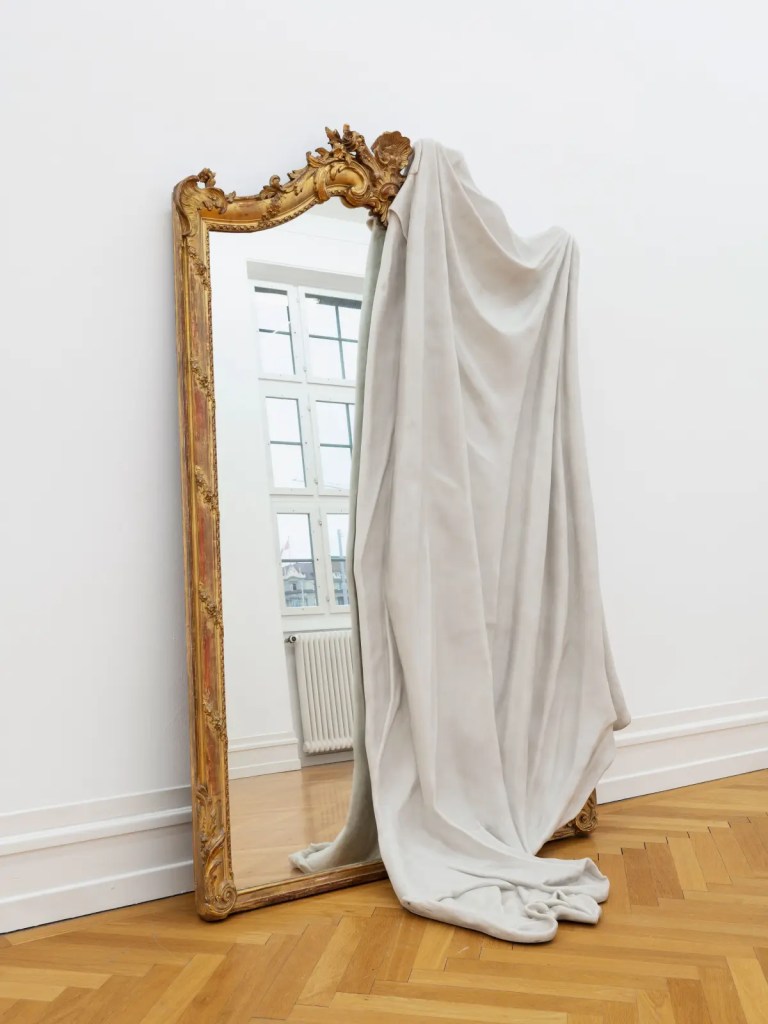
This is not an accusation against Gander. It is a structural description. He has become the ideal figure for the post-YBA administered era: someone whose difference can be described narratively rather than materially, whose disability can be integrated into an institutional identity without requiring the institution to transform itself. Inclusion, in this sense, becomes text. And Gander—whose work already operates as a system of translations—fits seamlessly into that textuality.
The Art of Institutional Morality Management
Examining several of Gander’s key works clarifies how his practice operates within this post-YBA framework. These are not isolated pieces; they reveal a consistent grammar: elegance, conceptual neatness, and an almost total elimination of political or emotional hazard.
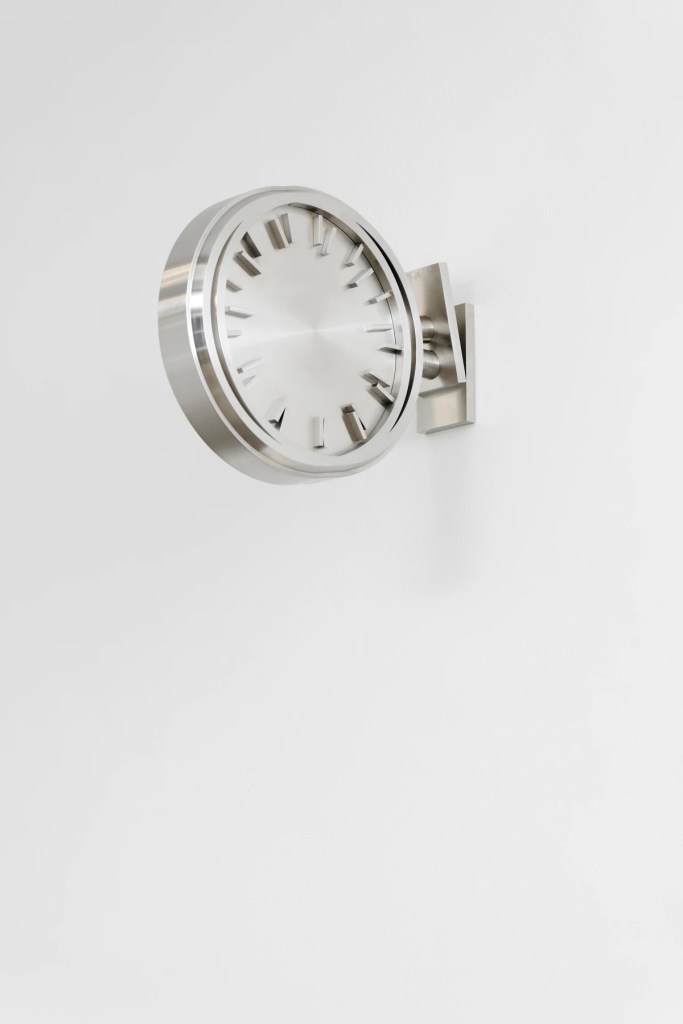
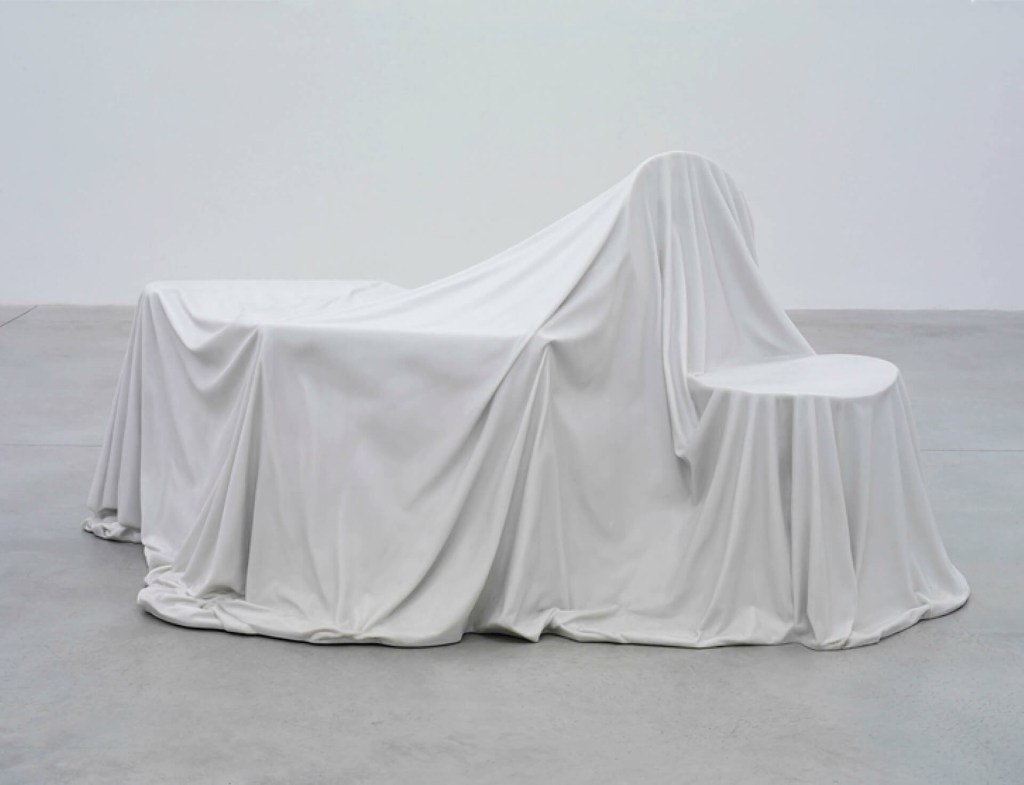
The marble works based on his daughter playing ghost under a bedsheet exemplify this tendency. A simple childhood gesture becomes a monumental drapery of stone. The body disappears; what remains is the idea of imagination. The work is made for the museum: white, smooth, photogenic, affective but not sentimental. It is not about trauma; it is about the cognitive beauty of play. The narrative of creative development overlays the sculpture, producing a gentle aura of universality.
In another register, the Associative Ghost Templates distill a similar logic. These translucent or white panels, perforated to mark the absence of objects or images, operate as conceptual diagrams. They are the shadow of an archive turned into design. Their politics are purely formal: they evoke loss and memory without specifying any historical or social stake. The viewer receives an empty outline and is invited to complete it imaginatively. Again, the institution gains a work that is at once intellectual, clean, abstract, and adaptable to any curatorial theme.
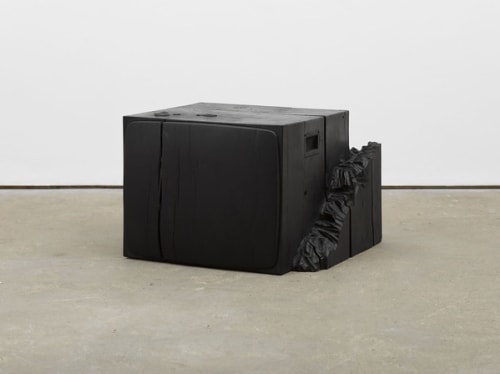
Ryan Gander’s series The Way Things Collide intensifies this grammar of conceptual play. He pairs objects that would not normally meet—a piece of luggage with a skateboarding element, a tampon with a car seat, a monitor with a sexual reference. The effect is humorous, slightly provocative, but always cushioned. Everything is crafted in wood, polished, made safe. What could have been an uncomfortable collision becomes a choreographed juxtaposition. The traces of sexuality, class, or consumer culture are flattened into neutral silhouettes. In a sense, these works are the perfect image of the post-YBA moment: the shock of the 90s softened into a sophisticated riddle.
Ryan Gander’s series The Way Things Collide intensifies this grammar of conceptual play. He pairs objects that would not normally meet. The effect is humorous but cushioned. What could have been an uncomfortable collision becomes a choreographed juxtaposition: the perfect image of the post-YBA moment softened into a pseudo-sophisticated riddle.
Tweet
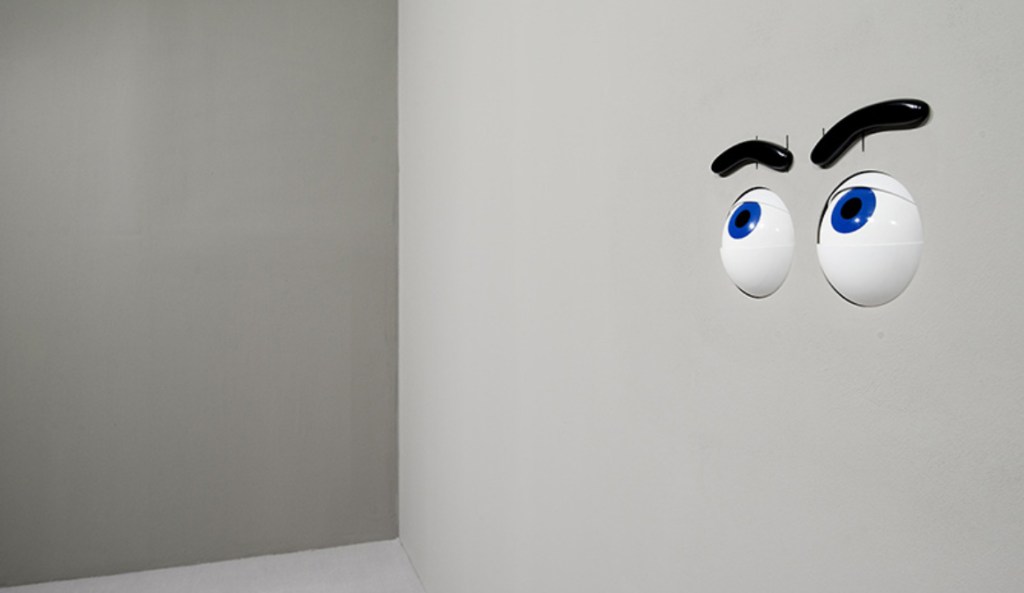
The project Make Everything Like It’s Your Last reveals the institutional metabolism even more clearly. At first glance it reads as a motivational command. As an installation and as a slogan, it captures the precarity of the creative worker who is always expected to produce at the edge of exhaustion. Yet in Gander’s hands the phrase becomes ambiguous—half critique, half branding. It speaks the language of neoliberal productivity while operating as a collectable artwork. The institution can present it as a commentary without altering its own demands on artists. This double register—critical surface, administrative core—is the hallmark of the post-YBA administered aesthetic.
Across all these works, Gander’s disability hovers in the background. Not as a disruptive force, but as a narrative that reinforces the ideal of imagination as transcendence. His body is present, yet its political implication is quietened. The artwork becomes a site where difficulty is sublimated into cleverness. In this, Gander becomes the perfect figure of post-YBA compatibility: the artist whose difference is visible but non-threatening, whose work is conceptual but never indicting, whose presence offers inclusion without conflict.
Jeremy Deller, Philippe Parreno, and the Limits of Gander’s Model
Jeremy Deller and Philippe Parreno offer a revealing counterpoint to Gander. They operate within similar institutional circuits—biennials, museums, commissions—but their work exceeds the frame of conceptual tidiness. Both produce art that resists closure and demands engagement with forces that cannot be administered into elegance.
Deller’s practice is inseparable from collective memory, historical trauma, and the politics of class. His re-enactment of the miners’ strike confrontation or his mobilisation of volunteers dressed as World War I soldiers for a day-long intervention are not puzzles to be decoded. They are social events, performances of loss, confrontations with the archive. They implicate the institution in conflicts that cannot be neutralised. The museum becomes a stage on which historical injuries return. There is no graceful conceptual exit. Deller uses the institution to expose what it would prefer to forget.
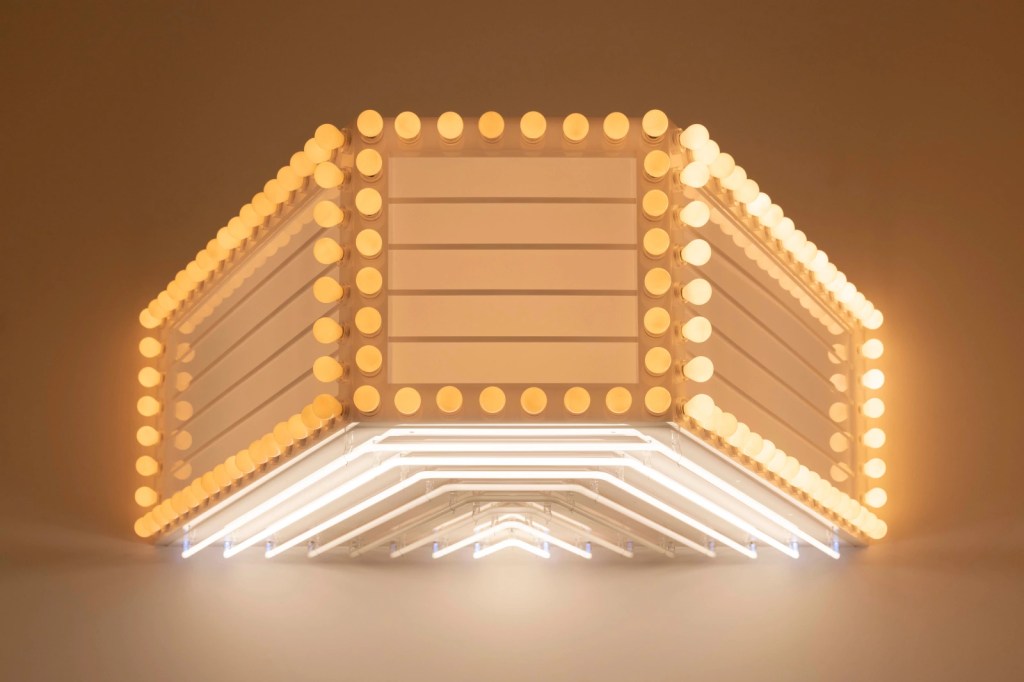
Parreno, for his part, produces temporal and perceptual environments that destabilise the museum’s desire for clarity. His installations shift lighting, sound, projection, and rhythm. They demand that the viewer experience art as a choreographed uncertainty. His films, whether centred on a football icon or on artificial organisms, complicate the very idea of a singular artwork. Time is not illustrative; it is material. The institution must surrender control over interpretation, because the work unfolds in ways that cannot be paraphrased by a single didactic text.
What Gander shares with Deller and Parreno is an interest in systems, translation, and the conditions of experience. What he lacks—deliberately or structurally—is the willingness to let those systems become unruly. Deller accepts conflict as constitutive. Parreno accepts ambiguity as the core of perception. Gander, by contrast, maintains a distance that ensures the work remains legible, elegant, and institutionally harmonious.
This is why I say that Deller and Parreno are “much more artists” in the sense that their work continues after the explanation. It produces an afterlife of thought and sensation that is not fully under the artist’s control. Gander’s work, in contrast, tends to close itself: the conceptual gesture resolves the experience. The viewer is invited to admire the device rather than inhabit the world it implies.
This comparison matters because the Royal Academy’s decision to entrust Gander with “interconnectedness” reveals precisely the institutional preference at stake. The RA does not want collision in the sense of political or social conflict; it wants juxtaposition in the sense of well-behaved diversity. It wants relationships without risk, differences without antagonism, access without structural revision. Gander is the curator who can guarantee that result.
The Meaning of Gander’s Rise
Gander’s success is not accidental. It reflects the evolution of British art from the fever of the 1990s to the managerial equilibrium of the 2020s. He represents an aesthetic that is conceptual but digestible, playful but responsible, personal but not destabilising. He is the ideal artist for institutions that want to show intelligence without entering political terrain, inclusion without restructuring, conceptual acuity without epistemic danger.
Gander’s work is not weak. But it operates within a strict horizon: it must be clever, elegant, and narratively supportive of institutional values. The disabled artist who expresses imagination rather than protest, the conceptualist who produces puzzles instead of pain, the insider who performs mischief rather than rupture—this is the figure that best captures the cultural moment.
Gander’s work is not weak. But it operates within a strict horizon: it must be clever, elegant, and narratively supportive of institutional values. The disabled artist who expresses imagination rather than protest, the conceptualist who produces puzzles instead of pain.
Tweet
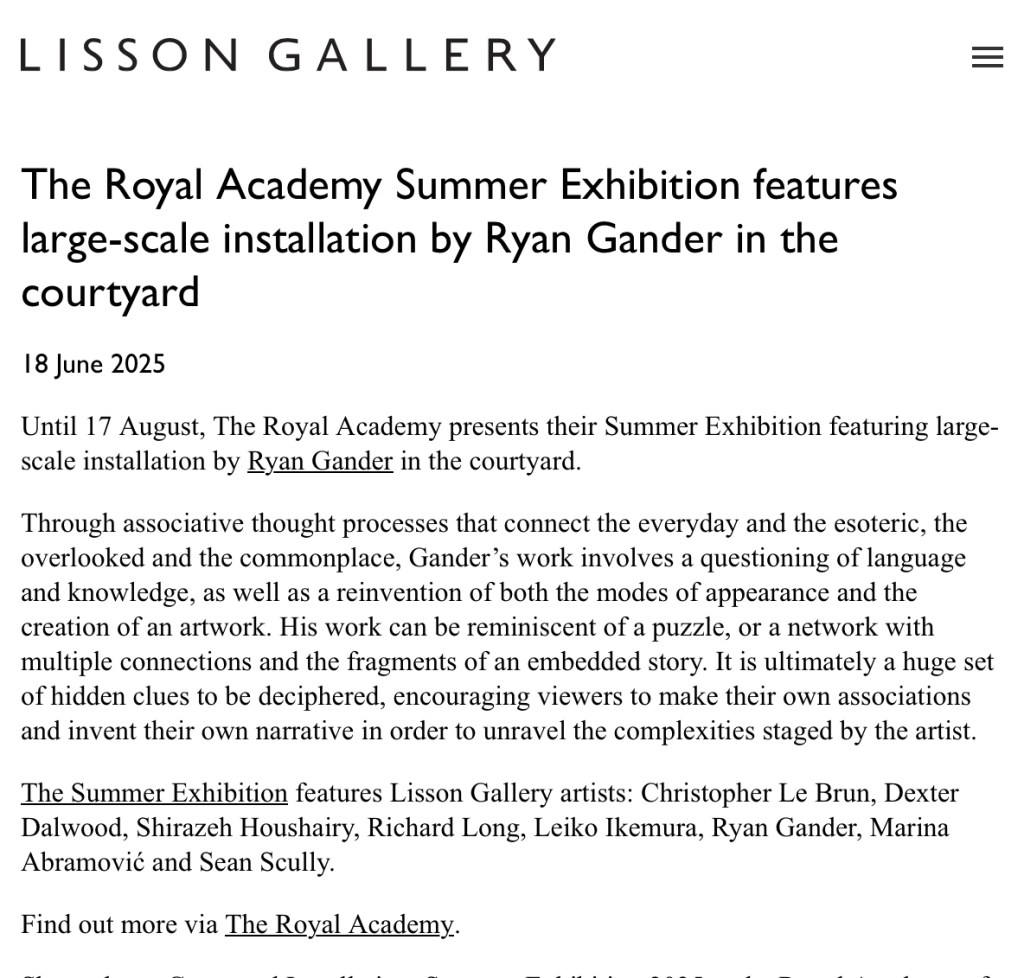
Gander’s appointment to the Summer Exhibition crystallises this. The show has always balanced democracy and decorum. Under Gander, it will lean toward a curated chaos that remains safe, an interconnectedness of forms without an interconnectedness of conflicts. It will offer collisions of media and generations, but not of historical wounds or political antagonisms. It will be charming, clever, well-designed.
And that is precisely the point. Gander is not a YBA. He is the post-YBA file obsessed management condition made flesh. His importance lies not in what he reveals, but in what he exemplifies: the institutional desire for art that looks inclusive, photographs beautifully, and never destabilises the system that elevates it.
Ryan Gander is the post-YBA file obsessed management condition made flesh. His importance lies not in what he reveals, but in what he exemplifies: the institutional desire for art that looks complex, feels inclusive
Tweet
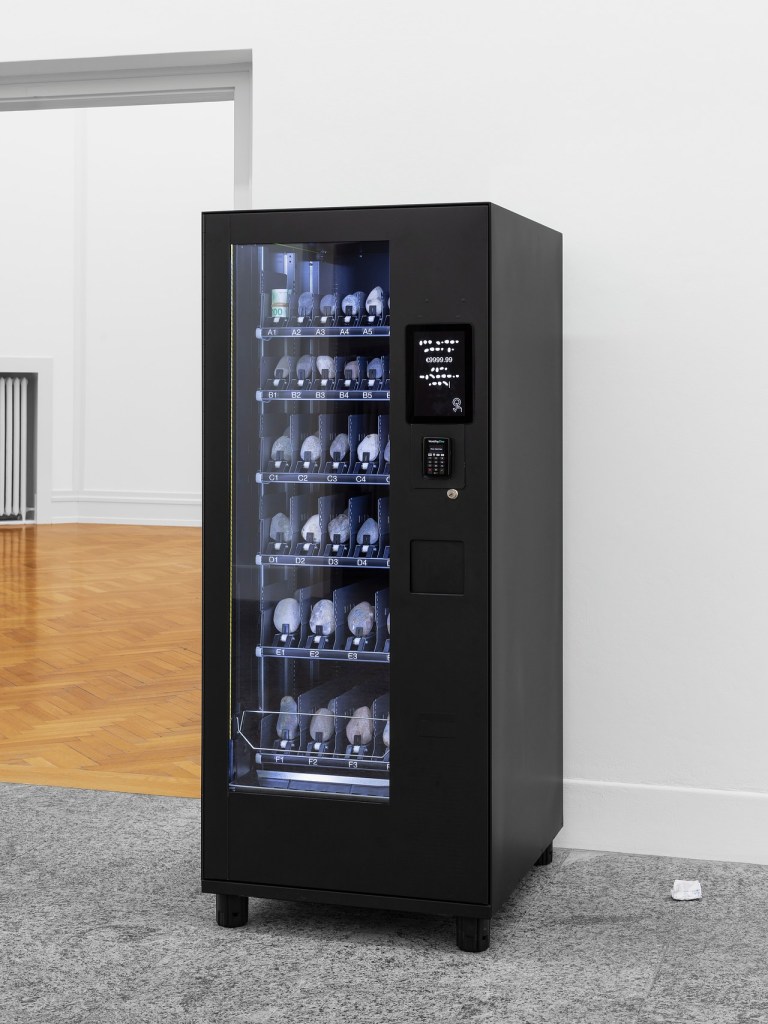
In that sense, he is a perfect artist for our time—and a necessary one to understand, not because his work is profound, but because it shows with unusual clarity how contemporary art institutions negotiate their own anxieties. He is the outcome of the YBA revolution once the spectacle has been domesticated, the trauma neutralised, the danger absorbed, and the politics displaced into slogans about imagination and interconnectedness. That, for better or worse, is the real significance of Ryan Gander.


 Loveartnotpeople.blog
Deja una respuesta