
La version en Español debajo de la version en Inglés.

Contemporary Art, Private Philanthropy, and Institutional Silence
A few days ago, the Courtauld and article in Artlyst announced, in an unequivocally celebratory tone, that that institution (where I spent almost seven years of my academic life) had secured a further “significant” philanthropic commitment from the Blavatnik Family Foundation. The figures are explicit: an additional £10 million, bringing total Blavatnik funding to £20 million, earmarked for the creation of two new galleries dedicated to contemporary art, scheduled to open in 2029 as part of the Courtauld’s long-term redevelopment of its Somerset House campus.
A few days ago, the Courtauld and article in Artlyst announced, in an unequivocally celebratory tone, that that institution (where I spent almost seven years of my academic life) had secured a further “significant” philanthropic commitment from the Blavatnik Family Foundation. This is highly problematic.
Tweet
The article presents the announcement as a straightforward success story: institutional renewal, expansion, and future-facing ambition. The tone is seamless; no tension, no hesitation, no contextual framing. Yet it is precisely this smoothness—this absence of conflict—that calls for closer examination. What is being celebrated here is not merely a donation, nor even a curatorial expansion, but the consolidation of a structural model that increasingly defines the limits of academic and cultural autonomy.
What is being celebrated in the Courtauld’s celebratory acceptance of Blavatnik’s money is not merely a donation, nor even a curatorial expansion, but the consolidation of a structural model that increasingly defines the limits of academic and cultural autonomy.
Tweet

A Name and Its Symbolic Weight
The article repeatedly refers to Sir Leonard Blavatnik. The honorific title that precedes his name (“Sir”) appears as a neutral descriptor, yet it is anything but neutral. It signals the full symbolic incorporation of private capital into the moral and institutional architecture of the British state. It formalises legitimacy, translating economic power into civic virtue.
The article repeatedly refers to Sir Leonard Blavatnik. The honorific title that precedes his name (“Sir”) appears as a neutral descriptor, yet it is anything but neutral. It signals the full symbolic incorporation of private capital into the moral and institutional architecture of the British state. It formalises legitimacy, translating economic power into civic virtue.
Tweet
It is important to clarify the scope of this critique from the outset. This is not a personal, moral, or legal accusation directed at Blavatnik, nor a blanket rejection of cultural philanthropy. Rather, the analysis is structural. Blavatnik functions here as a paradigmatic figure of transnational private capital that, through philanthropy, becomes embedded within public cultural and academic institutions, acquiring not only symbolic legitimacy but also material influence over institutional trajectories. The issue is not the donation itself, but the way such funding reshapes the conditions under which critique, governance, and intellectual autonomy can operate.
The issue is not Blavatnik’s donation to the Courtauld, itself, but the way such funding reshapes the conditions under which critique, governance, and intellectual autonomy can operate.
Tweet

Deregulated Capital and the British Context
This paradigmatic role cannot be understood outside the specific British context of the past two decades. Blavatnik’s prominence is inseparable from the period of largely deregulated Russian and post-Soviet investment in the UK, particularly from the early 2000s to the mid-2010s, when London functioned as a major global hub for the absorption of transnational capital of opaque origin. This period—widely documented through parliamentary inquiries, investigative journalism, and subsequent regulatory reforms—reshaped not only property markets and financial systems, but also the cultural and academic landscape.
Universities and cultural institutions became key sites for the symbolic re-legitimation of this opaque Russian capital through philanthropy. Recent regulatory tightening does not erase this history; it retrospectively confirms it as a formative moment in which institutions incorporated private funding without developing adequate critical frameworks to assess its long-term effects on governance, discourse, and intellectual independence.
Universities and cultural institutions became key sites for the symbolic re-legitimation of this opaque Russian capital through philanthropy. Recent regulatory tightening does not erase this history; it retrospectively confirms a refusal to assess its long-term effects on governance, discourse, and intellectual independence.
Tweet
Institutional Continuity as Destiny
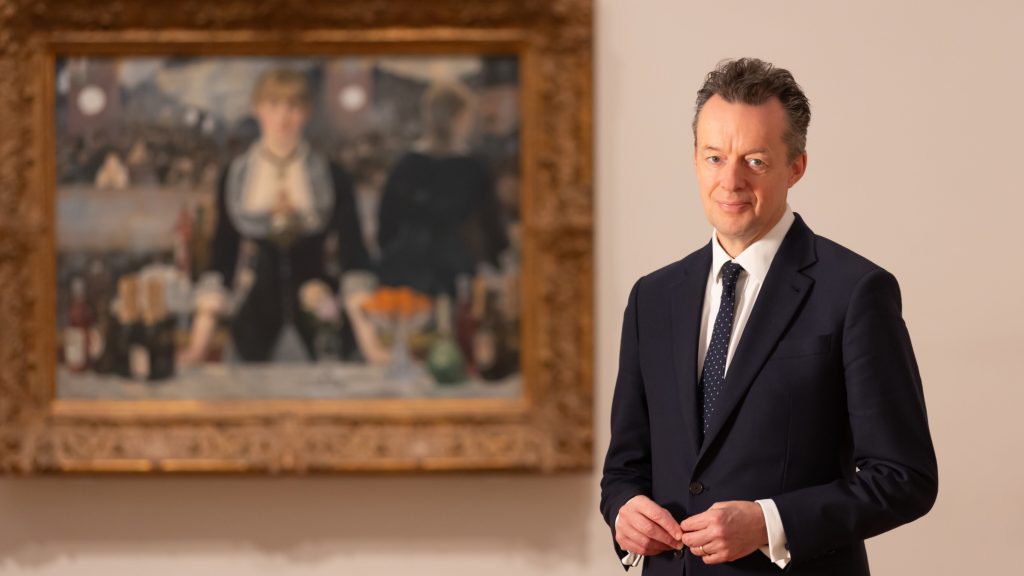
According to Artlyst, Lord Browne of Madingley, Chair of the Board of Trustees, emphasises that Sir Leonard and Lady Emily Blavatnik have been “instrumental” in shaping the Courtauld’s trajectory over the past decade. The new pledge builds upon existing landmarks: the Blavatnik Fine Rooms (opened in 2021) and the forthcoming Blavatnik Reading Room within the refurbished library. That is the decade that saw the relevance of art history and the Courtauld dramatically drop.
The term “instrumental” is revealing. This is not episodic support but infrastructural involvement. When a donor structures an institution’s material and symbolic future over an extended period, that donor ceases to be external to the institution’s identity. Funding becomes destiny.
The term “instrumental” is revealing. This is not episodic support but infrastructural involvement. When a donor (like Blavatnik) structures an institution’s material and symbolic future over an extended period, that donor ceases to be external to the institution’s identity. Funding becomes destiny.
Tweet

Contemporary Art as Institutional Rebranding
A central thread in the Artlyst article is the Courtauld’s deepening commitment to contemporary art. Since the reopening of its gallery in 2021, following the award-winning refurbishment by Witherford Watson Mann, the institute has positioned contemporary practice as a core component of its public identity.
The article lists exhibitions and commissions: Peter Doig, Claudette Johnson, a major commission by Cecily Brown, the launch of an annual commission in the John Browne Entrance Hall, and the forthcoming first European solo exhibition of Salman Toor in 2026.
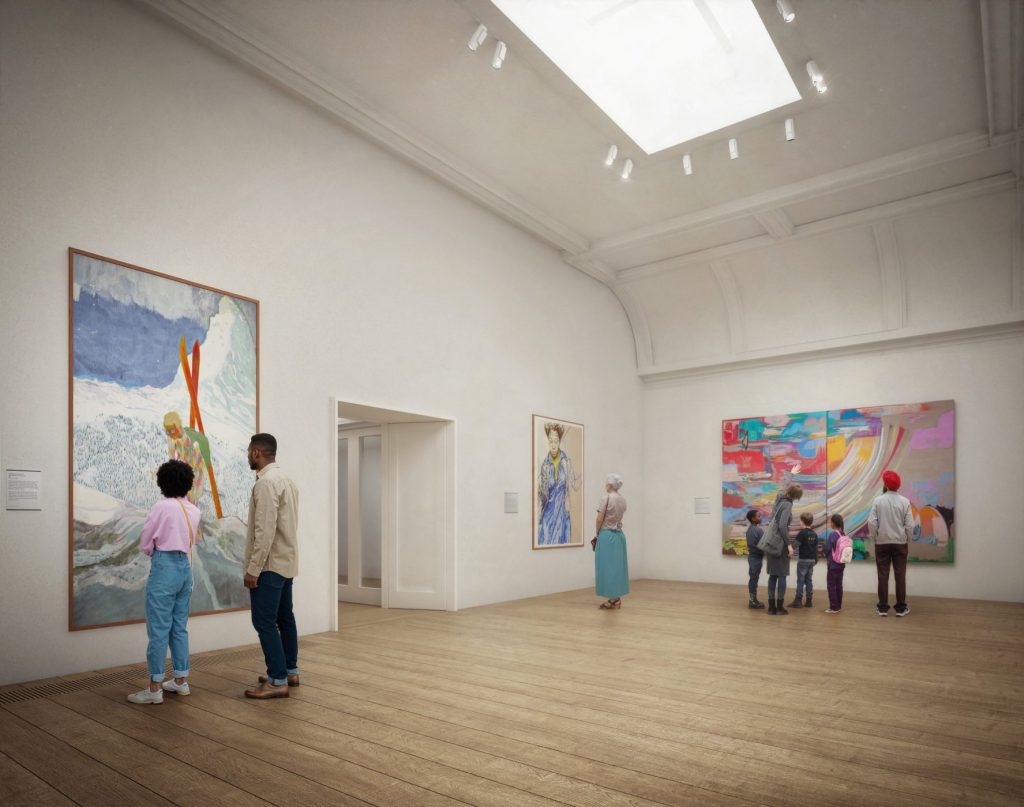
None of this is objectionable in itself. The issue arises when contemporary art functions as an institutional rebranding mechanism, signalling openness, relevance, and experimentation, while simultaneously deflecting attention from the structural conditions that make such programming possible. Art appears as content; funding remains naturalised.
The Article’s Blind Spot
What Artlyst, the Art Newspaper or The Courtauld do not address is as significant as what they celebrate. There is no reflection on financial dependency, no reference to prior controversies surrounding cultural philanthropy, and no consideration of how such funding models affect institutional autonomy, internal culture, or working conditions. Phrases such as “a site of possibilities” float free of material constraints. Possibilities for whom, and under what conditions, remain unasked questions.
The Courtauld referred to the donation as “a site of possibilities” which as an expression floats free of material constraints. The question is: possibilities for whom, and under what conditions, and at what cost, remain unasked questions.
Tweet
Philanthropy as a Technology of Cultural Governance
In the contemporary British context, the Courtauld is not an exception but a case study. The gradual withdrawal of state funding has compelled universities and museums to adopt quasi-corporate governance models, where academic and curatorial visions are increasingly entangled with donor relations.
Philanthropy thus becomes a technology of cultural governance. It governs not through overt censorship but through anticipation, gratitude, and internalised limits. Critical inquiry is not prohibited; it is rendered structurally precarious.
The Human Cost of Structural Precarity
Institutions fluent in the language of care, wellbeing, and inclusion (in this the U Turn of the Courtauld could be considered, to say the least, opportunistic) often coexist with opaque hierarchies, sustained pressure, and cultures of silence. These conditions are not neutral. They disproportionately affect those in vulnerable positions, whether psychological, professional, or contractual. Such effects are absent from celebratory institutional narratives, yet they are integral to the ecosystem that sustains them.

The Honorific as Symptom
The title “Sir” returns us to the core contradiction. It marks the moment at which private capital is not merely accommodated by public culture but ennobled within it. Universities and art institutions become spaces where capital is not questioned but consecrated. There are no villains here, only a system functioning with remarkable coherence. A system in which critique is displayed, taught, and historicised—but rarely permitted to interrogate the conditions of its own possibility.
The title “Sir” returns us to the core contradiction. It marks the moment at which private capital is not merely accommodated by public culture but ennobled within it. Universities and art institutions become spaces where capital is not questioned but consecrated. Critique, in those institutions, is displayed, taught, and historicised—but rarely permitted to interrogate the conditions of its own possibility.
Tweet
A Necessary Question
If contemporary art now occupies a central place in the Courtauld’s institutional identity, the question is not which artists will be shown or how ambitious the programme will be. The question is more fundamental: What kind of critique can an institution produce when its survival depends on that which it cannot meaningfully interrogate?
If contemporary art now occupies a central place in the Courtauld’s institutional identity. The question is: What kind of critique can an institution produce when its survival depends on that which it cannot meaningfully interrogate?
Tweet
It is an open question. And it is the one that matters.
© Rodrigo Cañete, 2026. All rights reserved. / Todos los derechos reservados.
Por qué el Courtauld festeja su propia hipoteca académica
Arte contemporáneo, filantropía privada y silencio institucional
El 27 de enero de 2026, Artlyst anunció, con un tono inequívocamente celebratorio, que The Courtauld Institute of Art había asegurado un nuevo compromiso filantrópico “significativo” por parte de la Blavatnik Family Foundation. Las cifras son claras: £10 millones adicionales, que elevan el apoyo total de la fundación a £20 millones, destinados a la creación de dos nuevas galerías de arte contemporáneo, con apertura prevista para 2029, como parte del proyecto de transformación a largo plazo del Courtauld en Somerset House.

El artículo presenta el anuncio como una historia de éxito sin fisuras: renovación institucional, expansión y proyección de futuro. El relato es fluido, sin tensiones ni preguntas. Sin embargo, es precisamente esa falta de fricción lo que exige ser interrogado. Lo que aquí se celebra no es solo una donación ni un programa expositivo, sino la consolidación de un modelo estructural que redefine los límites de la autonomía académica y cultural.
Un nombre propio y su peso simbólico
El texto se refiere reiteradamente a Sir Leonard Blavatnik. El “Sir” aparece como un detalle protocolar, pero no lo es. El título nobiliario señala la plena incorporación simbólica del capital privado al aparato moral e institucional del Estado británico, transformando poder económico en virtud cívica.
Conviene precisar el alcance de esta crítica. No se trata de una imputación personal, moral o jurídica dirigida a Blavatnik, ni de un rechazo general a la filantropía cultural. El análisis es estructural. Blavatnik funciona aquí como una figura paradigmática del capital privado transnacional que, a través de la filantropía, se inserta en el corazón de las instituciones culturales y universitarias públicas, adquiriendo legitimidad simbólica y capacidad de incidencia sobre sus condiciones materiales, discursivas y programáticas. El problema no es la donación en sí, sino el modo en que este tipo de financiación redefine los márgenes de autonomía institucional y los límites de lo criticable.
Capital desregulado y contexto británico
Esta función paradigmática solo puede entenderse en relación con el contexto británico de las últimas dos décadas. La centralidad de Blavatnik está ligada al período de inversión rusa y postsoviética ampliamente desregulada en el Reino Unido, especialmente entre comienzos de los años 2000 y mediados de la década de 2010, cuando Londres operó como uno de los principales nodos globales de absorción de capital transnacional de origen opaco. Ese ciclo —documentado en debates parlamentarios, investigaciones periodísticas y posteriores reformas regulatorias— transformó no solo los mercados inmobiliarios y financieros, sino también el ecosistema universitario y cultural.
Las instituciones culturales se convirtieron en espacios privilegiados de re-legitimación simbólica de ese capital. Las regulaciones introducidas posteriormente no borran ese legado; lo confirman retrospectivamente como un momento formativo en el que se incorporó financiación privada sin desarrollar marcos críticos adecuados para evaluar sus efectos a largo plazo.
Continuidad institucional como destino
Según recoge Artlyst, Lord Browne of Madingley subraya que Sir Leonard y Lady Emily Blavatnik han sido “instrumentales” en la trayectoria del Courtauld durante la última década. El nuevo aporte se suma a hitos ya existentes, como las Blavatnik Fine Rooms (2021) y la futura Blavatnik Reading Room.

El término “instrumental” es revelador. No se trata de apoyo puntual, sino de implicación estructural. Cuando un donante configura de manera sostenida el futuro material y simbólico de una institución, deja de ser externo a su identidad. La financiación se convierte en destino.
El arte contemporáneo como rebranding institucional
El artículo destaca la creciente centralidad del arte contemporáneo en el Courtauld. Desde la reapertura de la galería en 2021, tras la remodelación premiada de Witherford Watson Mann, el arte contemporáneo se presenta como eje de renovación institucional.
Se enumeran exposiciones y comisiones: Peter Doig, Claudette Johnson, una gran comisión de Cecily Brown, el lanzamiento de una comisión anual en el John Browne Entrance Hall y la futura primera exposición individual europea de Salman Toor en 2026.
Nada de esto es objetable en sí mismo. El problema surge cuando el arte contemporáneo funciona como dispositivo de rebranding, señalando apertura y actualidad mientras desvía la atención de las condiciones estructurales que lo sostienen. El arte aparece como contenido; la financiación, como naturaleza.
El punto ciego del relato
Lo que Artlyst no menciona es tan significativo como lo que celebra. No hay reflexión sobre dependencia financiera, ni referencia a antecedentes problemáticos de la filantropía cultural, ni análisis del impacto de estos modelos sobre la autonomía institucional, la cultura interna o las condiciones de trabajo y estudio. Expresiones como “a site of possibilities” quedan suspendidas en el aire. Las posibilidades aparecen desligadas de sus condiciones materiales.
La filantropía como tecnología de gobierno cultural
En el Reino Unido contemporáneo, el Courtauld no es una excepción, sino un caso de estudio. La retirada progresiva del Estado ha empujado a universidades y museos hacia modelos de gobernanza cuasi-corporativos, donde los proyectos académicos se entrelazan con la captación de capital privado.
La filantropía se convierte así en una tecnología de gobierno cultural. No gobierna mediante censura explícita, sino a través de la anticipación, el agradecimiento y la interiorización de límites. La crítica no se prohíbe: se vuelve estructuralmente inviable.
El costo humano de la precariedad estructural
Las instituciones que hablan con fluidez de cuidado, bienestar e inclusión suelen coexistir con jerarquías opacas, presión sostenida y culturas del silencio. Estas condiciones no son neutras y afectan de manera desigual a quienes ocupan posiciones vulnerables. Nada de esto aparece en los comunicados celebratorios, pero forma parte del mismo ecosistema institucional.
El “Sir” como síntoma
El “Sir” condensa la contradicción central. Marca el punto en que el capital privado no solo es aceptado por la cultura pública, sino ennoblecido en su interior. Las instituciones culturales se convierten en espacios donde el capital no es interrogado, sino consagrado. No hay villanos individuales, sino un sistema que funciona con notable coherencia. Un sistema en el que la crítica se enseña y se exhibe, pero rara vez se aplica a las condiciones que la hacen posible.
Una pregunta necesaria
Si el arte contemporáneo ocupa hoy un lugar central en la identidad del Courtauld, la pregunta no es qué artistas se exhibirán ni cuán ambicioso será el programa. La pregunta es más fundamental: ¿Qué tipo de crítica puede producir una institución cuya supervivencia depende de aquello que no puede interrogar de manera efectiva?
No es una acusación. Es una pregunta abierta. Y es la que importa.
Mi libro está disponible en Mercado Libre, Amazon y las mejores librerías.



 Loveartnotpeople.blog
Deja una respuesta