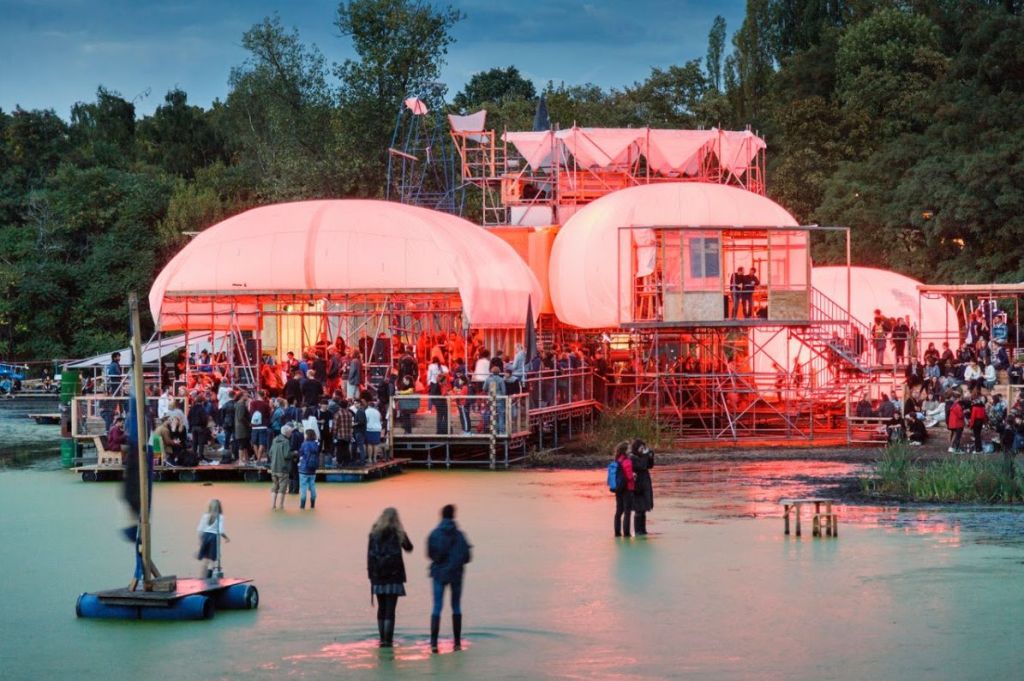
El Giro Afectivo del Arte Contemnporáneo
Tenemos un nuevo episodio (el numero 6) del Curso de Care Curating. Toda curaduría es, etimológicamente, un acto de cuidado: curar viene de curare, cuidar de algo. Pero cuando el cuidado se convierte en programa curatorial, cuando la empatía se institucionaliza como metodología, hay que preguntarse qué cura exactamente cura. La premisa de este ensayo va a contracotriente: el giro afectivo del arte contemporáneo —su fe en el Deep Listening, en el trabajo somático, en la vulnerabilidad compartida como forma de resistencia— no resuelve las patologías del capitalismo tardío que dice combatir. Las administra. Y administrar el daño, hacerlo habitable, no es lo mismo que repararlo.
Tenemos un nuevo episodio (el numero 6) del Curso de Care Curating.
Tweet
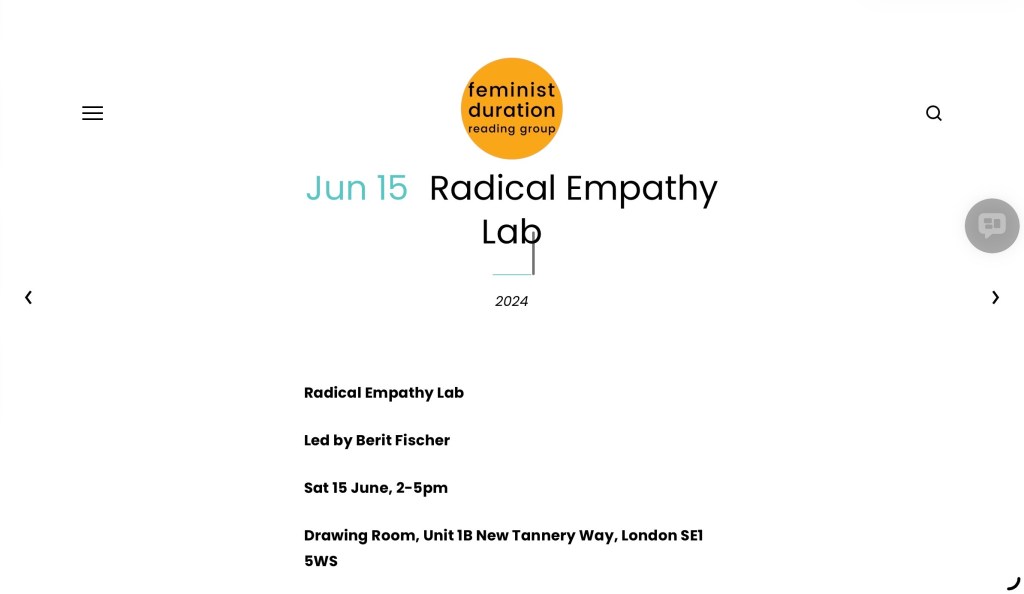
En ese nuevo episodio me dedico al Radical Empathy Lab, plataforma itinerante fundada en Alemania en 2016. Es el caso más consecuente de este giro del cuidado. Se mueve entre universidades, centros de arte y bienales europeas proponiendo una sustitución completa del vocabulario museístico: donde había espectador, ahora hay participante; donde había contemplación, inmersión; donde había objeto, experiencia. Sus herramientas —el Deep Listening, la improvisación colectiva, las pedagogías feministas, el trabajo corporal— no ilustran un discurso sobre el cuidado: pretenden producirlo directamente en el cuerpo de quien asiste. La curaduría deja de organizar objetos para organizar afectos. Es, en su propio lenguaje, una tecnología de subjetivación. Pero en qué términos y quién es el verdaderamente beneficiado?
En ese nuevo episodio me dedico al Radical Empathy Lab, plataforma itinerante fundada en Alemania en 2016. Allí, la curaduría deja de organizar objetos para organizar afectos. Es, en su propio lenguaje, una tecnología de subjetivación But…
Tweet
La tesis que sostiene el proyecto tiene una lógica interna difícil de refutar: si el neoliberalismo gobierna a través del deseo, la ansiedad y la atención fragmentada, la resistencia debe operar en ese mismo nivel micropolítico. El problema no es la premisa sino su consecuencia práctica. Cuando la transformación política se desplaza del terreno de la redistribución al terreno de la sensibilidad, la clase que gestiona el cuidado —programadores culturales, curadores, docentes, becarios de residencia artística— convierte su propio ajuste emocional en sustituto de la lucha material. No hace falta cambiar quién controla el presupuesto de un centro de arte si se puede, en cambio, cambiar el ritmo de la respiracion cuando esos cuerpos “meditan”.
Cuando la transformación política se desplaza del terreno de la redistribución al terreno de la sensibilidad, la clase que gestiona el cuidado convierte su propio ajuste emocional en sustituto de la lucha material.
Tweet
Sus Contradicciones
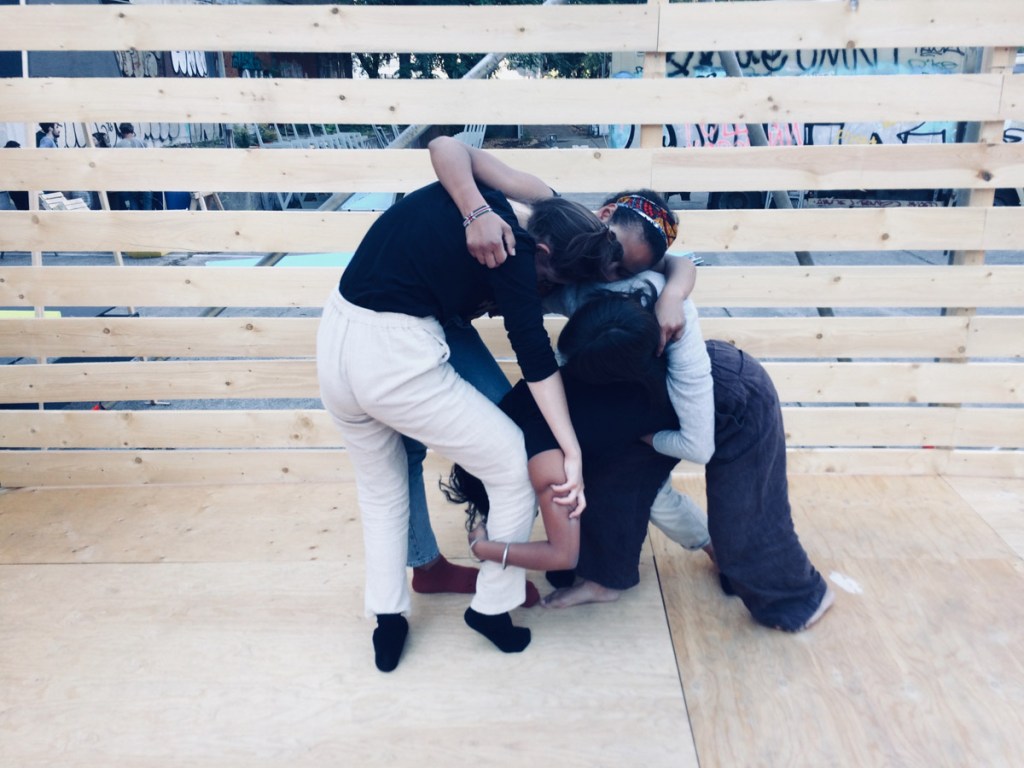
Y ahí aparece la contradicción que el proyecto no puede resolver desde adentro: las infraestructuras que sostienen al Radical Empathy Lab —universidades, bienales, centros financiados por fundaciones y gobiernos— son exactamente las mismas que reproducen el capitalismo cultural avanzado que el laboratorio dice cuestionar. La empatía radical necesita, para desplegarse, presupuestos, comités de selección, financiamiento que no ha diseñado ni puede rediseñar. El cuidado se vuelve la forma más sofisticada que tiene la institución de seguir siendo eso sin cambiar nada más que su vocabulario.
Esto no significa que el proyecto sea cínico ni que el cuidado sea una farsa. Significa algo peor: que el apego a la promesa de transformación afectiva —la fantasía de que sentir distinto alcanza para vivir distinto— puede ser precisamente lo que impide cambiar las causas del daño. El Radical Empathy Lab no necesita ser desenmascarado como fraude; necesita ser leído como síntoma. Y un síntoma no se cura señalándolo: se sostiene, se lo deja doler, hasta que revela lo que efectivamente representa.
Tal vez la pregunta no sea si el cuidado cura, sino qué encubre cuando cura demasiado bien. Quién financia la empatía. Quién tiene el tiempo de sentir en un taller de Deep Listening mientras otro limpia la sala después. Quién puede acceder físicamente (pagandose la nafta o el tren) al centro de ‘experimentación. Quién decide qué cuerpo necesita ser escuchado, y quién sigue, terminado el ejercicio, sin acceso a lo único que el afecto no puede redistribuir: el dinero, el tiempo, el poder de decisión sobre el presupuesto. La curaduría del cuidado no tiene que renunciar a sí misma para volverse políticamente útil. Tiene que dejar de ofrecerse como sustituto de la pregunta que todavía no responde.
The Radical Empathy Lab: The Cure That Doesn’t Cure (ENG)
Every act of curating is, etymologically, an act of care: to curate comes from curare, to take care of something. But when care becomes a curatorial program, when empathy is institutionalized as method, the question is what exactly this cure cures. The premise here is an uncomfortable one: the affective turn in contemporary art — its faith in Deep Listening, somatic work, shared vulnerability as resistance — does not resolve the pathologies of late capitalism it claims to treat. It administers them. And administering the damage, making it livable, is not the same as repairing it.
The Radical Empathy Lab, an itinerant platform founded in Germany in 2016, is the most consequential case of this turn. It moves through European universities, art centers, and biennials proposing a full substitution of the museological vocabulary: where there was a spectator, now a participant; where there was contemplation, immersion; where there was an object, an experience. Its tools — Deep Listening, collective improvisation, feminist pedagogies, somatic work — don’t illustrate a discourse about care; they aim to produce it directly in the body of whoever attends. Curating stops organizing objects and starts organizing affects. In its own language, it is a technology of subjectivation.
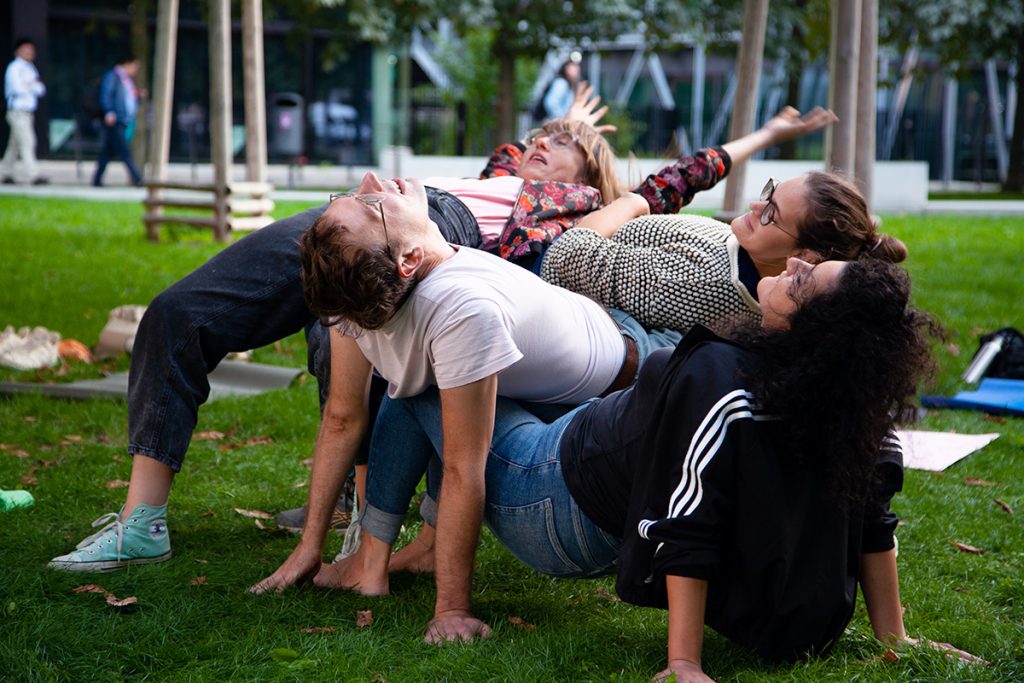
The thesis behind the project has an internal logic that’s hard to refute: if neoliberalism governs through desire, anxiety, and fragmented attention, resistance has to operate at that same micropolitical level. The problem isn’t the premise — it’s the practical consequence. When political transformation shifts from the terrain of redistribution to the terrain of sensibility, the class that manages care — cultural programmers, curators, adjunct educators, residency fellows — turns its own emotional adjustment into a substitute for material struggle. There’s no need to change who controls an art center’s budget if you can instead change how bodies breathe inside it.
And here the contradiction the project can’t resolve from within appears: the infrastructures sustaining the Radical Empathy Lab — universities, biennials, centers funded by foundations and governments — are exactly the ones reproducing the advanced cultural capitalism the lab claims to question. Radical empathy needs, in order to unfold, budgets, residencies, selection committees, funding calendars it hasn’t designed and can’t redesign. Care becomes the institution’s most sophisticated way of remaining the institution while changing nothing but its vocabulary.
None of this means the project is cynical, or that the care is fake. It means something more uncomfortable: that the attachment to the promise of affective transformation — the fantasy that feeling differently is enough to live differently — may be exactly what blocks arrival at anything else. That tension doesn’t need a verdict. The Radical Empathy Lab doesn’t need to be unmasked as a fraud; it needs to be read as a symptom. And a symptom isn’t cured by pointing at it. It’s held, allowed to hurt, until it reveals what it actually stands for.
Maybe the question isn’t whether care cures, but what it covers up when it cures too well. Who funds the empathy. Who has the time to feel, inside a Deep Listening workshop, while someone else cleans the room afterward. Who decides which body needs to be heard, and who remains, once the exercise ends, without access to the one thing affect can’t redistribute: money, time, decision-making power over the budget. Curatorial care doesn’t have to renounce itself to become politically useful. It has to stop offering itself as a substitute for the question it still hasn’t answered.

 Loveartnotpeople.bloG
Deja una respuesta