When a friend told me she was visiting a major photography exhibition at the Prada Foundation in Milan, I didn’t hesitate to ask for details. The show, titled Typologien, is a comprehensive exploration of 20th-century German photography, with a particular and logical emphasis on a visual continuity that projects a kind of emotional detachment—from the aesthetics of the New Objectivity, through Gerhard Richter, to the massive, hyper-commercial photographic objects of the 1990s that rivaled Jackson Pollock’s paintings or those of Neo-Abstract expressionism exhibited at the MoMA.
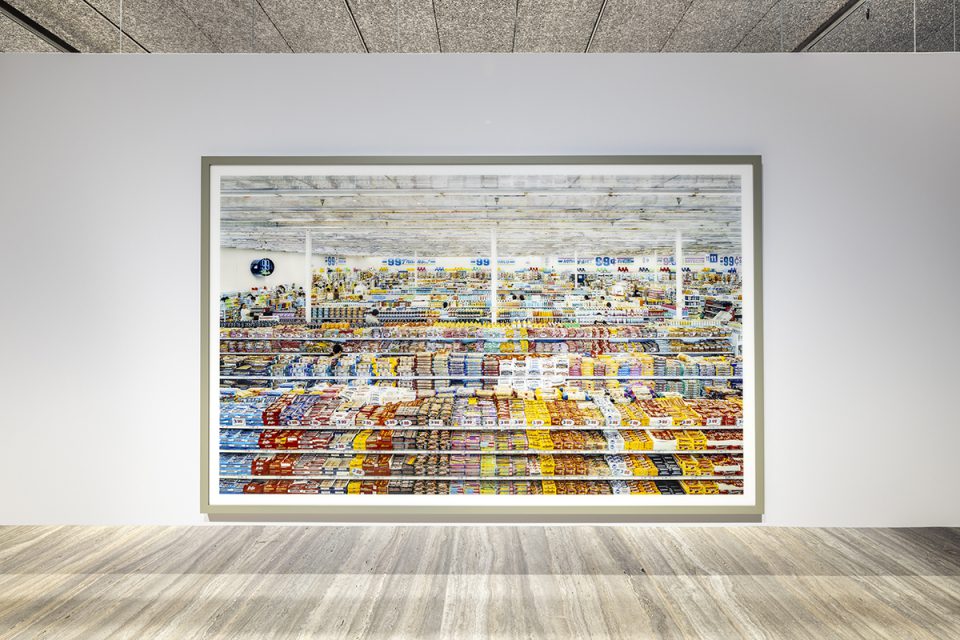
Curated by Susanne Pfeffer, director of the MUSEUM MMK FÜR MODERNE KUNST in Frankfurt, the exhibition is structured around the concept of typology, a system of classification that originated in 17th- and 18th-century botany and entered photography in the early 20th century, gaining strong traction in Germany. Rather than merely categorizing, typology in Typologien operates in a paradoxical register: it systematizes the visible while simultaneously revealing the arbitrariness of its own ordering logic.
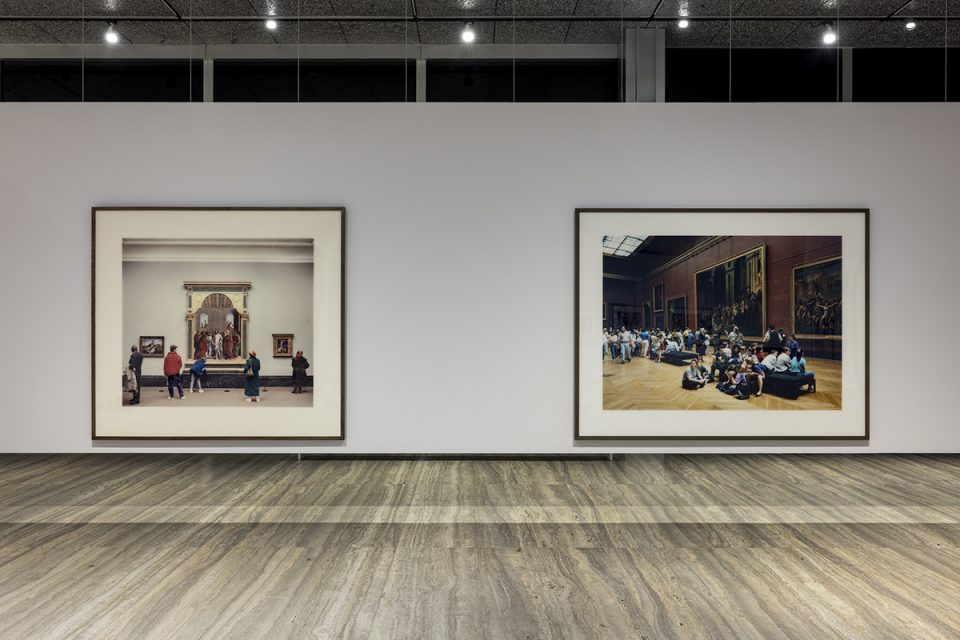
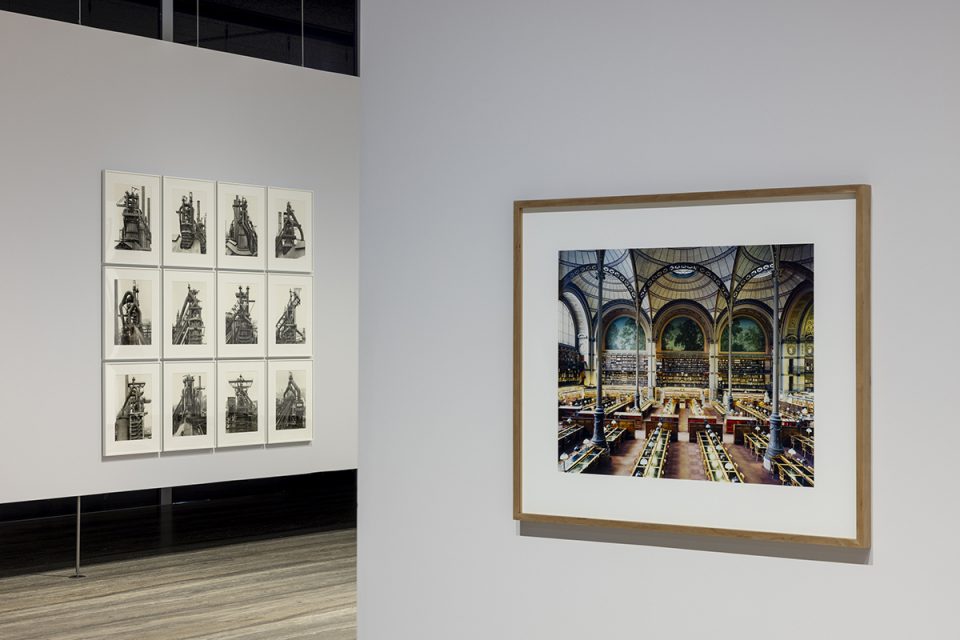
The exhibition avoids a chronological layout and instead adopts a typological structure, bringing together over 600 photographic works by 25 artists, including Bernd and Hilla Becher, Sibylle Bergemann, Karl Blossfeldt, Candida Höfer, Andreas Gursky, Gerhard Richter, Thomas Ruff, August Sander, and Wolfgang Tillmans. Pfeffer designed a system of suspended walls that forms unexpected connections between these diverse artistic practices. These walls, far from being neutral exhibition supports, become part of an installation that thematizes separation and partitioning—evoking, in a German context, the symbolic gesture of circumcision as an inscription of memory.
Typological Photography: Seriality, Classification, Emotional Detachment, Archival Fetishism
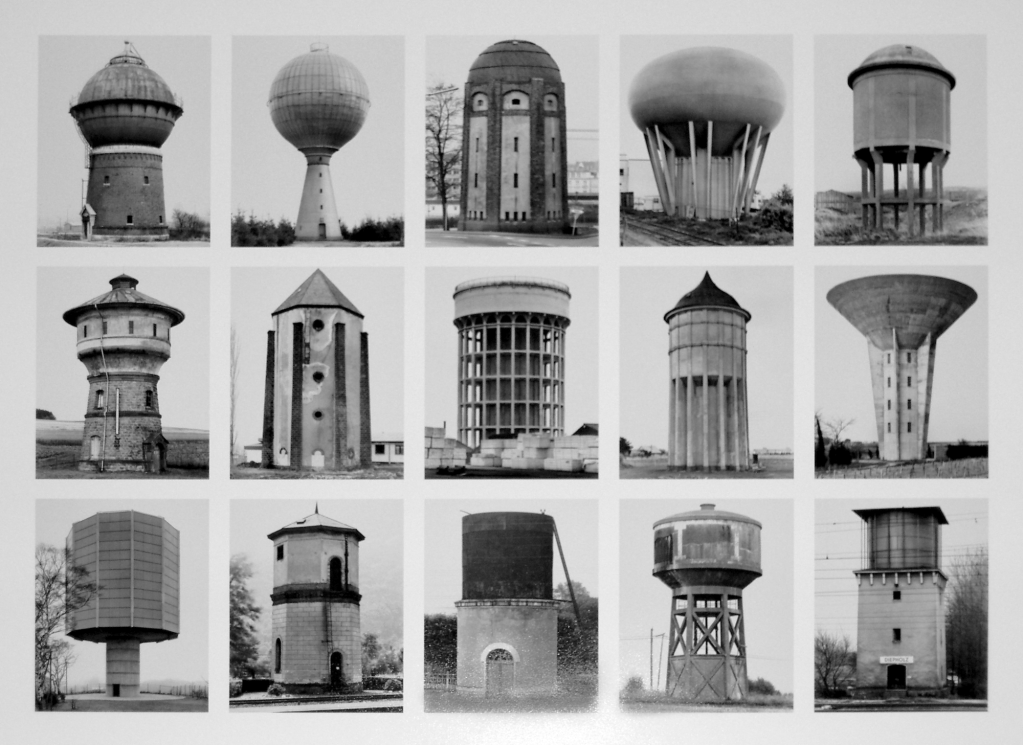
Typological photography is fundamentally an aesthetics of repetition. It is an art of the archive, of systematization, of accumulating images with minimal variation. On the surface, the exhibition appears to follow four key principles:
1. A Serial Approach: The repeated depiction of a single object with slight variations (industrial structures in the Bechers, buildings in Höfer, crowds in Gursky) creates an effect of quasi-scientific observation.
2. Visual Classification: Photography is employed as a tool for cataloging, with an emotional detachment akin to that of a botanist studying specimens.
3. Emotional Detachment: The supposed neutrality of these images isn’t truly dispassionate—it is a psychic defense.
4. The Archive as Obsession: From a psychoanalytic perspective, the repetition of typologies and the accumulation of images can be read as a compulsion to repeat (Wiederholungszwang, in Freud), a way to process what cannot be symbolized.
This psychoanalytic lens is crucial when considering that 20th-century German photography is inscribed within a traumatic historical memory: Nazism, post-war division, the Cold War, reunification. The exhibition reflects a particular cultural sensitivity, a need for anesthesia in the face of historical trauma. Why were so many of these artists so successful from the 1990s onward? Perhaps because they articulated an aesthetic that, without overtly depicting trauma, made it palpable through distance, cold objectivity, and compulsive visual order.
But the relationship between repetition and trauma is not only a German historical question—it is also a key to understanding the present. In a world marked by conflicts like the genocide in Palestine or invisible economic wars—tariffs, blockades, forced migration—repetition has become a global anesthetic. We are shown images of destroyed, displaced bodies daily, but they no longer affect us as they should. The saturation of visuals creates an infinite yet hollow archive: we see everything, but we see nothing.

The danger of typological vision is precisely this: that repetition neutralizes meaning. Images of poverty, war, and suffering become aesthetic categories, consumed and forgotten. As Foucault pointed out, the archive is not only a memory tool—it is a mechanism of control. To classify, to name, to measure is to organize life and determine visibility.
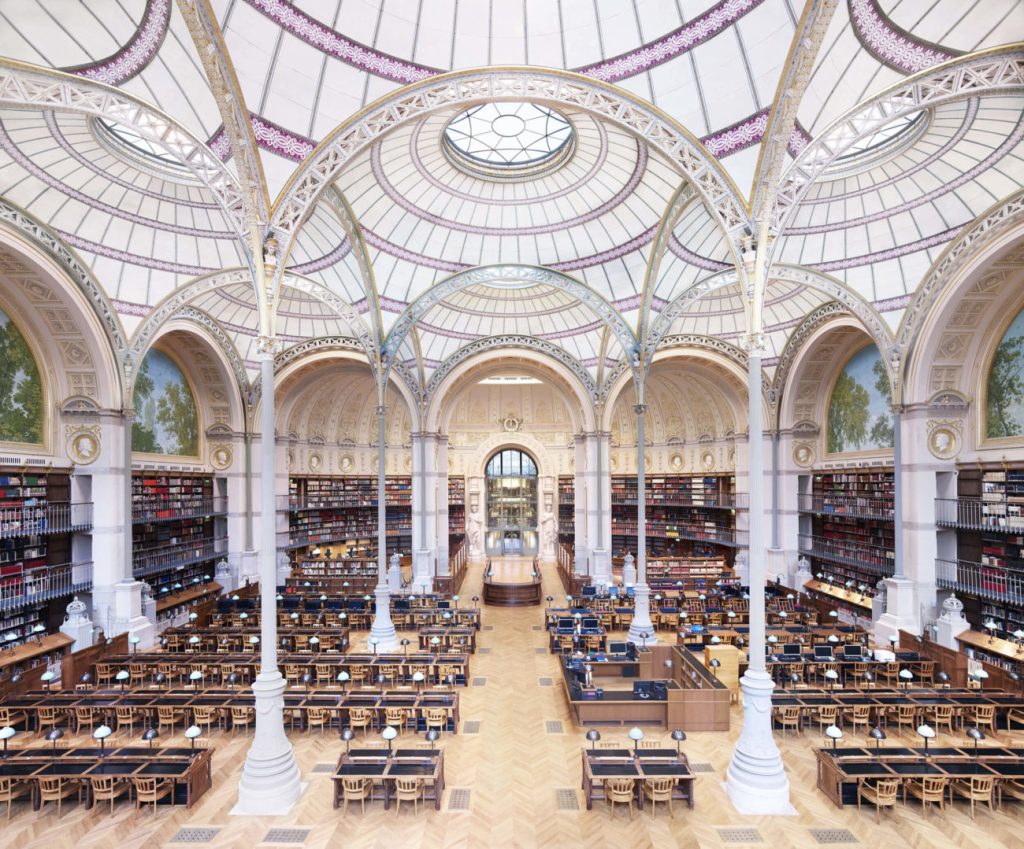
The Return of the Repressed and Technology as Condition of the Real
And yet, the repressed always returns. Even in its systematic coldness, typology leaks. The real insists. In this exhibition, it manifests in the micro-differences that break uniformity, in the uncontainable elements that escape the frame, in the images that—while catalogued—cannot be completely domesticated.
Thus, Typologien is not merely a study of German photography, but also a reflection on our present. The obsession with ordering the visual world is a symptom of our era: an attempt to give form to what cannot be controlled. But in that same process, typology exposes its own failure. And in that fissure, the real may emerge.




Deja una respuesta