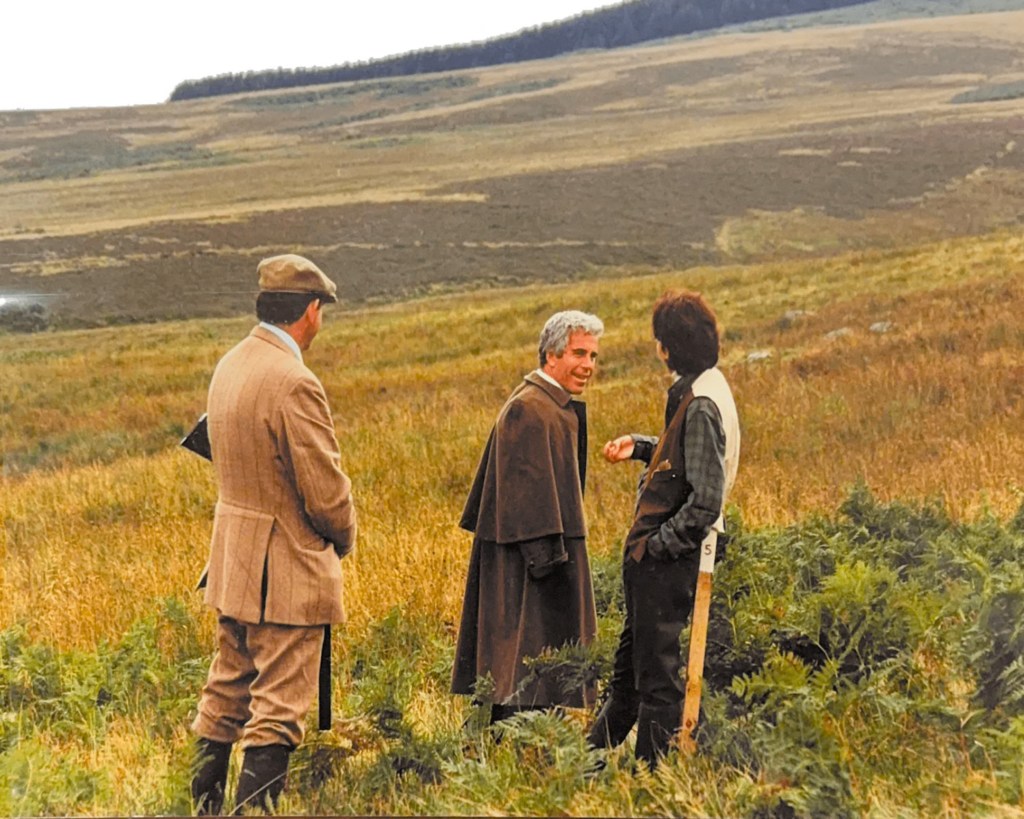
Do you know who predicted that Donald Trump would start a war with Iran if he were cornered? Jeffrey Epstein.
En comunicaciones que forman parte de los llamados Epstein files, aparece una línea que hoy vuelve con una fuerza particular: si Trump se sentía acorralado, podría incentivar una guerra —incluyendo un ataque a Irán— para generar una crisis que le permitiera agrupar apoyo público.
Epstein habría anticipado en mensajes de 2018 que, si Trump se veía acorralado, podía activar una crisis externa —incluida Irán— como “distracción total” y mecanismo de defensa política.
Tweet
En intercambios fechados alrededor del 20 de diciembre de 2018 entre Jeffrey Epstein y Steve Bannon, Bannon escribe sobre “total diversion”. Dice que en la Casa Blanca estaban sorprendidos por ciertas decisiones y que nadie entendía exactamente qué estaba haciendo Trump. La conversación deriva hacia escenarios internacionales y, en ese contexto, Epstein responde que Trump no parpadearía antes de alentar un ataque si eso le permitía saltar a la defensa del país. “Cornering a rat is never a good idea”, escribe. También menciona explícitamente a Irán dentro de posibles escenarios.
En correos de 2013 vinculados a Ehud Barak, Jeffrey Epstein aparece articulando un encuadre de urgencia sobre Siria y el “riesgo iraní” que funciona como argumento preventivo para una posible escalada regional.
Tweet
Epstein señala que si Trump se veía verdaderamente cercado, podría hacer algo que generara un problema real para luego posicionarse como defensor. En uno de los intercambios, Bannon incluso pregunta: “My God, is he that cornered? Ese es el primer eje.
El segundo eje se remonta a 2013 y a correos electrónicos vinculados al ex primer ministro israelí Ehud Barak, que fueron filtrados tras un hackeo atribuido al grupo iraní Handala. En esos correos aparece Epstein participando en discusiones estratégicas sobre Siria, Rusia e Irán.
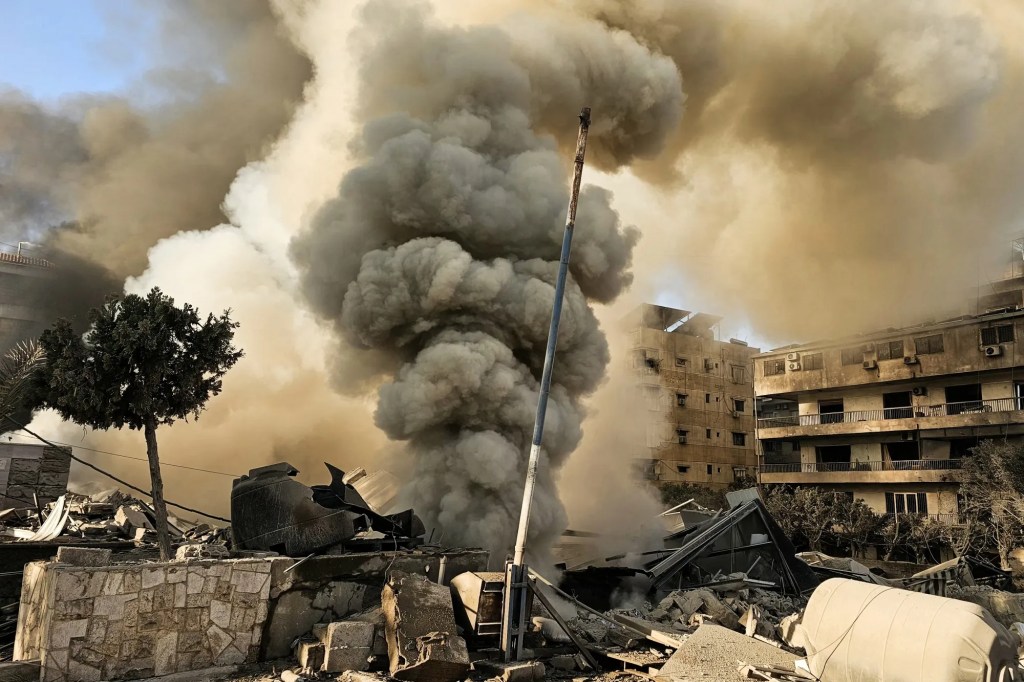
En mayo de 2013, Epstein escribe un texto detallando la situación en Siria, el uso de armas químicas, la posibilidad de proliferación regional, la amenaza de transferencia de sistemas avanzados a Hezbollah y la necesidad de no esperar “hasta que sea demasiado tarde”. Advierte sobre el riesgo de que la guerra civil siria derive en un conflicto regional más amplio y menciona directamente la cuestión iraní como un “nuclear ball moving toward goal”.
Parte de ese material circuló primero a través de filtraciones y hackeos atribuidos a actores iraníes, antes de los grandes volcados oficiales de los archivos Epstein, reforzando la idea del archivo como campo de batalla informativo.
Tweet
En otros mensajes se menciona que Putin pidió reunirse con Epstein en el marco de una conferencia económica en San Petersburgo. También se discuten contactos diplomáticos y escenarios de coordinación internacional.
Lo relevante es que el encuadre que aparece en esos correos —la urgencia, el argumento preventivo, el foco en Irán como amenaza estratégica— es el mismo tipo de argumento que hoy se utiliza para justificar acciones militares.
El Hacking y los Archivos
Gran parte del material vinculado a Epstein ha sido publicado de manera fragmentaria, con redacciones extensivas. Se habla de decenas de terabytes de información que no han sido liberados. Parte del material vinculado a Ehud Barak apareció antes del primer gran volcado oficial, tras el hackeo iraní.
Mientras tanto, en el presente, el Departamento de Justicia enfrenta críticas por el manejo de los Epstein files. En paralelo, el Comité de Supervisión de la Cámara, liderado por James Comer, realizó deposiciones privadas de Bill Clinton y Hillary Clinton que no fueron publicadas inmediatamente, a pesar de que inicialmente se había sugerido transparencia.
Comer afirmó públicamente que Clinton “exoneró” a Trump bajo juramento, señalando que no tenía información que lo implicara en conducta ilegal vinculada a Epstein. Sin embargo, el video completo no fue difundido en ese momento. La narrativa pública se instaló antes que el material completo estuviera disponible. En ese contexto, se produce la escalada militar contra Irán.
La secuencia que se plantea es la siguiente: Epstein anticipa que si Trump se siente acorralado podría activar una guerra como mecanismo de defensa política. Años antes, Epstein había articulado en correos un marco argumental para confrontar a Irán. En el presente, con presión política creciente por los archivos, Trump autoriza acciones militares contra Irán.
Además, algunos sectores mediáticos comienzan a referirse al conflicto no como “Iran war” sino como “Epstein war”, argumentando que la guerra funciona como distracción frente a los archivos. Esa es la conexión que se está trazando.
En paralelo, la gestión política y mediática de deposiciones y “exoneraciones” difundidas antes de publicar los materiales completos sugiere una operación para fijar el relato antes de que aparezcan los documentos.
Tweet
No es un argumento sobre moralidad ni sobre ideología. Es una reconstrucción de mensajes, fechas y declaraciones que, leídos en conjunto, plantean una pregunta: ¿estamos viendo la activación de una crisis externa en el momento exacto en que la presión interna alcanza su punto máximo?
Epstein no aparece en estos materiales como un “financista con opiniones”, sino como un operador: alguien que cruza élites políticas, inteligencia, negocios y diplomacia informal en un mismo circuito, armando intereses híbridos transnacionales que no responden a un Estado de manera transparente sino a redes. En ese registro, su figura funciona como bisagra entre capital privado, seguridad, acceso a mandatarios y backchannels, y por eso su correspondencia no se lee como chisme sino como infraestructura: un tipo que se ofrece para abrir puertas, calibrar mensajes, coordinar reuniones sensibles y conectar actores que públicamente no deberían estar conectados. Si además fue —directa o indirectamente— un activo de inteligencia, eso no sería un “detalle conspirativo” sino la forma concreta que toma el poder cuando opera fuera de los canales institucionales: influencia por archivo, por acceso y por transacciones.
If Jeffrey Epstein scripted the attack on Iran in 2013, is Donald Trump his successor as the manager of the 95 people who run the world? The Sequence Linking Epstein, Iran, and the War
Do you know who predicted that Donald Trump would start a war with Iran if he were cornered? Jeffrey Epstein.
In communications that form part of the so-called Epstein files, a line appears that today returns with particular force: if Donald Trump felt cornered, he might incentivize a war—including an attack on Iran—to generate a crisis that would allow him to rally public support.
Epstein allegedly anticipated in 2018 messages that if Trump felt cornered he might trigger an external crisis—including Iran—as a “total diversion” and political survival mechanism.
Tweet
In exchanges dated around December 20, 2018 between Epstein and Steve Bannon, Bannon writes about “total diversion.” He says that people in the White House were surprised by certain decisions and that nobody quite understood what Trump was doing. The conversation moves toward international scenarios, and in that context Epstein responds that Trump would not blink before encouraging an attack if it allowed him to leap to the country’s defense. “Cornering a rat is never a good idea,” he writes. He also explicitly mentions Iran among possible scenarios.
Epstein suggests that if Trump truly felt cornered, he might do something that would create a real crisis and then position himself as the country’s defender. In one of the exchanges, Bannon even asks: “My God, is he that cornered?”
That is the first axis.
The second axis goes back to 2013 and to emails linked to former Israeli prime minister Ehud Barak that were leaked after a hack attributed to the Iranian group Handala. In those emails, Epstein appears participating in strategic discussions about Syria, Russia, and Iran.
In 2013 emails linked to Ehud Barak, Epstein appears articulating an urgent strategic framing around Syria and the “Iranian threat” that functions as a preventive argument for regional escalation.
Tweet
In May 2013, Epstein writes a text describing in detail the situation in Syria, the use of chemical weapons, the possibility of regional proliferation, the risk of advanced systems being transferred to Hezbollah, and the need not to wait “until it is too late.” He warns about the risk that the Syrian civil war could evolve into a broader regional conflict and refers directly to the Iranian issue as a “nuclear ball moving toward goal.”
Other messages mention that Vladimir Putin asked to meet Epstein during an economic conference in St. Petersburg. Diplomatic contacts and possible coordination scenarios are also discussed. What matters here is that the framing that appears in those emails—the urgency, the preventive argument, the focus on Iran as a strategic threat—is the same type of argument now used to justify military action.
The third element concerns the archives.
A large portion of the material related to Epstein has been released only in fragmentary form, heavily redacted. There are references to tens of terabytes of information that have not been made public. Some of the material linked to Ehud Barak appeared before the first major official document release, following the Iranian hack.
Meanwhile, in the present, the Department of Justice faces criticism over its handling of the Epstein files. At the same time, the House Oversight Committee—led by James Comer—conducted private depositions of Bill Clinton and Hillary Clinton that were not immediately made public, despite earlier suggestions that the process would be transparent.
Part of that material first circulated through leaks and hacks attributed to Iranian actors, before the major official Epstein file releases, reinforcing the idea of the archive as an informational battlefield.
Tweet
Comer publicly stated that Clinton had “exonerated” Trump under oath, saying he had no information linking Trump to wrongdoing involving Epstein. However, the full video of the deposition was not released at that time. The public narrative circulated before the complete material was available.
In that context, military escalation with Iran takes place. The sequence that is being proposed is the following: Epstein anticipates that if Trump feels cornered he might activate a war as a mechanism of political defense. Years earlier, Epstein had articulated in emails a strategic argument for confronting Iran. In the present, with increasing political pressure surrounding the Epstein files, Trump authorizes military actions against Iran. Some media figures have even begun referring to the conflict not as the “Iran war” but as the “Epstein war,” arguing that the military escalation functions as a distraction from the files.
That is the connection being drawn. This is not an argument about morality or ideology. It is a reconstruction of messages, dates, and statements that, when read together, raise a question: are we witnessing the activation of an external crisis at the exact moment when internal pressure reaches its peak?
In these materials, Epstein does not appear as a “financier with opinions,” but as an operator—someone moving across political elites, intelligence networks, business interests, and informal diplomacy in the same circuit, assembling hybrid transnational interests that do not transparently answer to any single state but rather to networks. In that sense, his role functions as a hinge between private capital, security sectors, access to heads of state, and backchannels. His correspondence reads less like gossip and more like infrastructure: someone offering to open doors, calibrate messages, coordinate sensitive meetings, and connect actors who publicly should not appear connected. If he was—directly or indirectly—an intelligence asset, that would not be a conspiratorial footnote but a concrete example of how power often operates outside formal institutional channels: through access, archives, and transactions.
© Rodrigo Cañete, 2026. All rights reserved. Originally published on LoveArtNotPeople.blog. Reproduction or redistribution without permission is prohibited.




Deja una respuesta