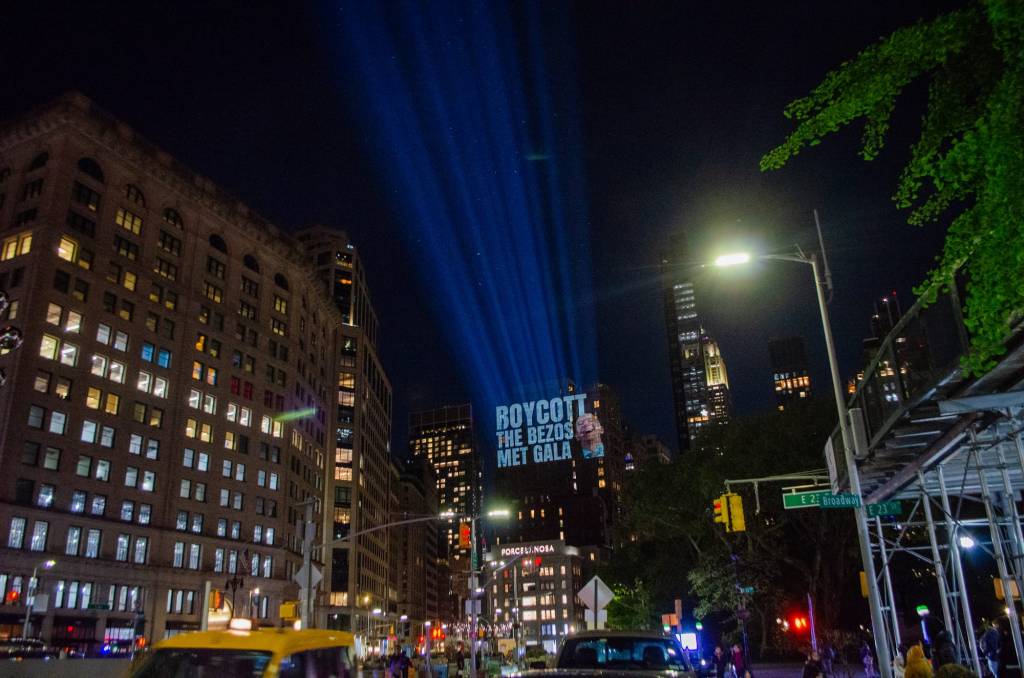
Anna Wintour describe su función en la Met Gala con una fórmula que, leída hoy, tiene el efecto de un diagnóstico involuntario. En la introducción a la publicación oficial del Costume Institute, Wintour escribe que la relación entre Vogue y el Metropolitan consiste en crear “un conducto entre una institución cultural de renombre mundial y el mundo de la moda.” Un conducto. Después agrega que la gala es la “oportunidad de recaudar los fondos necesarios para asegurar el futuro” del Costume Institute como el principal museo de moda del mundo. Nótese la precisión involuntaria de las metáforas: un conducto, una recaudación, un futuro a asegurar. Wintour no habla el lenguaje del arte; habla el lenguaje de la infraestructura. Y esa infraestructura es, precisamente, el tema de este año.
La Met Gala 2025 no es polémica por los vestidos. Es polémica porque el capital que los financia ya no puede ser purificado por el museo. Eso es lo que Bezos produce: la ruptura de la máquina Wintour.
Tweet

Porque el tema oficial de la edición 2025 es “Fashion is Art”, asociado a la exposición Costume Art que Andrew Bolton, curator-in-charge del Costume Institute, presenta como una exploración de la relación entre la moda, la forma y el cuerpo vestido. Bolton es la inteligencia curatorial detrás de las últimas dos décadas del Costume Institute: es quien —según la propia Wintour— trabaja con la moda como “material culture and historical catalyst.” Es una posición académicamente seria. Y la exposición de este año probablemente la sostenga con rigor. Pero hay una paradoja en el momento exacto en que esa tesis se enuncia: la gala que celebra la autonomía estética del cuerpo vestido está financiada en 2025 por Jeff Bezos y Lauren Sánchez Bezos, sponsors principales y honorary chairs según el anuncio del propio Metropolitan. Reuters reportó que la donación de Bezos ascendió a diez millones de dólares. Ahí se produce una grieta que ninguna curaduría puede administrar del todo. El conducto que Wintour construyó está transportando ahora un capital cuya procedencia es demasiado visible, demasiado reciente y demasiado corporal para ser absorbida sin residuo por la lógica del museo.
Para entender por qué esta presencia en particular produce lo que otras no producen, hay que detenerse en la lógica de funcionamiento del sistema que Wintour construyó. La Met Gala no es simplemente un evento cultural con mecenas: es la escenificación más perfecta de lo que la moda hace siempre, que es producir y administrar un sistema de inaccesibilidad. La moda no puede ser democrática porque su lógica exige que haya siempre un adentro y un afuera, un código que algunos conocen y otros no. Françoise Montenay, ex directora europea de Chanel, lo formuló con una franqueza que vale la pena recordar: “El lujo es exclusividad: está hecho para ti y nadie más lo tiene.” No es calidad ni tradición ni manufactura: es la garantía de que otros quedarán afuera. Y la Met Gala es, entre otras cosas, la escenificación más espectacular de ese principio: la inclusión de los que están adentro sólo es posible porque la exclusión de los que están afuera está garantizada. Wintour perfeccionó ese mecanismo durante décadas con una eficacia extraordinaria. Pero ese mecanismo tiene una condición de funcionamiento que este año se volvió inestable: requiere que el capital que lo financia no sea demasiado visible como capital. Requiere que el museo absorba el dinero y lo devuelva como cultura.
Adentro del Metropolitan, el cuerpo es arte. Afuera, el cuerpo es un código de barras. Amazon administra ambas economías del cuerpo. Esa es la contradicción central de este primer lunes de mayo.
Tweet
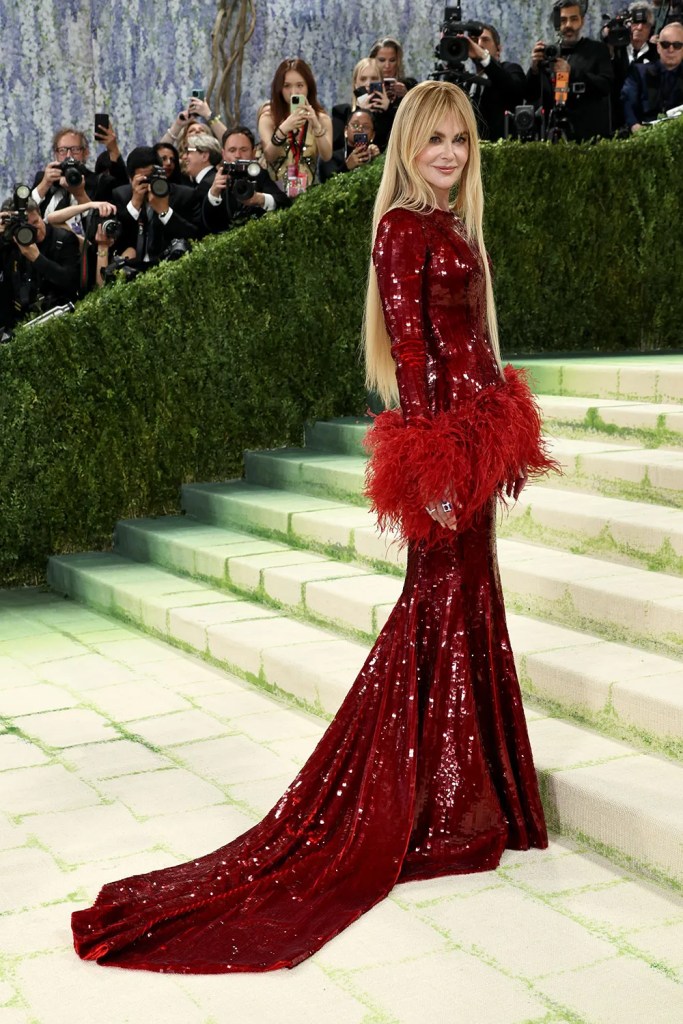
Cuando el origen del dinero es demasiado conocido, demasiado reciente y demasiado documentado, la operación de purificación se complica. Bezos no es un viejo apellido de la Costa Este ni una dinastía europea de la moda. Bezos es Amazon. Y Amazon es un sistema cuya lógica de funcionamiento es pública, discutida, sindicalizada, litigada. Alessandro Delfanti, en The Warehouse: Workers and Robots at Amazon, ofrece la descripción más útil de ese sistema para leer lo que ocurrió afuera del Metropolitan el primer lunes de mayo. El capítulo que más me interesa se llama “Work hard”: no por azar, porque Work hard. Have fun. Make history es el eslogan pintado en las paredes de cada fulfillment center de Amazon, justo antes de las puertas de seguridad y los escáneres corporales por los que todos los trabajadores deben pasar al entrar o salir del edificio. Delfanti describe el depósito MXP5 de Piacenza, Italia, como un espacio sin ventanas, iluminado por luz de neón, cruzado por kilómetros de cintas transportadoras. Sus propios trabajadores lo llaman “the spaceship”, la nave espacial. La comparación revela más de lo que parece: un interior perfecto, cerrado, funcional, diseñado para una sola operación.
Wintour lo dijo: La gala es un conducto entre la institución cultural y el mundo de la moda. Este año, ese conducto está transportando una contradicción que ninguna curaduría puede absorber.
Tweet
Amazon no debe pensarse sólo como una empresa de comercio electrónico ni como un empleador particularmente brutal. Es una máquina de circulación. Su arquitectura completa —depósitos, algoritmos, trabajadores, escáneres, servidores— está organizada alrededor de una sola obsesión: que la mercancía no se detenga. El pedido no puede esperar. La promesa del consumo instantáneo depende de que algo esté siempre en movimiento. Y en ese sistema aparece un elemento que Delfanti identifica con precisión como el más problemático: el trabajador. El cuerpo humano que puede cansarse, organizarse, demorar, hacer huelga. Un gerente del MXP5 le explicó en una entrevista: “la tecnología codifica, comprende, gestiona; pero la máquina real es el humano.” La automatización no elimina el trabajo: lo administra.
El tema oficial es “Fashion is Art”. Pero la imagen que va a quedar de esta edición no es un vestido en una vitrina. Es la imagen de lo que estaba afuera.
Tweet
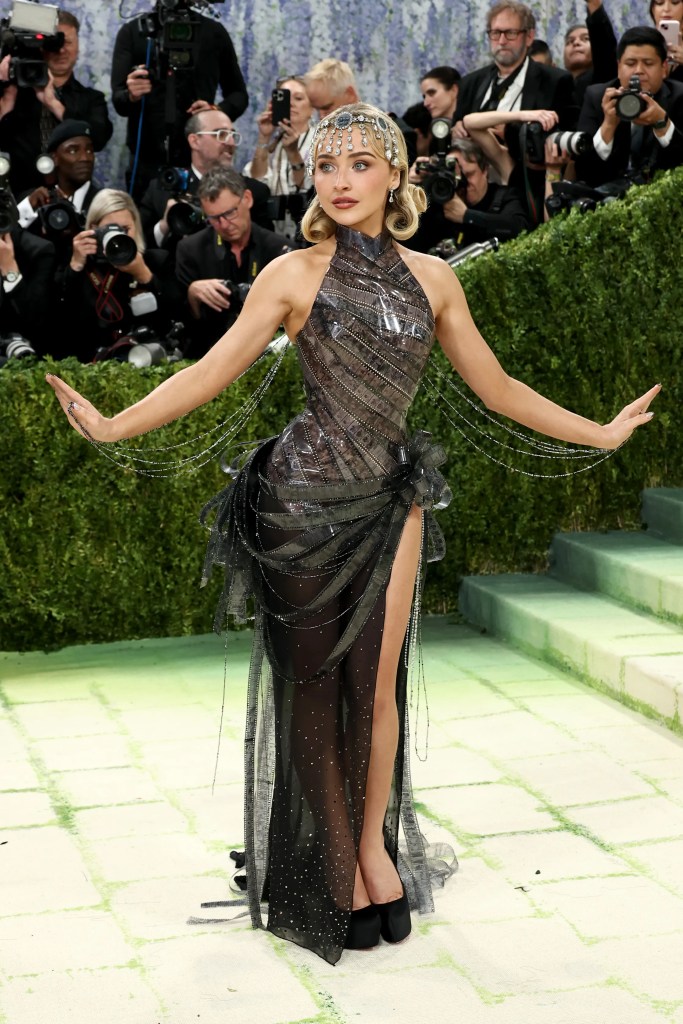
El instrumento central de ese sistema de administración es el escáner de código de barras —lo que los propios trabajadores llaman “la pistola”— que cada empleado recoge al inicio de su turno. A través del escáner, el trabajador queda incorporado al sistema de información de Amazon: registra posiciones, recibe órdenes, reporta rendimiento. Y el trabajador mismo se convierte en información. Una trabajadora veterana del MXP5 llamada Maria lo dijo con una claridad que no necesita glosa: “somos un número; lo que importa es nuestra credencial, nuestro código.” Igual que los objetos que circulan por las estanterías, los trabajadores existen en el sistema Amazon como unidades codificadas, rastreadas, medidas. El sociólogo Aneesh Aneesh acuñó el término “algocracia” para describir estas formas organizacionales en las que los algoritmos permiten a la dirección construir y controlar el proceso de trabajo en su propio beneficio. En Amazon, eso significa que ningún supervisor en el piso de la fábrica está mirando a los trabajadores con un cronómetro. El cronómetro está en el escáner. El supervisor está en el algoritmo.
Lo que hace singular a Amazon en esa genealogía —que Delfanti conecta con el taylorismo de los años 1880— es el almacenamiento caótico: Amazon organiza sus inventarios no por categorías sino de manera aparentemente aleatoria, objetos de naturaleza completamente distinta almacenados juntos. Esta lógica tiene una función de eficiencia logística precisa, pero tiene también una consecuencia estructural: los trabajadores no pueden conocer el inventario. Solo el software sabe dónde está todo. Delfanti describe esto como “worker dispossession by machine”: los trabajadores son despojados del conocimiento de dónde estaban las cosas, que en los viejos depósitos era una forma de poder irreemplazable. Amazon, mediante el desorden gestionado algorítmicamente, disuelve esa irreemplazabilidad. El trabajo se vuelve más descartable, más fácil de rotar, más fácil de someter.
Todo esto ocurre en el reverso exacto de la imagen de la Met Gala. El conducto de Wintour dice: el cuerpo vestido es arte. Amazon dice, en la práctica: el cuerpo trabajador es métrica, tiempo, rendimiento, escaneo, fatiga, código. Adentro del Metropolitan, los cuerpos aparecen como superficie de significación: vestidos, ornamentados, curados, fotografiados, convertidos en imagen. Afuera, Reuters reportó protestas contra Bezos en las inmediaciones del Metropolitan, con consignas sobre desigualdad y derechos laborales. El alcalde de Nueva York, Zohran Mamdani, decidió no asistir —su gesto fue leído públicamente como incompatible con su agenda sobre impuestos al capital extremo y vivienda accesible. Chris Smalls, figura central de la sindicalización en Amazon, fue identificado por varios observadores como el hombre detenido frente al evento, aunque la NYPD no confirmó oficialmente su identidad.
La oposición visual es de una brutalidad simbólica que difícilmente podría haberse planificado. De un lado, los cuerpos que entran al museo como si el cuerpo fuera pura superficie estética. Del otro, los cuerpos que recuerdan que el capital que financia esa superficie procede de una maquinaria de turnos nocturnos, escáneres, algoritmos y cansancio medido en métricas de rendimiento. Maria, la trabajadora que Delfanti entrevistó, lo formuló así: “en Amazon todo es un código de barras, y eso es lo que somos nosotros también, y es triste.” El conducto que Wintour construyó entre Vogue y el Metropolitan transporta en 2025 una contradicción que no puede ser purificada del todo: que la fortuna que financia el cuerpo-como-arte se produce administrando el cuerpo-como-infraestructura.
Por eso no diría simplemente que esto daña el legado de Wintour. Es más preciso: lo expone en su fase terminal. No porque Wintour haya perdido poder. Sino porque el tipo de poder que ella perfeccionó —esa mezcla de celebridad, museo, moda, prensa y capital— ya no puede sostenerse sin que aparezca su reverso. La exposición se llama Costume Art. Pero la imagen que va a quedar de esta edición no es un vestido en una vitrina iluminada. Es la imagen de lo que estaba afuera.
La pregunta que queda es ¿Qué cuerpos tienen derecho a aparecer como arte? ¿Y qué cuerpos son obligados a desaparecer como trabajo?
MetGala 2026: Human Bodies As Art Versus Disposable People
The Met Gala 2025 isn’t controversial because of the outfits. It’s controversial because the capital funding them can no longer be purified by the museum. That’s what Bezos produces: the breakdown of the Wintour machine.
Tweet
Anna Wintour describes her role at the Met Gala with a formula that, read today, has the effect of an involuntary diagnosis. In the introduction to the Costume Institute’s official publication, Wintour writes that the relationship between Vogue and the Metropolitan consists of creating “a conduit between a globally renowned cultural institution and the world of fashion.” A conduit. She then adds that the gala is the “once-a-year chance to raise enough funds to secure an expansive future” for the Costume Institute as the world’s preeminent fashion museum. Note the involuntary precision of the metaphors: a conduit, a fundraising opportunity, a future to be secured. Wintour does not speak the language of art; she speaks the language of infrastructure. And that infrastructure is, precisely, this year’s subject.
Because the official theme of the 2025 edition is “Fashion is Art,” associated with the Costume Art exhibition that Andrew Bolton, curator-in-charge of the Costume Institute, presents as an exploration of the relationship between fashion, form, and the dressed body. Bolton is the curatorial intelligence behind the last two decades of the Costume Institute: the one who — according to Wintour herself — works with fashion as “material culture and historical catalyst.” It is a defensible academic position. And this year’s exhibition probably sustains it with rigor. But there is a paradox in the exact moment this thesis is stated: the gala that celebrates the aesthetic autonomy of the dressed body is funded in 2025 by Jeff Bezos and Lauren Sánchez Bezos, principal sponsors and honorary chairs according to the Metropolitan’s own announcement. Reuters reported that Bezos’s donation amounted to ten million dollars. There, a fracture opens that no curatorship can fully manage. The conduit Wintour built is now transporting a capital whose origins are too visible, too recent, and too corporeal to be absorbed without remainder by the logic of the museum.
To understand why this presence produces what others do not, we must pause on the operational logic of the system Wintour built. The Met Gala is not simply a cultural event with patrons: it is the most perfect staging of what fashion always does, which is to produce and administer a system of inaccessibility. Fashion cannot be democratic because its logic demands that there always be an inside and an outside, a code that some know and others do not. Françoise Montenay, former European CEO of Chanel, formulated this with a candor worth remembering: “Luxury is exclusivity — it is made for you and no one else has it.” It is not quality or tradition or craftsmanship: it is the guarantee that others will be left out. And the Met Gala is, among other things, the most spectacular staging of that principle: the inclusion of those on the inside is possible only because the exclusion of those on the outside is guaranteed. Wintour perfected that mechanism with extraordinary effectiveness over decades. But that mechanism has an operating condition that became unstable this year: it requires that the capital funding it not be too visible as capital. It requires the museum to absorb money and return it as culture.
Inside the Metropolitan, the body is art. Outside, the body is a barcode. Amazon manages both economies of the body. That’s the central contradiction of this year’s first Monday in May.
Tweet
When the origin of money is too well-known, too recent, and too documented, the purification operation becomes complicated. Bezos is not an old East Coast surname or a European fashion dynasty. Bezos is Amazon. And Amazon is a system whose operational logic is public, debated, unionized, litigated. Alessandro Delfanti, in The Warehouse: Workers and Robots at Amazon, offers the most useful description of that system for reading what happened outside the Metropolitan on the first Monday in May. The chapter that interests me most is called “Work hard” — not by chance, because Work hard. Have fun. Make history is the slogan painted on the walls of every Amazon fulfillment center, just before the security gates and body scanners that every worker must pass through to enter or leave the building. Delfanti describes the MXP5 fulfillment center in Piacenza, Italy, as a windowless space, illuminated by neon light, crisscrossed by miles of conveyor belts. Its own workers call it “the spaceship.” The comparison reveals more than it seems: a perfect, closed, functional interior, designed for a single operation.
Wintour said it herself: the gala is a conduit between the cultural institution and the world of fashion. This year, that conduit is carrying a contradiction no curatorship can absorb.
Tweet
Amazon should not be understood merely as an e-commerce company or a particularly brutal employer. It is a circulation machine. Its entire architecture — warehouses, algorithms, workers, scanners, servers — is organized around a single obsession: that merchandise not stop moving. An order cannot wait. The promise of instantaneous consumption depends on something always being in motion. And in that system appears an element that Delfanti identifies with precision as the most problematic: the worker. The human body that can get tired, organize, delay, strike. A manager at MXP5 explained in an interview: “technology codifies, understands, manages; but the real machine is the human.” Automation does not eliminate labor: it administers it.
The central instrument of that administrative system is the barcode scanner — what workers themselves call “the gun” — that every employee picks up at the start of their shift. Through the scanner, the worker becomes incorporated into Amazon’s information system: recording positions, receiving orders, reporting performance. And the worker themselves becomes information. A veteran worker at MXP5 named Maria stated it with a clarity that needs no gloss: “We are a number; what matters is our badge, our code.” Just like the objects circulating on the shelves, workers exist in the Amazon system as coded, tracked, measured units. Sociologist Aneesh Aneesh coined the term “algocracy” to describe these asymmetrical organizational forms in which algorithms allow management to build and control the labor process for its own benefit. In Amazon, that means no supervisor on the factory floor is watching workers with a stopwatch. The stopwatch is in the scanner. The supervisor is in the algorithm.
The official theme is “Fashion is Art.” But the image that will remain from this edition is not a dress in an illuminated vitrine. It is the image of what was outside.
Tweet
What makes Amazon singular in that genealogy — which Delfanti connects to Taylorism from the 1880s — is chaotic storage: Amazon organizes its inventories not by category but in an apparently random manner, objects of entirely different natures stored together. This logic serves a precise logistical efficiency function, but it also has a structural consequence: workers cannot know the inventory. Only the software knows where everything is. Delfanti describes this as “worker dispossession by machine”: workers are stripped of the defining feature of traditional warehouse labor — knowledge of where things were — which in old warehouses was an irreplaceable form of power. Amazon, through algorithmically managed disorder, dissolves that irreplaceability. Labor becomes more disposable, easier to rotate, easier to subdue.
All of this occurs in the exact reverse of the Met Gala’s image. Wintour’s conduit says: the dressed body is art. Amazon says, in practice: the working body is metric, time, performance, scanning, fatigue, code. Inside the Metropolitan, bodies appear as surfaces of meaning: dressed, adorned, curated, photographed, converted into image. Outside, Reuters reported protests against Bezos in the vicinity of the Metropolitan, with chants about inequality and labor rights. New York City Mayor Zohran Mamdani chose not to attend — his gesture was publicly read as incompatible with his political agenda on taxing extreme wealth and affordable housing. Chris Smalls, a central figure in Amazon’s unionization, was identified by several observers as the man detained outside the event, though the NYPD did not officially confirm his identity.
The visual opposition is of a symbolic brutality that could hardly have been planned. On one side, bodies entering the museum as though the body were pure aesthetic surface. On the other, bodies reminding us that the capital funding that surface comes from a machinery of night shifts, scanners, algorithms, and exhaustion measured in performance metrics. Maria, the worker Delfanti interviewed, put it this way: “In Amazon everything is a barcode, and that’s what we are too, and it’s sad.” The conduit Wintour built between Vogue and the Metropolitan is carrying in 2025 a contradiction that cannot be fully purified: the fortune financing the body-as-art is produced by administering the body-as-infrastructure.
This is why I would not simply say this damages Wintour’s legacy. It is more precise: it exposes it in its terminal phase. Not because Wintour has lost power. But because the kind of power she perfected — that mixture of celebrity, museum, fashion, press, and capital — can no longer sustain itself without its reverse becoming visible. The exhibition is called Costume Art. But the image that will remain from this edition is not a dress in an illuminated vitrine. It is the image of what was outside. Two questions remain: Which bodies have the right to appear as art? And which bodies are forced to disappear as labor?




Deja una respuesta